


Uzbekistan hands Iranian envoy note of protest
00:36
| Home page World |

|
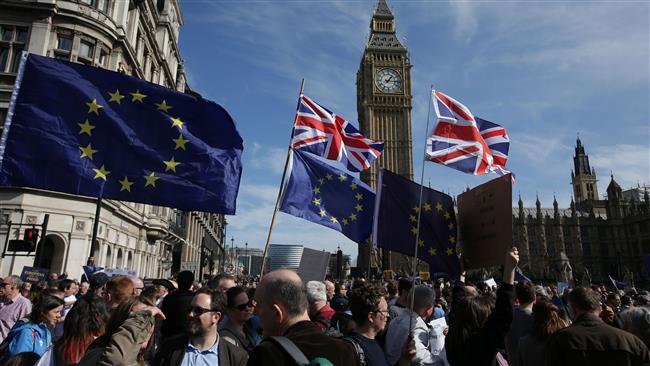
Britain’s National Health Service (NHS) has been under increasing stress for many years, with increasingly large protests over the state of healthcare outside the capital.
Axar.az reports citing AP.
The British-based think-tank UK in a Changing Europe has issued the findings of a report which it says show that Britain's exit from the European Union may add further strains to the country's much-loved National Health Service.
Health Policy in the United Kingdom is an area of authority delegated to the devolved governments of Scotland, Wales and Northern Ireland. The regional governments of the former two countries are at odds with the Minister for Devolution, David Lidington over when and how executive powers exercised by Brussels, some of them concerning the Health sector, should return to London or the parliaments in Edinburgh and Cardiff.
UK Health policy is deeply influenced by that of the European Union and the report envisions potential dangers in divergences opening between the health systems of Northern Ireland and the Republic of Ireland which could complicate common health programs in both countries.
Reciprocal Rights
As current citizens of the European Union, Britons are entitled to reciprocal medical care in other member-states whose citizens are also entitled to be treated in British hospitals by means of the European Health Insurance Card. Access to each other's health-care systems is underpinned by freedom of movement, a key condition of EU membership that Theresa May's government has pledged to bring to an end. The extent to which the British health service will be affected by its dependence on European workers who have taken advantage of freedom of movement, with up to 11,000 European doctors and 100,000 EU27 social care workers, is also a major concern to the report's authors.
Britain's Health Secretary Jeremy Hunt has previously declared that EU-approved pharmaceutical products would be automatically licensed to be sold and used in Britain, although a guarantee of reciprocal treatment for UK-developed products in the EU has not been forth-coming. Britain's pharmaceutical industry consumes 20 percent of the country's research and development expenditure according to the British Pharmacological Society and directly employs around 73,000 people while also being home to some of the world's largest drug companies such as GlaxoSmithKline and AstraZeneca.


|
Date
2018.03.13 / 22:29
|
Author
Axar.az
|