

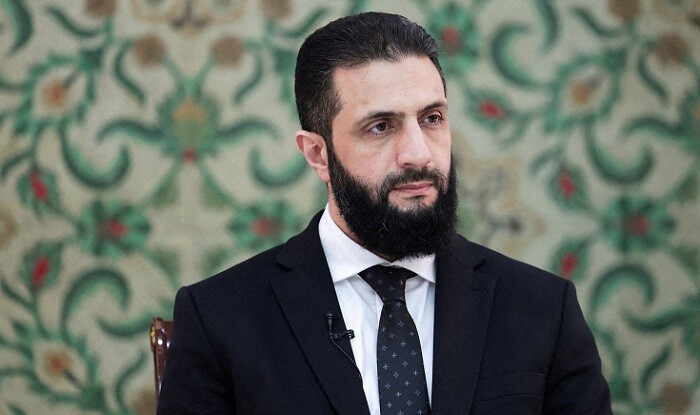
Al-Sharaa meets EU's Kallas in Damascus
29 September 23:55
| Home page Politics |

|
The peace process between Azerbaijan and Armenia has advanced significantly, but Europe's approach to the South Caucasus still largely reflects outdated perceptions of the region, according to The Washington Examiner.
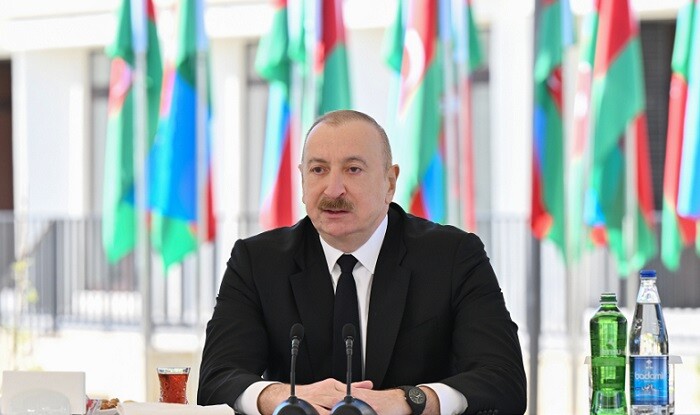
Axar.az informs, citing Rеport, that an address by Azerbaijani President Ilham Aliyev at a summit in Yerevan would have seemed unthinkable only a few years ago.
In May 2026, Aliyev addressed the European Political Community summit by video link from Baku, criticizing the European Parliament over a resolution adopted several days earlier and accusing it of attempting to derail the peace process between Azerbaijan and Armenia.
The article's author, Taras Kuzio, argues that the fact Aliyev directed his criticism at Europeans rather than Armenia reflects a significant shift in relations between the two former adversaries, while European approaches to the region have changed far less.
The article highlights the South Caucasus' strategic importance to Europe as a major overland route between Europe and Asia bypassing Russia and Iran, as well as an energy corridor for gas supplies from the Caspian region and Central Asia.
Kuzio notes that after the 44-day war in 2020, which resulted in Azerbaijan restoring control over Karabakh, many expected relations between Baku and Yerevan to deteriorate further. Instead, the two sides continued negotiations and later moved closer to concluding a peace agreement.
According to the author, however, European countries focused mainly after the war on the rights and security of Karabakh Armenians and on a possible special political status for the region. Kuzio argues that this approach failed to reflect changes on the ground and continued to rely on the previous mediation framework.
He also points to disagreements between Baku and a number of European capitals. In particular, he argues that European countries supported Ukraine"s territorial integrity within its 1991 borders while continuing to treat territorial issues between Azerbaijan and Armenia as matters for negotiation.
According to Kuzio, this contributed to declining trust in European mediation. As an example, he cites the EU summit in Granada in October 2023, where the Azerbaijan-Armenia negotiation process was disrupted amid accusations from Baku that France was siding with Yerevan.
Meanwhile, Azerbaijan and Armenia continued bilateral talks and agreed on the text of a peace treaty in March 2025.
On August 8, 2025, Azerbaijani President Ilham Aliyev and Armenian Prime Minister Nikol Pashinyan initialed the peace agreement at the White House in the presence of US President Donald Trump.
The article also points to growing practical cooperation between the two countries, including supplies of Azerbaijani fuel to Armenia through Georgia and plans to restore and open transport routes between them, including the Trump Route for International Peace and Prosperity (TRIPP).
Kuzio writes that at the next stage of the peace process, the European Union has an opportunity to help move from the initialed agreement toward the final signing of a peace treaty.
He identifies provisions in Armenia's Constitution as one of the remaining obstacles. The Constitution refers to the 1990 Declaration of Independence, which in turn cites a 1989 decision on the unification of Soviet Armenia with Karabakh. Baku views this as an ongoing territorial claim and an obstacle to signing and bringing the peace treaty into force.
The article notes that resolving the issue would require the adoption of a new constitution through a referendum. Armenian Prime Minister Nikol Pashinyan has previously said he intends to hold such a referendum after elections are completed.
Kuzio concludes that European capitals have for decades pursued approaches toward the South Caucasus that, in his view, no longer correspond to current realities. He argues that Europe now has an opportunity to play a role in bringing the Azerbaijan-Armenia peace process to completion.


|
Date
2026.09.29 / 23:31
|
Author
Axar.az
|