


Turkiye signs contract to rebuild historic Ani Bridge
19:52
| Home page Politics |

|
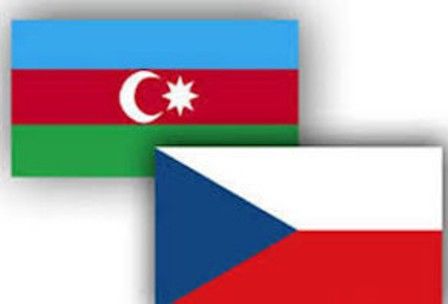
Azerbaijan–Czech relations are an important example of political, economic, and geopolitical relations between the South Caucasus and Central Europe. These relations should not be considered only as bilateral diplomatic relations between two states.
Azerbaijan is located in the South Caucasus and the Caspian region and plays an important role in energy and transport routes between Europe and Asia. The Czech Republic, on the other hand, is a Central European country and a member of the European Union and NATO. Therefore, Azerbaijan–Czech relations have a wider geopolitical meaning and are connected with the relations between the South Caucasus and Europe, European energy security, the Eastern Partnership, and regional security
The Czech Republic recognized the independence of Azerbaijan on 8 January 1992, and diplomatic relations between the two countries were established on 27 January 1993. During the first period, political and economic relations were relatively limited. One reason was that both countries were adapting to new geopolitical realities and had different foreign policy priorities. Azerbaijan had recently restored its independence and was trying to strengthen its statehood, deal with regional security problems, and establish its position in the international system. The Czech Republic was also going through a process of building a new political and economic system after the dissolution of Czechoslovakia. Therefore, during the first years, relations mainly focused on establishing diplomatic contacts and creating the institutional basis for cooperation.In the following years, the development of diplomatic missions and the increase in high-level political contacts had an important influence on bilateral relations. Azerbaijan established its embassy in the Czech Republic in 2005, while the Czech Republic established its embassy in Azerbaijan in 2019. At the same time, parliamentary relations, governmental meetings, and political consultations became more active. This process helped the relationship move beyond formal diplomatic contacts and created more regular connections between different state institutions.
From the late 2000s, Azerbaijan–Czech relations began to develop more actively. Along with political contacts, cooperation in trade, transport, tourism, culture, and other areas also expanded. There were several geopolitical and economic reasons behind this development. Azerbaijan, as a country with important energy resources in the Caspian region, was becoming increasingly important for Europe. The Czech Republic, as it became more integrated into the European Union, also became more interested in energy security, new economic partners, and relations with its eastern neighbors. As a result, Azerbaijan's interest in developing relations with Europe and the Czech Republic's interest in the South Caucasus increasingly began to overlap.
One of the most important stages in the development of bilateral relations was the signing of the Joint Declaration on Strategic Partnership between Azerbaijan and the Czech Republic in Baku on 15 September 2015. This document demonstrated the growing political importance of the relationship. The concept of strategic partnership showed that the relationship was no longer limited to diplomatic contacts and that wider mutual interests were developing in political, economic, and other fields. However, the term “strategic partnership” should not automatically be understood as equally strong cooperation in every area. The real meaning of a strategic partnership should also be measured by practical results in areas such as political dialogue, trade, investment, energy, technology transfer, and education.
The geopolitical importance of Azerbaijan–Czech relations can also be understood through the Czech Republic's position in the European Union. As an EU member, the Czech Republic can play a role in Azerbaijan's relations with Europe. In particular, the Eastern Partnership has become an important framework for relations between the EU and countries such as Azerbaijan, Armenia, Georgia, Moldova, Ukraine, and Belarus. The Czech Republic has been one of the European countries that has paid particular attention to this policy. Therefore, Azerbaijan–Czech relations should not be viewed only as relations between Baku and Prague. They should also be understood in the wider context of Azerbaijan–EU relations.
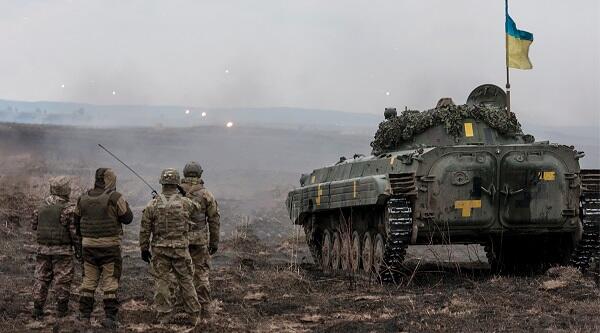
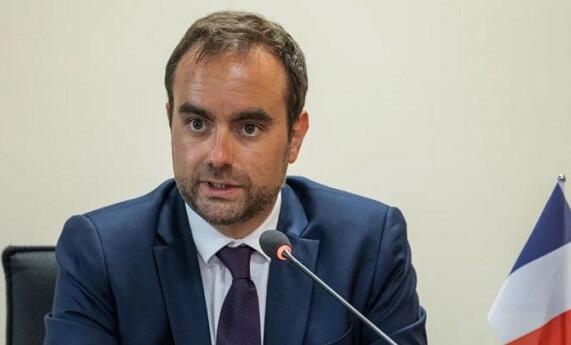
There are also different political approaches that should be considered. Azerbaijan gives particular importance to sovereignty, territorial integrity, energy, and economic cooperation in its foreign policy. EU member states, in addition to these issues, may also focus on democratic governance, human rights, political institutions, and the rule of law. Therefore, it is more objective to analyze Azerbaijan–Czech relations as a system in which different interests and priorities interact, rather than presenting them as relations based on complete political agreement.Energy is one of the most important geopolitical aspects of these relations. Azerbaijan's location in the Caspian region and its role as an energy exporter make it an important partner for European countries. This issue has become particularly important after the Russia–Ukraine war. Energy security and the diversification of energy sources have become major issues for Europe. In this situation, Azerbaijan has become an additional partner for the diversification of Europe's energy supplies. For the Czech Republic, cooperation with Azerbaijan in the energy sector is important because it can help diversify its energy sources and supply routes. During the visit of Czech Prime Minister Andrej Babiš to Azerbaijan in April 2026, the two sides discussed energy security, possible supplies of Azerbaijani gas to the Czech Republic, investment, technology transfer, and industrial cooperation. On 26 May 2026, Azerbaijani Foreign Minister Jeyhun Bayramov and Czech Foreign Minister Petr Macinka also discussed political, economic, energy, and humanitarian cooperation, as well as regional and international issues.
At the same time, making energy the only major basis of the relationship could create certain limitations. Energy prices and changes in international markets can directly affect trade relations. Therefore, cooperation should also develop in areas such as industry, technology, transport, agriculture, education, innovation, and investment. The importance of increasing mutual investments and diversifying areas of cooperation was specifically emphasized during Azerbaijan–Czech meetings in 2026. This shows that both sides recognize the need for a more diversified and sustainable relationship.
Economic relations are another important part of the geopolitical relationship. A Joint Commission on economic, scientific-technical, and cultural cooperation between the two countries was established in 2011. By 2023, the commission had held five meetings. The Czech Republic was one of Azerbaijan's important European trading partners in 2023. However, changes in trade turnover over the years also show that economic relations have not developed in a completely stable way. For example, trade turnover reached a high level in 2022 but decreased in 2023. These changes can be influenced by the global economic situation, energy markets, and the structure of exports.
The structure of economic relations also shows a certain imbalance. Oil and petroleum products have an important place in Azerbaijan's exports to the Czech Republic, while Azerbaijan imports vehicles, electrical equipment, industrial products, and other goods from the Czech Republic. This situation shows that the two economies can complement each other in certain areas. However, it also shows the potential for developing cooperation in sectors with higher added value. In other words, energy cooperation is one of the strengths of the relationship, while cooperation in technology and production could make the economic relationship more sustainable in the future.
Azerbaijan's geographical position is another important factor that increases its geopolitical importance. Azerbaijan connects the Caspian region with the South Caucasus and has an important position in transport links between Europe and Asia. In this context, the Middle Corridor is an important area for the future development of Azerbaijan–Czech relations. The Middle Corridor connects Central Asia, the Caspian Sea, Azerbaijan, Georgia, Türkiye, and Europe. After the Russia–Ukraine war, interest in alternative transport routes increased, which also strengthened Azerbaijan's importance as a transit country. The Czech Republic's location in Central Europe increases its potential role in connecting this route with European transport and logistics networks. Therefore, the future of Azerbaijan–Czech relations may depend not only on energy but also on transport and logistics cooperation.
Regional security is another important component of bilateral relations. Because Azerbaijan is located in the South Caucasus, its relations with Armenia, regional stability, and the peace process are important issues for European countries. The Czech Republic has expressed support for the principles of Azerbaijan's sovereignty and territorial integrity. At the same time, as an EU member, the Czech Republic's policy towards the South Caucasus is connected with the wider European security policy. In meetings between Azerbaijani and Czech representatives in 2024 and 2026, Azerbaijan–Armenia relations, the regional situation, and the peace process were also discussed. This demonstrates that bilateral relations cannot develop independently from regional security issues.
The year 2026 represents an especially important period in the development of Azerbaijan–Czech relations. During Czech Prime Minister Andrej Babiš's visit to Azerbaijan in April, the two sides discussed energy security, possible gas supplies, investment, technology transfer, and the activities of Czech companies in Azerbaijan. During the meeting between Azerbaijani Foreign Minister Jeyhun Bayramov and Czech Foreign Minister Petr Macinka on 26 May, political, economic, energy, and humanitarian cooperation, as well as regional and international issues, were discussed. The Azerbaijani side emphasized the contribution of high-level political dialogue, mutual visits, parliamentary relations, and political consultations between the foreign ministries to the development of bilateral relations. The two sides also emphasized the importance of increasing mutual investments and diversifying areas of cooperation. These developments show that the relationship has the potential to move beyond traditional diplomatic cooperation towards more practical economic and geopolitical cooperation.
Overall, the development of Azerbaijan–Czech relations can be understood through several stages. In the 1990s, the main goal was to establish diplomatic relations and create a new framework for interstate cooperation. From the late 2000s, political and economic relations became more active. The signing of the Joint Declaration on Strategic Partnership in 2015 created a new political framework for bilateral relations. In the following years, energy, trade, parliamentary relations, regional security, and relations with the EU became important areas of cooperation. In 2026, the growing focus on energy security, investment, technology, and economic diversification shows the potential for a new stage in the relationship.
However, it is also important to approach the future of the relationship critically. The existence of a “strategic partnership” does not automatically mean a high level of mutual dependence in every field. Changes in trade turnover, the important role of energy products in trade, and the need to expand cooperation in technology, investment, and high-value-added sectors show that there is still significant potential for development. In addition, the Czech Republic's membership in the EU and NATO means that its foreign policy is connected not only with bilateral interests but also with wider European and transatlantic policies. Azerbaijan, on the other hand, gives importance to a multi-vector foreign policy and regional partnerships. These differences can create some political and institutional complexity, but they can also create opportunities for dialogue and cooperation.In conclusion, Azerbaijan–Czech relations have developed from basic diplomatic contacts into a broader and more diversified partnership over the past three decades. Political dialogue, economic and energy cooperation, parliamentary relations, regional security, and Europe–South Caucasus relations form the main foundations of this partnership.
Azerbaijan's geopolitical position in the South Caucasus and the Caspian region and the Czech Republic's position in Central Europe and the European Union complement each other in several important areas. Energy security, the Middle Corridor, the EU's Eastern Partnership, and regional stability in the South Caucasus demonstrate that Azerbaijan–Czech relations should not be studied only as bilateral relations. They should also be understood as part of the wider geopolitical relationship between Europe and the South Caucasus. From this perspective, the future development of the relationship will largely depend on whether cooperation can move beyond energy and traditional trade towards investment, technology, industry, transport, education, and innovation.
Vali Khaspoladov,
PhD, is a researcher in History and International Area Studies at Mendel University.


|
Date
2026.10.05 / 17:24
|
Author
Axar.az
|