


Israel-US miscalculated resistance strength
23:12
| Home page World |

|
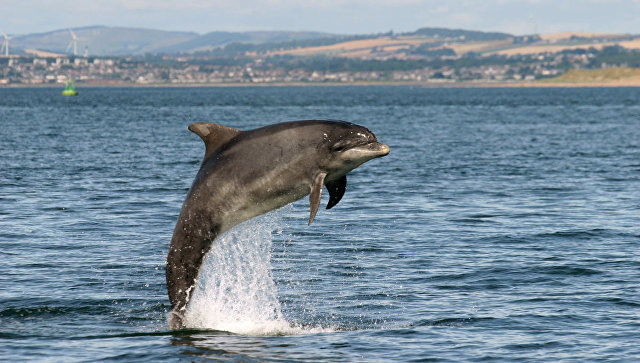
This is the emotional moment a mother dolphin was joined by her pod as she paraded her dead calf through the sea for six days.
Axar.az reports, citing SWNS, drone footage shows the dolphin, Fraggle, carrying her calf on her back in the Indian Ocean – a common behaviour.
But in an unusual moment, her entire pod of 14 dolphins came to support Fraggle, named after the muppet in Fraggle Rock, riding by her side to support her through her heartbreak.
Rodney Peterson, 53, a director at Geographe Marine Research, who research and promote preservation of sea creatures such as dolphins in Leschenault, Western Australia, said Fraggle had given birth to her calf in winter.
He said this often results in a low chance of survival for young dolphins.
Rodney said: “Dolphins are actually very emotional creatures, and they love their offspring.
“When a mother dolphin loses their calf, they are usually as sad as Fraggle was.
“Mothers keep their dead calf’s with them for a week at a time – they really see it as a little baby – and can be put off food for an entire week due to the heartbreak.
“We have had people trying to find the dead calf to test what was his case of death. We are using drones to find it – its day six and we have seen she is still carrying round.”
Due to the cold season, the young calf is suspected to have died as a result of respiratory problems, but the team won’t know the cause of death for certain until testing is done on the calf’s body.
He said: “We get them tested even when they are decomposed so we can see what the impacts have been on their survival – for this one it is probably something natural as we spotted irregular breathing patterns.
“In past years, dolphins would come to see if a calf had passed – but that day then she had the local population and couple of pods from the ocean paying their respects.
“She had lost four calves, so she’s been so unlucky – she lost her last one in March, 2025 – to have a calf during winter is not a good idea.
“We know she has been pregnant for a while – hence why we kept an eye out for her – but given we knew it was a slim chance of survival – we usually don’t name the calf’s until after a while when we are certain they will survive.”
Rodney has been a sea lover his whole life, and now enjoys spending time with dolphins and whales for his day to day work as a director of the non-profit organisation.
Even he was shocked to see the huge flock paying respect. He said: “I like doing what I do. You see these dolphins a lot and you get a connection with them and we do it with whales too.
“I haven’t seen anything like that though – it was heartwarming. I had goosebumps viewing it, it was amazing to see myself.
“Dolphins are just so amazingly intelligent – it’s great to work with them.”


|
Date
2026.07.28 / 17:23
|
Author
Axar.az
|