


All Azerbaijanis rescued after drone attack off Romania
19:10
| Home page World |

|
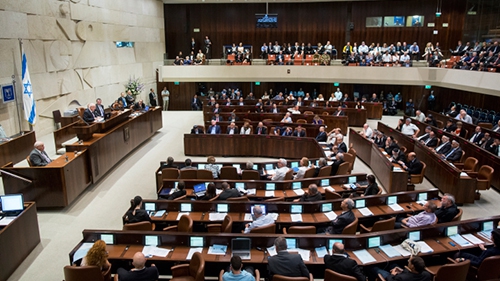
Israelis are set to head to the polls on October 27 to elect the 120 members of the 26th Knesset, the country’s parliament.
Axar.az informs that opinion polls suggest a close contest between Prime Minister Benjamin Netanyahu’s bloc and the opposition. Whether either side can secure the 61 seats required for a parliamentary majority may depend on the performance of smaller parties and the composition of the next Knesset.
Israel elects its parliament through nationwide proportional representation. Citizens aged 18 and older vote for a party rather than an individual candidate, with seats allocated according to each party’s share of the national vote.
Before the election, parties submit lists of prospective Knesset members. To enter parliament, a party must receive at least 3.25 percent of the national vote. The political landscape is broadly divided into two camps: parties aligned with Netanyahu’s coalition and those opposed to his continued leadership. However, smaller parties and groups that do not clearly align with either camp could play a decisive role in determining the next government.
Key parties in Netanyahu’s bloc include Otzma Yehudit, Shas, Religious Zionism- Zehut and Amcha Yisrael.
The opposition camp includes Yashar, Beyachad, Yisrael Beiteinu and The Democrats.
Arab parties, including the Joint List and Ra’am, as well as Jewish parties whose coalition alignment may vary, could also influence post-election negotiations. The latter group includes United Torah Judaism and The Reservists–New Economic Party.
According to the latest polls published by Israeli outlets Channel 12, Channel 13, Kan 11, i24NEWS, Walla, Channel 14, Maariv and Zman Yisrael, the parties are projected to win the following numbers of Knesset seats:
Projected seat totals by political alignment:
Opposition bloc: 52.0 seats
Netanyahu’s coalition bloc: 49.6 seats
Arab non-aligned parties: 14.0 seats
Jewish non-aligned parties: 4.5 seats
Projected seats by party:
Yashar, led by Gadi Eisenkot: 21.8 seats
Likud, led by Benjamin Netanyahu: 20.1 seats
Beyachad, led by Naftali Bennett: 13.3 seats
The Democrats, led by Yair Golan: 9 seats
Joint List, led by Yousef Jabareen: 8.5 seats
Otzma Yehudit, led by Itamar Ben-Gvir: 8 seats
Yisrael Beiteinu, led by Avigdor Lieberman: 7.9 seats
Shas, led by Aryeh Deri: 7.5 seats
United Torah Judaism, led by Yaakov Asher: 7.5 seats
Religious Zionism–Zehut, led by Bezalel Smotrich: 6.5 seats
Ra’am, led by Mansour Abbas: 5.5 seats
The Reservists–New Economic Party, led by Yoaz Hendel: 3 seats
Amcha Yisrael, led by Ofer Winter: 1.5 seats.


|
Date
2026.10.23 / 18:35
|
Author
Axar.az
|