

Kim Jong-un attends concert by Baku-born Larisa Dolina - Photo
12:33
| Home page World |

|
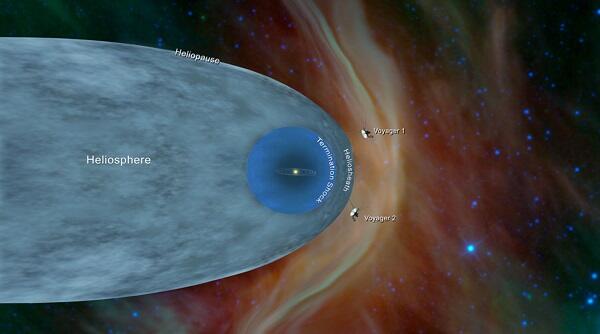
Just as it was about to reach a historic milestone that made it the first human-made object to travel one light-day from Earth, NASA’s aging Voyager 1 spacecraft experienced yet another communication breakdown.
Axar.az reports, citing CNN, that the deep-space probe is no longer sending science and engineering data and is returning only an empty “carrier signal” — a continuous radio signal that normally also contains information gathered by the spacecraft’s instruments.
NASA detected the problem on November 14, five days before Voyager 1 was set to mark the light-day achievement. One light-day is the distance at which a radio signal, moving at the speed of light, takes 24 hours to reach the spacecraft — roughly 16 billion miles (26 billion kilometers).
Using the carrier signal and trajectory calculations, the Voyager engineers were able to confirm the probe had reached that distance. However, there is now concern about the status of the 49-year-old spacecraft, which launched in September 1977 and has extended its mission more than 10 times longer than expected.
The presence of a carrier signal, according to NASA, means that Voyager 1’s navigation computer is keeping the spacecraft correctly pointed at Earth and its antenna and broadcast equipment are still working. But the absence of data hints at an issue with an onboard computer tasked with collecting information from the probe’s scientific instruments. Out of the 10 instruments onboard Voyager 1, only two are still operating, while the others have been turned off to save power.


|
Date
2026.11.27 / 12:25
|
Author
Axar.az
|