





Peskov: Zelensky is not seeking a peaceful settlement
17:55
| Home page Society |

|
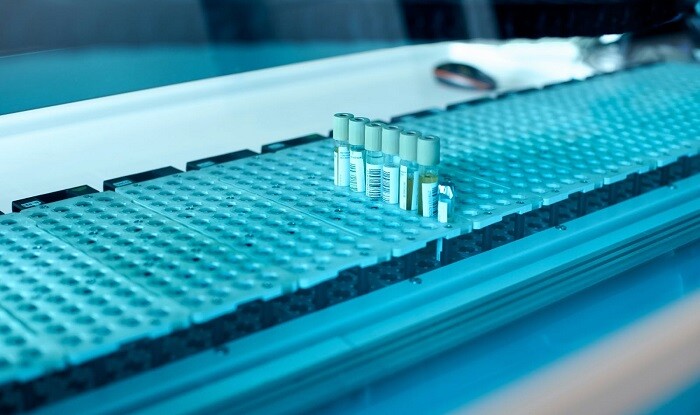
Within the expanding field of peptide-based molecular research, PNC-27 has attracted considerable scientific curiosity due to its unusual structural composition and its theorized interactions with cellular membranes. Unlike many peptides investigated for receptor-mediated signaling, PNC-27 appears to occupy a distinct conceptual space, where structural mimicry and membrane affinity intersect. This hybrid design has led researchers to explore its properties across several experimental domains, particularly in relation to cellular integrity, protein interactions, and targeted molecular recognition.
PNC-27 is a synthetic peptide derived from a segment of the p53 protein, specifically the region associated with binding to HDM-2 (double minute 2). This segment is fused to a membrane residency sequence (MRS), a structural addition that is believed to guide the peptide toward lipid bilayers. The resulting construct has been theorized to combine selective binding potential with membrane-localizing tendencies, creating a molecule that may interact with cells in a manner distinct from classical signaling peptides.
Structural Composition and Molecular Rationale
The conceptual foundation of PNC-27 lies in its partial mimicry of p53, a protein widely recognized for its regulatory involvement in cellular stress responses and genomic stability. The HDM-2 binding domain of p53 plays a central role in modulating p53 activity, as HDM-2 itself is known to regulate p53 through direct interaction. By isolating and incorporating this binding region into PNC-27, researchers have theorized that the peptide may retain affinity for HDM-2 or structurally related proteins.
The addition of the membrane residency sequence introduces a second layer of functionality. This segment is thought to facilitate insertion or association with lipid membranes, potentially positioning the peptide at the interface between extracellular and intracellular environments. Research indicates that this dual-domain architecture might allow PNC-27 to engage in both protein recognition and membrane interaction simultaneously.
Membrane Interaction and Pore Formation Hypotheses
One of the most widely discussed properties of PNC-27 relates to its theorized potential to interact with cellular membranes in a disruptive manner. Research indicates that under certain experimental conditions, the peptide may associate with membrane surfaces and potentially induce structural rearrangements. These interactions have led to hypotheses suggesting that PNC-27 might contribute to the formation of transmembrane pores.
The proposed mechanism involves the peptide binding to membrane-associated targets, followed by aggregation or conformational changes that destabilize lipid organization. It has been hypothesized that such disruptions might alter membrane permeability, allowing the passage of molecules that would otherwise be restricted. This concept aligns with broader investigations into pore-forming peptides, a class of molecules studied for their potential to modify membrane integrity.
HDM-2 Association and Target Recognition Research
The relationship between PNC-27 and HDM-2 remains a central theme in discussions of its molecular properties. HDM-2 is traditionally considered an intracellular protein, yet certain investigations suggest that it might also be present at or near the membrane in some cellular contexts. This atypical localization has prompted researchers to explore whether PNC-27 might recognize and bind to HDM-2 in these regions.
It has been theorized that such binding could serve as a targeting mechanism, guiding the peptide to specific cellular environments. This concept is particularly relevant in research domains focused on differential protein expression, where variations in HDM-2 distribution might influence how PNC-27 interacts with distinct cell populations.
Possible Applications in Cancer Research Models
PNC-27 has been most extensively explored within the context of cancer-related research models. Its theoretical potential to distinguish between cells based on HDM-2 expression patterns has positioned it as a candidate for studying selective targeting mechanisms. Researchers have proposed that the peptide might serve as a tool for probing differences in membrane composition and protein localization across various cellular systems.
In this context, PNC-27 is believed to be used to investigate how structural features of peptides influence their interaction with transformed versus non-transformed cells. The hypothesis that membrane-associated HDM-2 could act as a distinguishing marker has opened avenues for examining how peptides might exploit such differences.
Additionally, the potential pore-forming properties of PNC-27 have prompted interest in its possible role as a model compound for studying membrane disruption. By analyzing how the peptide interacts with lipid bilayers, researchers may gain insights into the broader principles governing peptide-induced permeability changes.
Biophysical and Imaging Applications
Beyond its relevance to oncology, PNC-27 has also been considered in the context of biophysical research. Its membrane affinity and structural specificity make it a candidate for studies involving lipid dynamics, membrane protein interactions, and nanoscale structural changes.
Advanced imaging techniques, such as fluorescence microscopy and electron microscopy, have been employed in some research models to observe how PNC-27 associates with cellular membranes. These approaches may provide visual data on membrane alterations, aggregation patterns, or structural rearrangements induced by the peptide.
Implications for Peptide Engineering
The development of PNC-27 reflects a broader trend in peptide engineering, where functional domains are combined to create molecules with tailored properties. This modular approach allows researchers to design peptides that integrate targeting, binding, and localization potential within a single construct.
PNC-27 is thought to serve as a conceptual template for future peptide design efforts. Its dual-domain structure illustrates how combining a recognition element with a membrane-targeting sequence might yield compounds with unique interaction profiles. Research indicates that such strategies could be extended to other protein targets, potentially leading to a new class of multifunctional peptides.
Theoretical Considerations and Ongoing Questions
Despite the growing interest in PNC-27, several aspects of its behavior remain incompletely understood. The precise mechanism by which it associates with membranes, the nature of its interaction with HDM-2, and the conditions under which it may induce structural changes are all subjects of ongoing investigation.
It has been hypothesized that environmental factors, such as membrane composition, ionic conditions, and peptide concentration, might influence its activity. These variables add complexity to experimental interpretations and highlight the need for controlled and reproducible research models.
Conclusion
PNC-27 occupies a distinctive position within peptide research, characterized by its hybrid structure and theorized dual functionality. By combining a p53-derived binding domain with a membrane residency sequence, the peptide has been hypothesized to engage in interactions that bridge protein recognition and membrane dynamics. Researchers may click here to learn more about the potential of this peptide.


|
Date
2026.06.13 / 22:00
|
Author
Axar.az
|