




Ukraine envoy thanks Azerbaijan for support to children
19:50
| Home page Society |

|
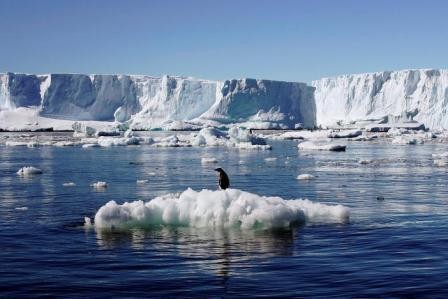
Twenty-four countries and the European Union agreed on Friday to create the world's largest marine park in the Antarctic Ocean, covering a massive 1.55 million square km (600,000 square miles) of ocean.
The Commission for the Conservation of Antarctic Marine Living Resources, meeting in Hobart, Australia, said the Ross Sea marine park would be protected from commercial fishing for 35 years.
The Ross Sea is seen as one of the world's most ecologically important oceans.
The sanctuary will cover more than 12 percent of the Southern Ocean, which is home to more than 10,000 species including most of the world's penguins, whales, seabirds, colossal squid and Antarctic tooth fish.
Fishing will be banned completely in 1.1 million square km (425,000 square miles) of the Ross Sea, while areas designated as research zones will allow for some fishing for krill and sawfish.
Scientists and activists described the agreement as a historic milestone in global efforts to protect marine diversity.
"The Ross Sea Region MPA will safeguard one of the last unspoiled ocean wilderness areas on the planet – home to unparalleled marine biodiversity and thriving communities of penguins, seals, whales, seabirds, and fish," U.S. Secretary of State John Kerry said in a statement, referring to the marine park authority.
Scientists said the marine park would also allow a greater understanding of the impact of climate change.
Russia agreed to the proposal, after blocking conservation proposals on five previous occasions.
The 25-member commission, which includes Russia, China, the United States and the European Union, requires unanimous support for decisions.
"They all have diverse economic, political interests and to get them all to align - especially in the context of there are divergent economic interests - is quite a challenge," Evan Bloom, director at the U.S. Department of State and leader of the U.S. delegation told.


|
Date
2016.10.28 / 09:15
|
Author
Valeh Mammadli
|