


Ukraine says 250 Russians captured in Vivaldi operation
17:23
| Home page World |

|
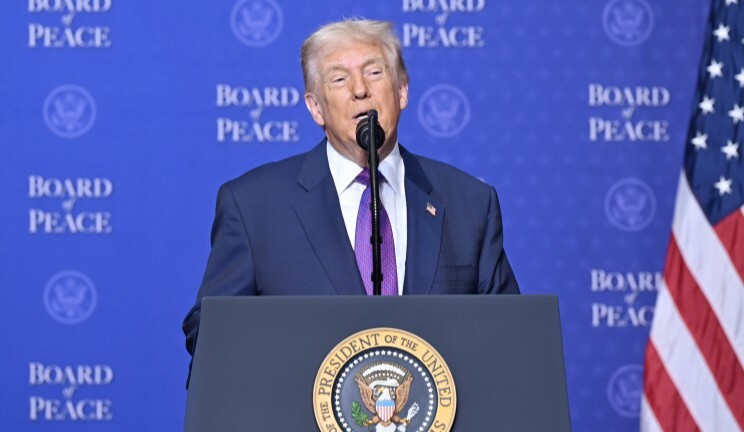
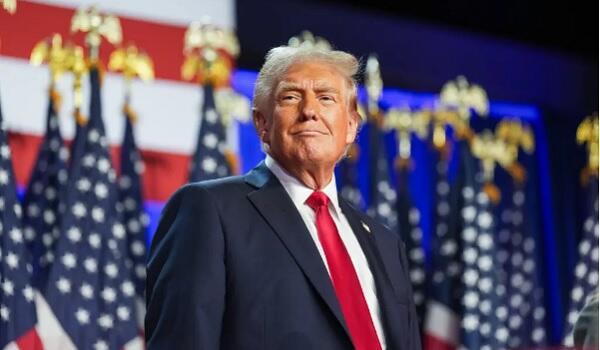
The North Atlantic Treaty Organization, which has ensured peace in Europe since the end of World War II, woke up Wednesday to what seemed like a nightmare: an incoming U.S. president who openly questions the value of the alliance.
During his campaign, Donald Trump repeatedly criticized NATO, calling the organization "obsolete." He also suggested that America might not defend fellow NATO countries that didn't help reimburse the U.S. for the cost of its troops and bases in Europe.
That threat strikes at the foundation of the organization: the principle of mutual defense, that an attack on one is an attack on all. Bruno Lete, a security analyst at the German Marshall Fund, recalls scrolling through colleagues' social media posts the morning after the American election.
"It was as if people would believe that it is the end of the world," said Lete in an interview at the think tank's offices in Brussels. "That it is the end of the trans-Atlantic bonds, that the Americans will no longer have the back of Europe, that we basically lost our only friend on the planet."
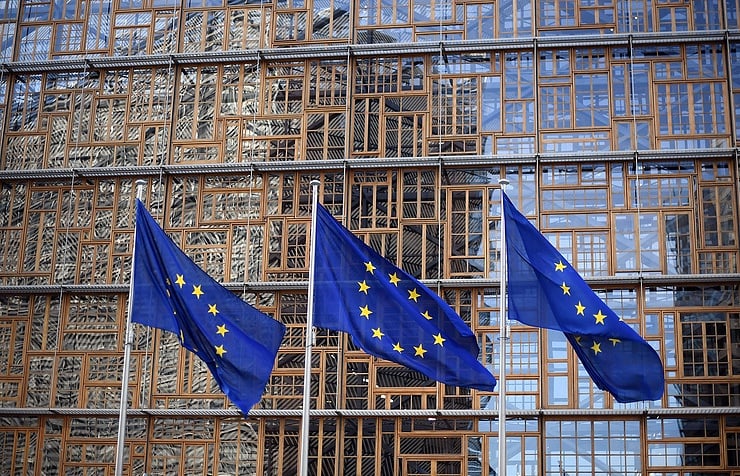
This coming week, European Union foreign and defense ministers will meet in Brussels to discuss greater cooperation on defense and security, according to analysts. The agenda has been in the works for some time, but Trump's election has given it greater urgency.
"In the hours we are living, there is, there will be, an increasing 'demand of Europe' from our neighbors and from our partners worldwide," said Federica Mogherini, the EU's foreign policy chief, in a speech earlier this week. Then, in what seemed a direct reference to the United States under a Trump administration, Mogherini added: "There is and there will be a growing request for a principled global security provider."
Trump's criticism that other NATO allies don't pay their fair share is nothing new and he has a point. NATO has set a goal that nations should spend the equivalent of 2 percent of their GDP on defense, but most don't. However, the idea that the U.S. – the dominant military force in NATO — might not defend an ally frightened many in Brussels and beyond.
Among the most fearful NATO countries are Estonia, Latvia and Lithuania, tiny nations that lie along the Baltic Sea and share borders with Russia. The Soviet Union annexed the Baltics in World War II, but they regained independence after the collapse of the USSR. The countries joined NATO in 2004, which infuriated Russian President Vladimir Putin.
In 2014, Russia invaded and annexed Crimea, an autonomous region of Ukraine. People in the Baltics worry that Russia could target them next. That's why Britain announced last month it was sending about 800 soldiers along with tanks and drones to Estonia as part of a NATO effort to counter Russian aggression. The U.S. is heading up another battle group in Poland; Canada will lead one in Latvia and Germany, in Lithuania.
If Trump's doubts about NATO weren't enough to rattle the Baltics, his complimentary remarks about Putin — a fierce critic of NATO who has threatened repeatedly to "protect" Russian-speaking minorities in the Baltics — has only added to their anxiety and a sense that the liberal, democratic order on the continent is under threat.
"I think the shock and the amazement in Europe is about how much of a rupture president-elect Trump is compared to any other American politicians since 1947," said Jonathan Eyal, international director at the Royal United Services Institute, a military think tank in London. Eyal said Trump is creating a dangerous "perception that Washington no longer cares about its formal strategic alliances."
Eyal says past American presidents were motivated by the shared values of democracy and freedom that bind NATO nations together. Trump, he says, is completely different. He sees the relationship with NATO as transactional and is focused on what's in it for him and the United States. Eyal says that has the Russians hoping that Trump is the kind of leader willing to cut a geopolitical deal.
"I think there are a lot of people in Moscow who see the real estate and property tycoon as being absolutely right and ready for a division into the spheres of influence between Russia and the United States," Eyal said in a phone interview.
Eyal emphasized he doesn't think Europe will be carved up, but he worries about Trump creating misperceptions in the Kremlin.
Since Trump made many grand claims and criticisms during the presidential race, analysts in Brussels hope his harsh words about NATO were mostly campaign rhetoric. And they hope he will change his mind about the military alliance when he attends a NATO summit in Brussels scheduled for next year.
Lete, of the German Marshall Fund, suggested the organization adopt a pragmatic approach and appeal to Trump's way of thinking.
"NATO in fact could be described as an insurance policy for American prosperity," says Lete. "Having these expensive U.S. soldiers in Europe basically guarantees that American business investments in Europe can operate in a stable environment."
"Mr. Trump has been a talented businessman," Lete continued. "I do believe that he will understand that investments need to be protected."


|
Date
2016.11.12 / 15:26
|
Author
Axar.Az
|