

Rainy weather expected tomorrow
18:10
| Home page World |

|
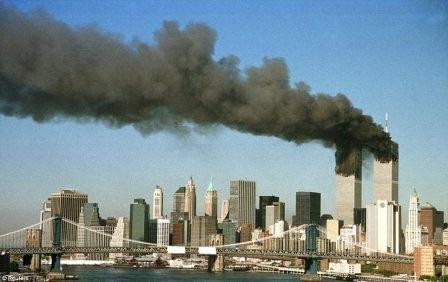
The 9/11 terrorist attacks had unbelievable effects on the world. We still feel the consequences today. It was a turning point for the U.S.A,, and recently was the 15th anniversary of the incident. Over these years some facts were forgotten or were never known. From USA Today, we put together 10 things that happened that day and before.
1. We don't know how the hijackers got into the cockpits of some of the planes
The comprehensive report of the commission created to investigate the attacks, which was published in 2004, said no one could determine how the hijackers were able to get into the cockpits of the four commercial airliners they hijacked. A flight attendant on American Flight 11 "speculated that they had 'jammed their way' in," the 9/11 report said.
2. Passengers and crew aboard the planes provided critical information
Those aboard the four hijacked flights called family and friends from their cellphones or used the aircrafts' radio communications to report the hijackings. That alerted authorities to the hijackings and enabled them to understand why they could not track the planes after their navigation systems were turned off.
3. Light passenger loads made it easier for the hijackers to maneuver
American 11, bound from Boston to Los Angeles, had 81 passengers on board out of a possible 158, according to the 9/11 report and aircraft data.
United 175, which also left Boston for Los Angeles, had 56 passengers out of a possible 168. That was a "load factor" of 33%, considerably lower than the 49% average for that flight, a federal investigation showed.
American 77, headed to Los Angeles from Washington, had 58 passengers out of a capacity of 176, the 9/11 report and other reports said.
United 93, bound from Newark, N.J., to San Francisco, had only 37 passengers for a 20% load factor, which was far below the normal 52%.
4. A missing hijacker made it easier for United 93 passengers to storm the cockpit
This is the only one of the four hijacked flights that did not strike its intended target, the U.S. Capitol. Some of that is because it was the only one that had four hijackers instead of the five that took down American 11, American 77 and United 175. "The operative likely intended to round out the team for this flight, Mohamed al Kahtani, had been refused entry by a suspicious immigration inspector at Florida’s Orlando International Airport in August," the 9/11 report said. As the passengers were just seconds away from getting into the cockpit, the hijacker at the controls crashed the plane in an empty field in Shanksville, Pa., just 20 minutes flying time from Washington.
5. The World Trade Center had been targeted before
New York’s World Trade Center held an iconic status for terrorists even before 9/11. Shortly after noon on Feb. 26, 1993, a bomb planted in a van parked in the center’s underground parking garage exploded, killing six people and wounding more than 1,000, the 9/11 report said. "The bombing signaled a new terrorist challenge, one whose rage and malice had no limit," the 9/11 report said. "Ramzi Yousef, the Sunni extremist who planted the bomb, said later that he had hoped to kill 250,000 people."
6. Vice President Cheney ordered United 93 to be shot down
Before the passengers forced the crash of United 93, then-vice president Dick Cheney gave the approval for the plane to be shot down before it could reach Washington, the 9/11 report said.
"The Vice President authorized fighter aircraft to engage the aircraft," the report said.
However, the report added, the Air Force fighters that were
airborne at the time probably would not have found and reached
United 93 in time. Military "officials have maintained consistently
that had the passengers not caused United 93 to crash, the military
would have prevented it from reaching Washington, D.C.," the 9/11
report said. "That conclusion is based on a version of events that
we now know is incorrect."
7. Earlier plots also targeted commercial aircraft
Ramzi Yousef, who planned the 1993 World Trade Center bombing, had planned a massive attack on 12 U.S. airliners over the Pacific in 1995, the 9/11 report said. Yousef worked with his uncle, Khalid Sheikh Mohammed, to devise the plot, the report said. Mohammed later became one of the masterminds of 9/11. Yousef was arrested in Islamabad, Pakistan, on Feb. 7, 1995, after an accomplice turned him in, the report said. The Manila plot was never carried out.
8. The U.S. worked on multiple attempts to kill Osama bin Laden before 9/11
The CIA and other agencies developed a plan to capture bin Laden in early 1998, the report said. That was delayed and then revived, but it was hampered by concerns from military officials about relying on Afghan tribal leaders. Then-national security adviser Sandy Berger was concerned about what would be done with bin Laden if he was captured and whether the evidence against him could lead to a criminal conviction in a U.S. court. After the U.S. embassies in Kenya and Tanzania were bombed on Oct. 8, 1998, President Bill Clinton authorized cruise missile strikes against bin Laden’s compound in Afghanistan. He survived but was later killed by a Navy SEAL team in May 2011.
9. The CIA warned President Clinton about hijackings in 1998
In the Dec. 4, 1998 President’s Daily Brief from the CIA, the agency told Clinton that "Bin Ladin Preparing to Hijack US Aircraft and Other Attacks." The plan, the agency said, was to hijack the planes to gain the release of Yousef and other terrorists, the 9/11 report said.
10. Saudi Arabia had multiple ties to the hijackers
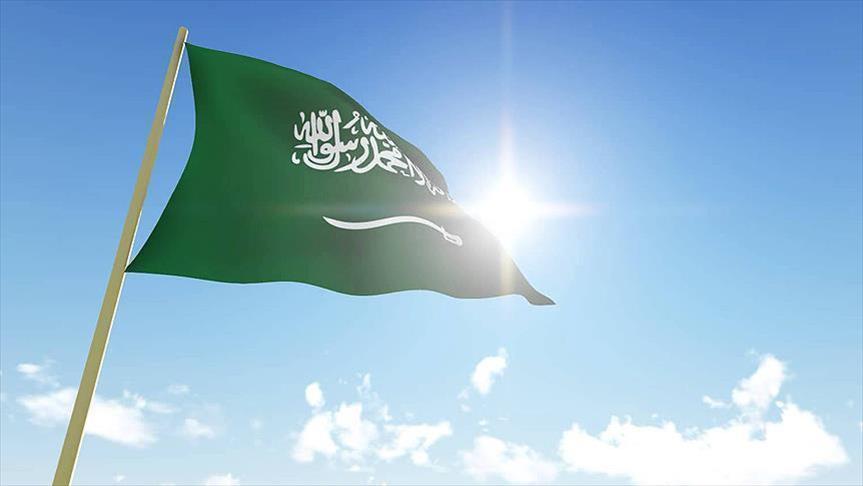
When the 9/11 report was released in 2004, 28 pages of material remained classified and the subject of intense speculation about their contents. Those pages, which were released in July, showed multiple links to associates of Saudi Arabian Prince Bandar, the former longtime ambassador to the United States. The documents, as USA TODAY reported in July, "show possible conduits of money from the Saudi royal family to Saudis living in the United States and two of the hijackers in San Diego. The documents also indicate substantial support to California mosques with a high degree of radical Islamist sentiment." The pages were not released, because the details contained in them had not been confirmed or shown to be relevant to the 9/11 attacks. Fifteen of the 19 hijackers were from Saudi Arabia.


|
Date
2016.11.07 / 12:29
|
Author
Axar.az
|