







.jpg)



Azerbaijani, Turkish FMs discuss bilateral ties in Baku
00:51
| Home page History |

|
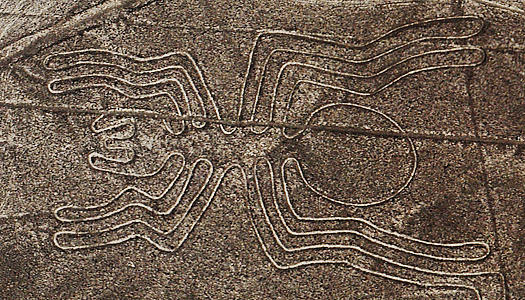
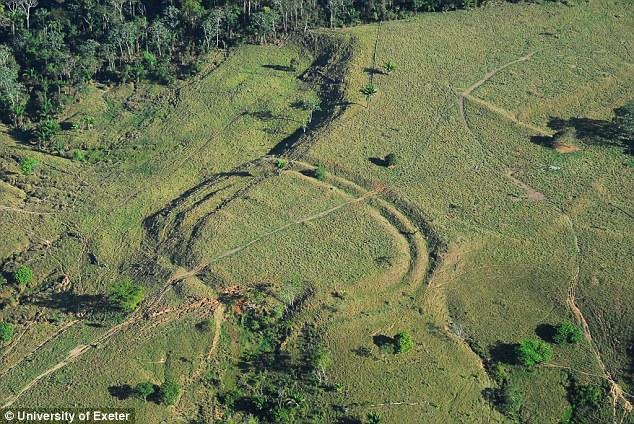
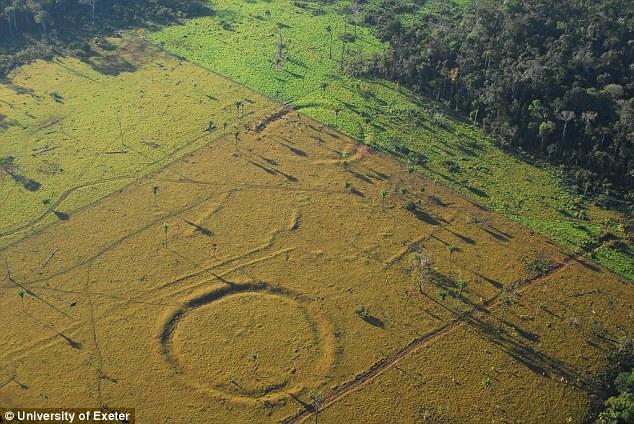
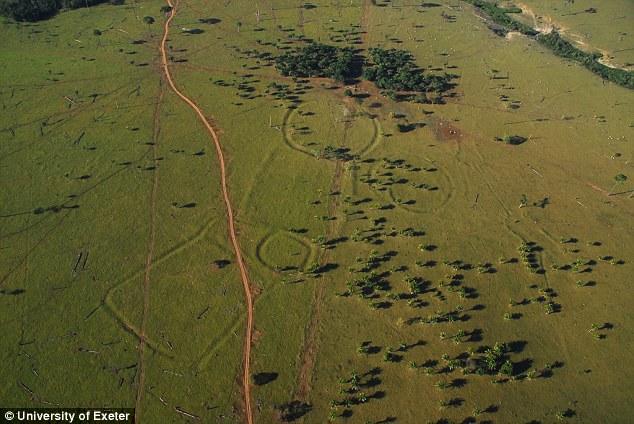
Hundreds of mysterious structures built into the Earth more than two thousand years ago have been discovered in the Amazon rainforest.
The remarkable earthworks have long remained hidden by trees – but, deforestation in recent years has unearthed more than 450 massive geoglyphs.
While little is known of their purpose, it’s thought that these ditched enclosures were once used sporadically as ritual gathering places.
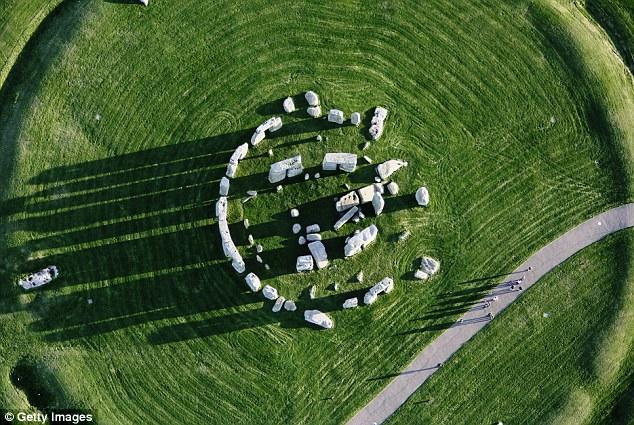
The Stonehenge-like ditches take up roughly 8,078 square miles (13,000 square kilometers) Acre state, in the western Brazilian Amazon.
According to the researchers from the UK and Brazil, the find suggests the rainforest isn’t as ‘untouched’ as previously thought.
‘The fact that these sites lay hidden for centuries beneath mature rainforest really challenges the idea that Amazonian forests are ‘pristine ecosystems,’ said Dr Jennifer Watling, a post-doctoral researcher at the Museum of Archaeology and Ethnography, University of Sao Paulo.
‘We immediately wanted to know whether the region was already forested when the geoglyphs were built, and to what extent people impacted the landscape to build these earthworks.’
The researchers reconstructed 6,000 years of vegetation and fire history around two of the geoglyph sites, revealing heavy alterations by ancient humans.
Humans altered the bamboo forests for millennia, they say, creating small, temporary clearings to build these mysterious structures.
The team collected soil samples from pits dug within and outside of the geoglyphs.
Then, they analysed ‘phytoliths’ – a type of microscopic plant fossil made of silica.
This allowed them to reconstruct the ancient vegetation and charcoal quantities, assess the amount of forest burning and carbon stable isotopes, and determine how ‘open’ the vegetation used to be.
The investigation revealed that the indigenous people didn’t burn large tracts of forest, whether for geoglyph construction or agricultural practices.
Instead, they concentrated on economically valuable tree species, such as palms, transforming their environment in the process to create a ‘prehistoric supermarket.’
And, the biodiversity of some of Acre’s remaining forests may have roots in these ancient ‘agroforestry’ practices, the researchers say.
The findings will be published in the Proceedings of the National Academy of Sciences.
‘Despite the huge number and density of geoglyph sites in the region, we can be certain that Acre’s forests were never cleared as extensively, or for as long, as they have been in recent years,’ Dr Watling said.
‘Our evidence that Amazonian forests have been managed by indigenous peoples long before European Contact should not be cited as justification for the destructive, unsustainable land-use practiced today.
‘It should instead serve to highlight the ingenuity of past subsistence regimes that did not lead to forest degradation, and the importance of indigenous knowledge for finding more sustainable land-use alternatives.’


|
Date
2017.02.07 / 13:12
|
Author
Axar.az
|