
Nations League third-round matches completed
00:54
| Home page Politics |

|
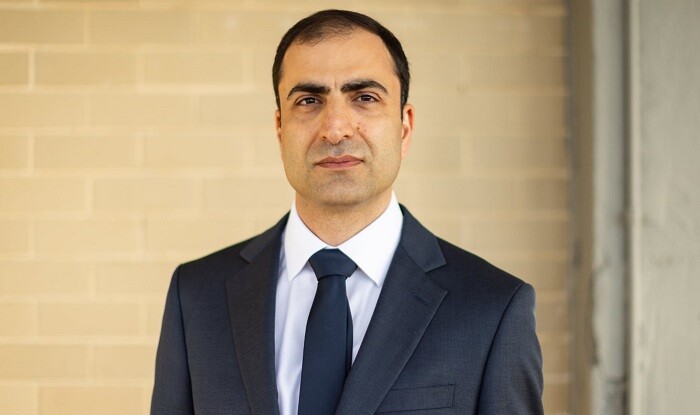
Iran is experiencing its most severe internal crackdown in decades. Speaking from Washington, D.C., Sharafedin draws on extensive reporting and sources inside the country to assess the scope of the repression and its regional and international implications.
Axar.az reports that in an exclusive interview, Bozorgmehr Sharafedin, an Iranian-British journalist and documentary filmmaker, offers an in-depth assessment of the current situation inside Iran and the international response to the unfolding crisis. Sharafedin is the head of the digital news service at Iran International news channel, and is based in Washington, D.C. He is also the author of the forthcoming book Stolen Revolution: Betrayal and Hope in Modern Iran.
- What is your overall assessment of what is currently happening inside Iran? Based on observations and reports, can it be said that the country is effectively under an undeclared state of martial law?
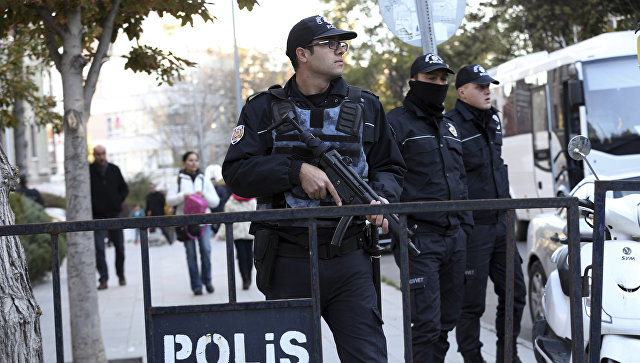
- We are seeing a heavy presence of security forces on the streets across the country. This includes armed soldiers, armored vehicles, and riot police. In most cities, shops and other businesses shut down after 4 p.m. Many people do not leave their homes after that. Those who do are questioned by security forces. Although no formal curfew has been announced, the scale of the security presence and restrictions means that, in practice, a curfew is in effect.
The heavy deployment of police and armed forces has two main goals. First, they are trying to prevent the formation of gatherings and new street protests. Second, the security forces are trying to erase visual evidence of the recent massacre in Iran. They are confiscating mobile phones, deleting stored photos and videos, and arresting individuals who possess any footage of the demonstrations.
Security forces have also raided homes and destroyed satellite dishes, which are the main source of information for many Iranians who rely on Persian-language satellite television channels — including Iran International — for news.
- Due to the near-total internet shutdown by the government, there are no precise figures on the number of those killed. According to Iran International’s estimates, around 12,000 people have been killed so far, with some sources citing even higher numbers. What is your assessment of these figures, and what methods has the Iranian government used to suppress the population?
- According to Iran International’s sources, at least 12,000 people have been killed over two days, on January 8 and 9. The total number of casualties could be much higher. Some outlets have said 20,000 or even 30,000. This would be the deadliest episode of state violence in Iran’s modern history, surpassing even the mass executions of 1988.
What makes the situation particularly disturbing is that the shooting was not aimed at dispersing protesters or enforcing crowd control. They had a shoot-to-kill approach. Many protesters were shot in the back. Some were killed in the city of Rasht as they had surrendered. There are testimonies that some protesters were trapped in dead-end alleys and shot dead. Human rights groups have also reported cases in which wounded individuals were killed by security forces on the streets and in hospitals.
Security forces were clearly operating with zero tolerance and no mercy. They were applying war-zone tactics in Iranian cities against civilians. There are also reports that chemical agents or poisonous gases may have been used to disperse some protesters, though they are not confirmed yet.
- What methods have Iranians used so far to confront the government, and now that street protests have declined, what options remain available to them? Especially considering reports of some Iranians leaving via the Turkish border, can it be said that people inside Iran are in a safe situation?
- We are still hearing about some sporadic protests, though they are not as widespread or as large as those of the past week. At night, many people continue to chant slogans against the Supreme Leader and the Islamic Republic from rooftops.
The repression is ongoing. Tens of thousands of people have been arrested, and there are many accounts of torture and beatings in detention. Some detainees have been stripped naked and left in the cold winter weather for hours.
Thousands of people have suffered eye injuries. Many have been shot but are afraid to go to hospitals. People have taken wounded individuals into their homes and are treating them without access to proper medical equipment. Security forces continue to raid homes, and arrests are ongoing.
What do you expect to happen next?
Over the past decade or so, Iran has experienced protests almost every two years, with each round stronger than the one before. Each wave of protests has included broader layers of society and grown in intensity.
The state has relied on force to suppress these movements, but they have continued to return, each time larger and stronger. The most recent round of killings will, without doubt, generate deep anger across the country. When speaking to people inside Iran, many say they know someone who has been killed or injured. This level of anger will create a societal pressure that no government can indefinitely survive.
- How do you assess the sudden shift in the Trump administration’s position?
- It is still too early to draw firm conclusions about Trump’s intentions. In my view, a U.S. strike against Iran has been delayed, not stopped. The administration still seems to be assessing the scale and timing of any possible action.
The aircraft carrier USS Abraham Lincoln, which had been in the South China Sea, is now en route to the Middle East and could arrive within a week. So the scenario of a U.S. attack on the Islamic Republic is still possible.
Trump has previously acted on his threats against Iran. One example was the killing of Qasem Soleimani, the former head of the Revolutionary Guards’ Quds Force in 2020. Trump also struck Iranian nuclear facilities in June.
Trump’s tone on Iran remains firm. On Saturday, Trump called for an end to the rule of Khamenei. In an interview with Politico, he called Khamenei “a sick man” and said his rule must come to an end.
- What role do regional and extra-regional countries play in the overall U.S. strategy toward Iran?
- Regional countries have for years called for a change in Iran’s behavior, mainly its interference in the domestic affairs of its neighbors. But they remain cautious about supporting any military attack against Iran, out of fear of retaliation.
Western governments have been more vocal in their criticism this time, but their response has been limited to diplomatic measures. There has been no support for military action against Iran comparable to past interventions, such as in Libya, where France and the United Kingdom played significant roles in the downfall of Muammar Gaddafi.
In recent weeks, new rounds of sanctions have been imposed on the Islamic Republic, and a number of countries have evacuated their embassies. But the move seems to be a precautionary step to protect diplomatic staff, rather than an effort to downgrade or sever diplomatic relations.


|
Date
2026.01.19 / 16:26
|
Author
Yusif Güney
|