



Von der Leyen calls Ceuta migrant crossings unacceptable
19:19
| Home page Politics |

|
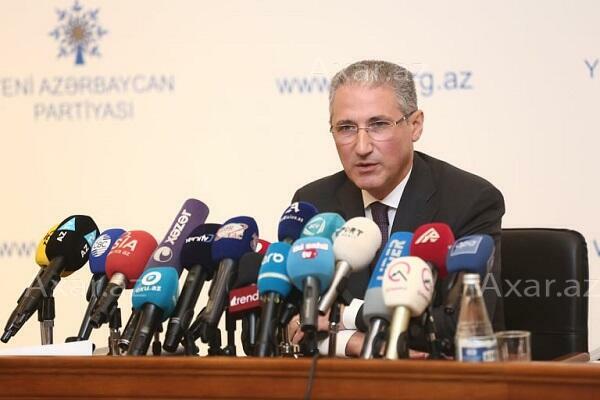
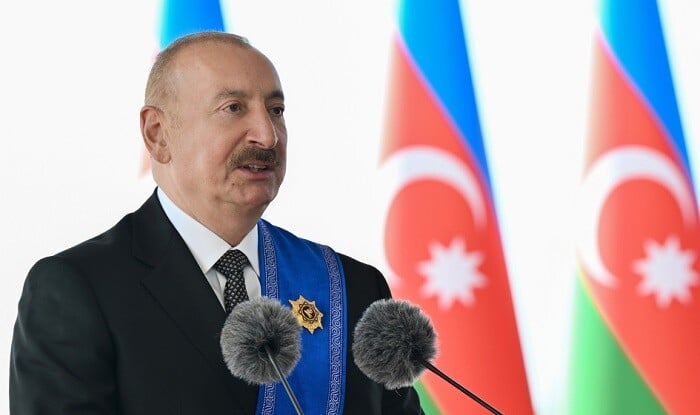
Azerbaijan’s Presidential Representative on Climate Issues, Mukhtar Babayev, participated in a high-level session on early warning and disaster risk reduction within the framework of the Regional Ecological Summit (RES 2026) held in Astana, Kazakhstan.
Axar.az reports that Babayev shared the information on his X account.
“Joined the high-level session on early warning and disaster risk reduction at RES 2026 in Astana, Kazakhstan.”
He noted that extreme weather events are increasingly being identified as a major risk across different time horizons:
“What stands out is how extreme weather events are increasingly identified as a major risk across short-, medium- and long-term horizons, while climate risks continue to accelerate - with rising temperatures, intensifying extremes and rapid glacier loss increasing exposure to floods, droughts and other hazards.”
Babayev emphasized that this is already being observed in Central Asia:
“In Central Asia, this is already visible. Glacier retreat is creating new risks, including glacial lake outburst floods, with implications for both mountain and downstream communities.”
According to him, efforts are ongoing in Azerbaijan to strengthen early warning systems and climate risk monitoring:
“In Azerbaijan, work continues on strengthening early warning systems and climate risk monitoring. The submission of the first National Adaptation Plan at COP29 adds to this direction, helping to frame risks more systematically and guide response.
At the same time, recent COP outcomes from scaling up adaptation efforts to operationalising support for loss and damage are gradually shifting the focus toward implementation.”


|
Date
2026.04.26 / 09:31
|
Author
Axar.az
|