



Ronaldo invests €10 million in mineral water production
14:55
| Home page Science |

|
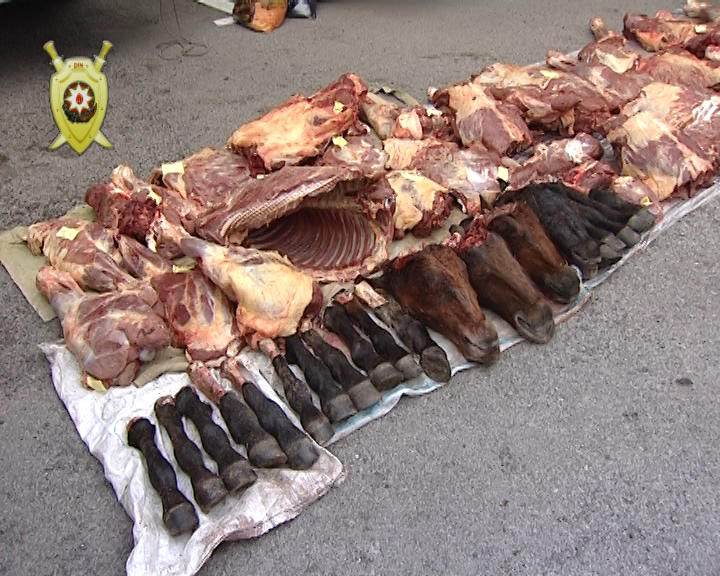
A new study finds that global wildlife trade significantly increases the risk of animal-to-human pathogen transmission, with risk rising the longer species remain in trade networks.
Axar.az reports that the researchers analyzed 40 years of global data on traded mammals, combining wildlife trade records from sources including CITES and U.S. import databases with a large pathogen-host dataset (CLOVER).
Their analysis, published in Science, covered more than 2,000 mammal species and examined whether traded species are more likely to share pathogens with humans compared to non-traded species.
The study found that traded mammals are substantially more likely to be zoonotic hosts. Among 2,079 traded species, 41% shared at least one pathogen with humans, compared with 6.4% of non-traded mammals. Overall, traded mammals were about 1.5 times more likely to carry pathogens shared with humans, even after controlling for factors such as evolutionary relatedness, geography, research effort, and human consumption.
Live-animal trade was identified as a particularly high-risk interface. Species found in live-animal markets were more likely to share pathogens with humans than those traded only as products, reflecting increased opportunities for transmission due to prolonged and direct contact between humans and live animals. The study also found mixed results for illegal trade: in some models it was associated with higher pathogen sharing, but the effect was not consistent across analyses.
A key finding of the study is that the length of time a species spends in trade strongly predicts how many pathogens it shares with humans. On average, a wild mammal species was estimated to gain one additional pathogen shared with humans for every 10 years it remains in the global wildlife trade.
The authors emphasize that wildlife trade involves repeated and sustained human-animal interactions across multiple stages, including capture, transport, storage, and market sale, all of which increase opportunities for cross-species transmission. They note that both zoonotic spillover (animal-to-human transmission) and reverse transmission (human-to-animal infection) can occur in these settings.
The study concludes that wildlife trade is a major structural driver of zoonotic pathogen emergence and that cumulative exposure over time increases future risk. The authors highlight the need for stronger biosurveillance and regulatory approaches that incorporate pathogen risk alongside conservation concerns, particularly as new species continue to enter global trade networks.


|
Date
2026.04.11 / 22:42
|
Author
Axar.az
|