

'Flying Doctor' helicopter crashes in Malaysia
16:13
| Home page World |

|
A confidential U.S. intelligence community assessment delivered to senior policymakers concludes that Iran could endure the U.S. naval blockade of the Strait of Hormuz for at least three to four months before facing severe economic strain.
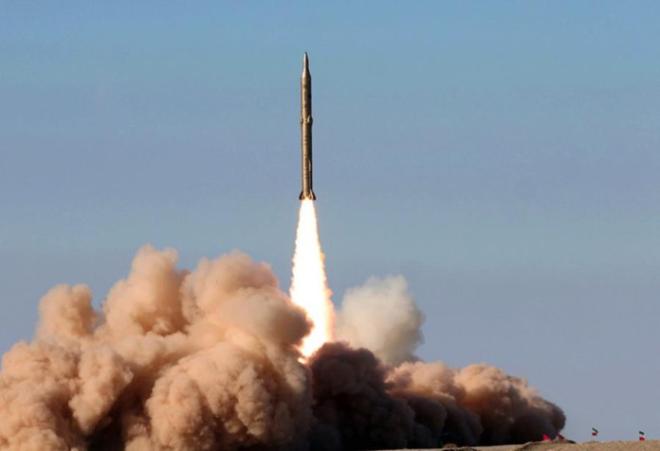
Axar.az reports, citing the Washington Post, the assessment, compiled by the CIA and other intelligence agencies, also finds that Iran has retained significant military capabilities despite weeks of strikes and disruption, including a large share of its missile and drone arsenal.
One U.S. official said Iran still holds roughly 75% of its prewar stock of mobile missile launchers and about 70% of its missile inventory. “There is evidence they have been able to recover and reopen almost all of their underground storage facilities,” the official said, adding that Tehran has also repaired damaged systems and assembled missiles that were near completion when the war began.
The findings appear to contrast with public statements by President Donald Trump, who has described Iran’s military as heavily degraded. “Their missiles are mostly decimated… they have probably 18, 19 percent,” Trump said Wednesday, while praising the effectiveness of the U.S. naval blockade.
A senior U.S. intelligence official, defending the administration’s strategy, said the blockade was still inflicting significant damage. “The President’s blockade is inflicting real, compounding damage — severing trade, crushing revenue, and accelerating systemic economic collapse,” the official said, adding that Iran’s leadership was “in hiding.”
However, one official familiar with the assessment said Iran’s ability to withstand pressure may be underestimated. “The leadership has gotten more radical, determined and increasingly confident they can outlast U.S. political will,” the official said.
The intelligence report also suggests Iran may be adapting economically by storing crude oil on tankers and exploring alternative export routes, including overland shipments, to mitigate the impact of the blockade.
Despite the disruption, Iran is believed to have maintained thousands of drones and more than 2,000 ballistic missiles, which analysts say continue to pose a regional threat, particularly to maritime traffic in the Gulf.
The assessment comes as Washington continues its blockade and diplomatic efforts with Tehran remain fragile, with both sides reportedly exploring temporary arrangements to stabilize the situation around the Strait of Hormuz.


|
Date
2026.05.07 / 23:33
|
Author
Axar.az
|