


Azerbaijan marks 6 years since Khudafarin Bridge liberation
09:12
| Home page World |

|
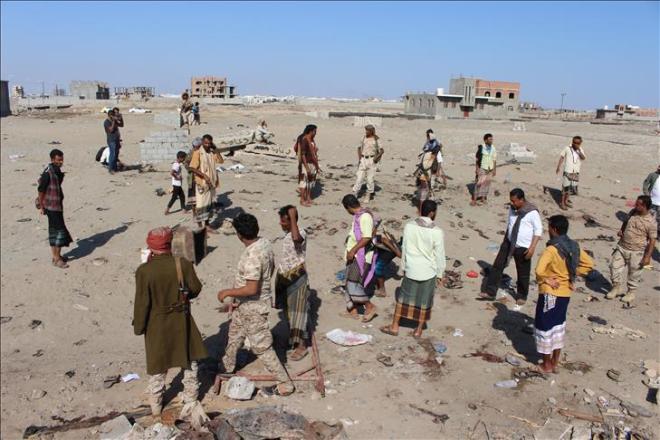
The year 2026 is not only a year of reporting, but also a year of redefining direction.
Axar.az reports that Executive Director of the United Nations Human Settlements Programme (UN-Habitat), Anaclaudia Rossbach, made a statement during the ministers’ meeting held within the framework of WUF13.
“I am honored to participate at a time when we are marking a critical moment. Ten years ago, member states adopted the New Urban Agenda at the United Nations Conference on Housing and Sustainable Urban Development held in Quito. Ten years from now, the 20-year implementation period of the agenda will come to an end.
This means that 2026 is not only a reporting year, but also a year of redefining direction. It is a year to ask what has worked, what has not progressed quickly enough, and what should be done differently.
The New Urban Agenda remains the most important global framework for housing and sustainable urbanization. This document reminds us that cities and human settlements are not only places where problems collide, but also spaces where solutions can be implemented on a large scale.
Over recent decades, we have witnessed real progress. National urban policies are now recognized as key tools for coordinated urban development.
Around 160 countries have adopted or are preparing urban policy frameworks, or have integrated them into national development strategies. More than two-thirds of countries have adopted national housing policies, with affordability receiving the greatest attention.
Around 300 cities and subnational governments have published local reports, helping align local actions with national priorities and global commitments.
Local priorities are also increasingly reflected in climate policies. The share of nationally determined contribution documents incorporating urban contexts increased from 49 percent in 2021 to 80 percent in 2025. These are important achievements, but they are not enough.
The Secretary-General’s progress report on the implementation of the New Urban Agenda shows that implementation remains uneven and insufficient in many areas.
Too often, commitments have not translated into sustained investments, local-level results, and measurable improvements in people’s lives. The housing issue clearly demonstrates this.
Today, more than one billion people around the world live in slums or informal settlements. Over the past decade, an additional 120 million people have moved into or begun living in such areas.
Pressures related to housing affordability affect families across different regions and income groups, as housing construction in many cities is failing to keep pace with demand.
Homelessness, one of the most severe forms of housing deprivation, is becoming a growing problem in both developed and developing countries.
These are not isolated problems affecting only a few cities or countries. They are shared development challenges that limit people’s access to jobs, education, healthcare, transport, services, safety, and opportunities.
At the same time, their lives are increasingly exposed to climate and natural disaster risks. In many cities, poor populations are the most vulnerable to threats such as floods, heatwaves, and landslides.
The Secretary-General’s report shows that risk levels in cities are rapidly increasing, with more than 80 percent of cities facing serious threats.
That is precisely why focusing on housing at the 13th World Urban Forum is so important.
If we want to accelerate the implementation of the New Urban Agenda, adequate housing must be recognized as a key driver of sustainable development. This is not merely a separate sector or only an issue of housing supply.
It is a matter of land. It is a matter of infrastructure. It is a matter of finance. It is a matter of governance, climate action, and human rights.
Therefore, the next decade must become a period of large-scale implementation.
This means integrated housing policies must prioritize people at risk of being left behind, including those living in informal settlements and those facing the risk of homelessness.
This means large-scale slum upgrading programs.
It means linking housing with land, transport, jobs, public spaces, infrastructure, and services so that housing becomes a pathway to inclusion and opportunity.
It means stronger financial systems, including public investment, municipal finance, land-based financing instruments, development finance, and partnerships supporting long-term affordability.
It also requires more active participation from communities, civil society, the private sector, and development partners. However, this role must be coordinated.
And finally, it means better data and monitoring.
We cannot accelerate a process that we cannot measure.
Therefore, this ministerial meeting is an important opportunity to assess implementation during the first decade, place adequate housing at the center of urban transformation for the next decade, and build political momentum for the General Assembly’s midterm review of the New Urban Agenda to be held in July.
UN-Habitat stands ready to support member states, local and regional governments, and all partners in this area.
Our new urbanization plan includes land resource management, improving data on informal settlements, and accelerating sustainable urbanization.
As we open today’s discussions, I call on ministers and all participants to contribute to the accelerated implementation of the New Urban Agenda.
The midterm review should not be merely a reporting exercise.
Let us use this meeting to renew political will and ensure that the New Urban Agenda delivers real improvements in people’s lives over the next decade."


|
Date
2026.05.17 / 12:12
|
Author
Axar.az
|