

Black Sea security requires comprehensive solution
23:11
| Home page World |

|
Since Donald Trump’s shock victory, fingers of blame have been pointed in all manner of directions. The perceived failure of Hillary Clinton, the popularity of third party candidates and the absence of everyman Bernie Sanders being three points to be heralded time and time again.
But in the tech world, Facebook has undoubtedly been the most vocally chastised. From reports that fake election news got more attention than real stories on Facebook to reports some of the company's own staff have now forged an unofficial task force to address the problem, it would be fair to say the social media site's reputation has not come out of this election well. Mark Zuckerberg is far from pleased with claims that Facebook’s fake news influenced the election, rejecting them as “crazy”.
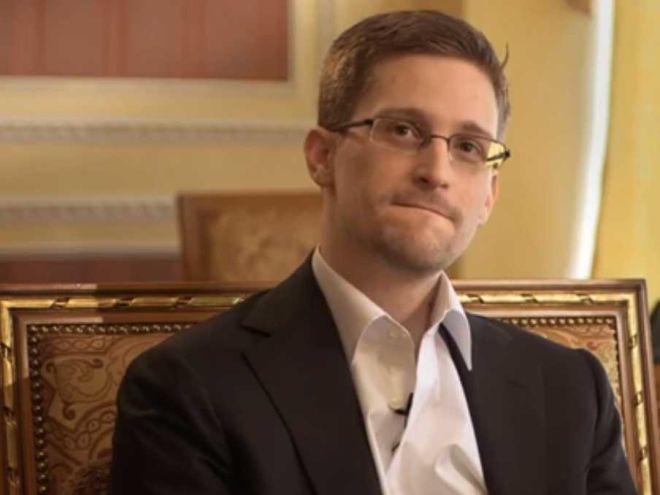
Edward Snowden has now waded into discussions about the role of Facebook in the election. The exiled NSA whistleblower suggested that the real problem is not the fake news itself but the fact the electorate could be so easily duped by it.
Snowden also said the problem lay in the lack of competition in the sphere of social media and the fact Facebook, Twitter and other key players are the only news source for so many people.
“There is a big controversy happening right now, about this election particularly, regarding Facebook,” Snowden said at Fusion’s Real Future Fair via Snowbot - a bizarre telepresence robot device which allows you to make video calls to a screen on remote control wheels.
“There is this claim – it hasn’t really been proved, it hasn’t really been substantiated, but it’s getting pretty popular – that Facebook rigged the election because they showed fake news”.
“If that was true, if that was possible, and Facebook just put on fake news up and down their pages all day long, and we were persuaded by that, I think that’s actually very sad indictment of our democracy that our voters could be so easily misled”.
“Where it true and there is some evidence that it may be - this gets into a bigger challenge, which is the lack of competition.”
“There seems to be no alternative to the largest services. Because of this network effect, because of the first mover advantage. When you get a Google or a Facebook or Twitter in place, they never seem to leave”.
Snowden criticised the centralisation of power in the sphere of social media, warning that the monopolisation of power can lead to dangerous consequences. He suggested that when one platform makes a mistake or a bad choice, everyone else is forced to suffer.
Snowden instead proposed a federalist vision of Facebook where numerous interconnected Facebook sites exist and can all propose their own rules.
“The Silicon Valley desire for massive, world-eating services, the scale that takes over not only our country but all others, it’s asking us to accept a status quo where we set aside that competition in favour of scale. We should be particularly cautious about embracing this and taking this to be the case.”
“There seems to be no alternative to the larger services. Because of this network effect, because the first mover advantage. When you get a Google or a Facebook or Twitter in place, they never seem to leave".
“To have one company that has enough power to reshape the way we think, I don’t think I need to describe how dangerous that is”.


|
Date
2016.11.18 / 10:14
|
Author
Axar.az
|