
UN Chief meets Iranian FM in New York
13:16
| Home page Politics |

|
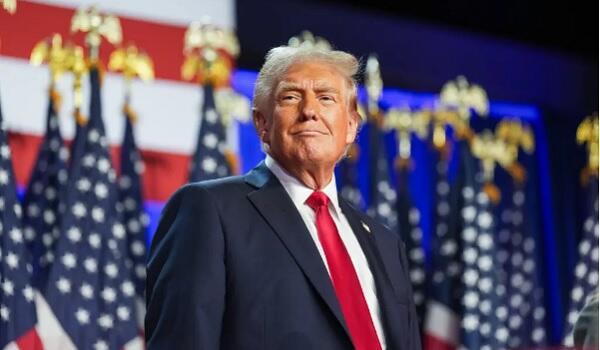
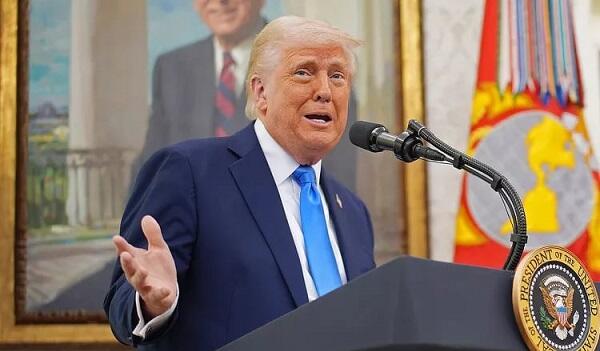
President Trump is clearly trying to put pressure on the Iranian government by expressing his support for the protesters and by threatening to take punishing action
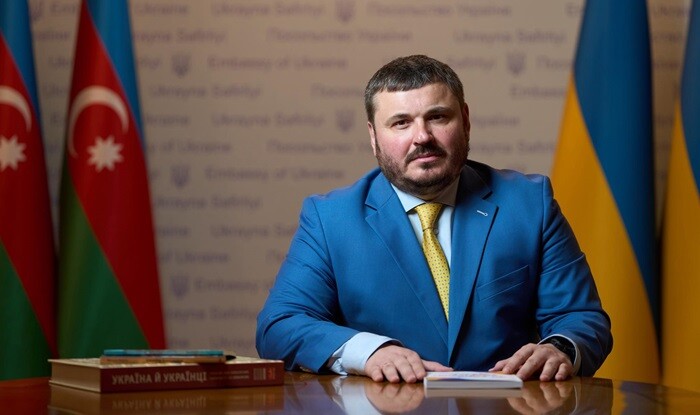
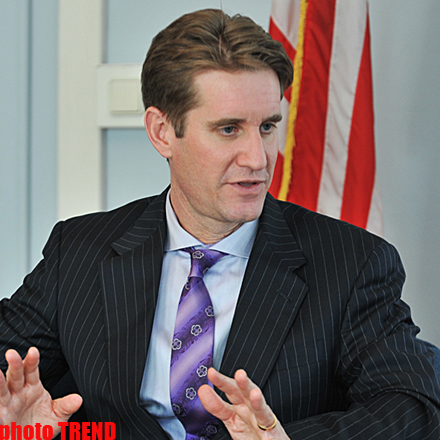
Axar.az reports that Matthew Bryza, former U.S. Ambassador to Azerbaijan and international political expert, in an exclusive interview, spoke about the ongoing protests in Iran and the possibilities of the US intervention.
- Is the United States actively shaping events in Iran, or mostly watching from the sidelines?
I have no idea what the United States might be doing underground in Iran in terms of intelligence operations, but President Trump is clearly trying to put pressure on the Iranian government by expressing his support for the protesters and by threatening to take punishing action, even military action against the regime in Tehran if they kill protesters and then he changed his statement to say if they execute protesters. And then yesterday, President Trump seemed to de-escalate by saying that, well, Iran is not executing any protesters, so that makes President Trump, in his mind, look strong.
- What real tools does Washington have right now — beyond sanctions and statements?
The other tools the US has, as I said, it could be intelligence operations or it could be military actions that Washington could take. We know that Israel, back in June during the 12-day war, assassinated a number of Iranian military officials as well as a nuclear scientist. So President Trump and a spokesperson have said all options are on the table. So those are the possibilities, but it seems pretty clear President Trump prefers not to use military force. And I don't even know how, how it could possibly, how there could be a military action that could either protect the protesters or lead to political change in Iran, even though the US military proved how incredibly capable it is in Venezuela when it captured and then rendered to the United States for trial a former Venezuelan president, Nicolas Maduro.
- How do Iran’s protests change U.S. calculations in the Middle East and South Caucasus?
I don't think Iran's protests change US calculations really at all in the South Caucasus or in the Middle East at this point because it's just the latest round of protests of which there have been several in the past. So there won't be changes in US policies until there's change in Iran, and there may not be change in Iran.
- What mistakes has the U.S. made in responding to unrest in Iran?
In terms of what mistakes the US has made, I think it is a mistake for President Trump to express support and encouragement of the protesters because that actually weakens the protesters by helping the regime in Tehran be able to argue that they are somehow tools or agents of the United States.
- Are you optimistic about the possibility of political change in Iran — and do you see a realistic chance of negotiations between Iran and the United States?
I'm, at this point, not optimistic about political change in Iran. I don't think it's likely at this point, but it all depends on how, or whether, the protests grow larger, but in recent days they seem to have been growing smaller.
- If the Iranian regime changes, what impact could that have on Azerbaijan and the broader South Caucasus region?
I have no comment on what might happen for Azerbaijan if the Iranian regime were to change because that's a purely hypothetical question and it's impossible to answer with any precision a hypothetical question.


|
Date
2026.01.15 / 19:00
|
Author
Aygun Safarova
|