



Death toll from Nepal floods reaches 1,355
13:56
| Home page Politics |

|
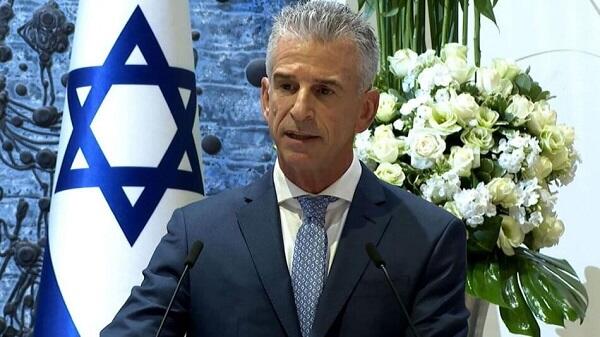
Israel’s foreign intelligence service, Mossad, has long been considered one of the most effective intelligence agencies in the world. However, operations carried out in recent years against Iran and its regional allies show that Mossad is not only executing successful missions but is also undergoing a deep internal transformation.
Axar.az reports that, following the end of David Barnea’s tenure as Mossad chief, information published in Israeli media and some Farsi-language outlets is striking. These reports suggest that Barnea created a highly efficient system, adapting the classical espionage model to the technological and hybrid warfare realities of the 21st century.
While the success of intelligence services used to be measured mainly by the scale of agent networks and the execution of key covert operations, today speed of information, technological capability, and the ability to strike multiple targets simultaneously have become decisive factors. Under Barnea’s leadership, Mossad has been reshaped precisely in this direction.
Barnea’s revolution
The structural reforms described by Mossad personnel as “Barnea’s biometric revolution” were implemented mainly in three directions:
- Maximizing the use of cyber, computational, and advanced technological capabilities;
- Creating technological and human capacity to simultaneously carry out multiple operations against different targets, both coordinated with the military and independently;
- Reforming operational methods of Mossad personnel—especially agents operating in target countries—to prevent biometric technologies that identify individuals from exposing them.
The third direction was also influenced by the exposure of Mossad operatives following the 2010 assassination operation against Hamas logistics and weapons procurement official Mahmoud al-Mabhouh in Dubai, UAE.
Strengthening “Tzomet” threefold
The most important and largest division within Mossad is “Tzomet.” Its main task is to recruit, handle, and manage agents abroad through case officers (“katsas”). It primarily deals with espionage activity, intelligence gathering, and establishing information sources in foreign countries.
Shortly after becoming Mossad chief, Barnea initiated reforms in “Tzomet,” as he knew the division well—he had previously headed it before becoming agency chief.
Reform in “Tzomet” and the famous “pager operation”
The division was reorganized into three main units:
- The first unit – responsible for recruiting new agents and using them in operations, while also maintaining older structures for managing covert assets abroad.
- The second unit (called IMG) – responsible for operations that end in explosions, such as assassination missions like the killing of Ismail Haniyeh in Tehran.
- The third unit – responsible for complex strategic operations such as the famous “pager operation” against Hezbollah.
It is noted that the “pager operation” resulted in the deaths of dozens of Hezbollah members and injuries to thousands more, including an Iranian diplomat.
Remarkable operations inside Iran
During Barnea’s leadership, Mossad’s technology division consisted of three departments:
- Cyber
- Digital
- Development and production of new technological tools for operatives
Barnea created a system that elevated Mossad to a level capable of conducting astonishing operations inside Iran. Some analysts even claim that Mossad has surpassed U.S. intelligence in recent years.
Mossad’s cyber division was also elevated to a higher level than the equivalent unit within the IDF (Israeli Defense Forces).
Barnea also established a “leak division,” whose success quickly became evident. Psychological warfare was one of its main areas of activity. For example, the publication of images showing former IRGC commanders and then Iranian Transport and Urban Development Minister Rostam Qasemi with an unveiled woman during a visit to Malaysia was attributed to this unit.
Barnea significantly expanded the use of foreign agents in operations. The results of this approach became especially visible during the so-called 12-day war against Iran in 2025. According to reports, Iranian citizens trained in Israel before the operation returned to their country and continued normal lives until activation time. Shortly before the Israeli strike began, these agents received instructions via covert communication channels and targeted IRGC air defense systems and missile launchers inside Iran using Israeli-supplied weapons.
Iran’s response and claims of infiltration
The most interesting aspect is Iran’s statements after the 12-day war regarding the exposure of Israeli agents. Iranian intelligence agencies repeatedly announced the arrest of dozens of “Israeli spies” almost daily after the war. However, the reports emphasize that none of those detained before or after the operation were actually Mossad collaborators. Instead, they were ordinary civilians—people filming or sharing footage or criticizing the Iranian government.
Barnea’s forecast on Iran
Barnea and his circle believe that unless Trump reaches an agreement with Iran that includes economic incentives for Tehran, the current theocratic regime could collapse by the end of this year. At best, it is estimated that the system could survive only 1–3 years.
In his farewell speech, Barnea also expressed confidence that Iran’s political system would eventually change.


|
Date
2026.06.09 / 10:13
|
Author
Axar.az
|