


Romania proposes joint NATO military command in Black Sea
09:37
| Home page Science |

|
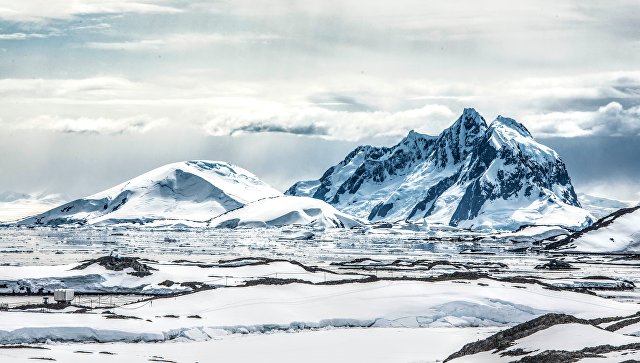
Glaciers worldwide continued to decline at record levels in 2025.
Axar.az reports, according to findings from an international research team, glaciers on Earth lost an estimated 408 gigatonnes of ice in 2025.
The loss contributed significantly to global sea-level rise and reflects an accelerating long-term trend in glacier decline.
According to a statement from Monash University, which published research as part of the Nature Reviews Earth & Environment “Climate Chronicles” collection, 2025 was the sixth most negative year for glacier mass change since records began in 1975.
Monash University Research Fellow Dr. Levan Tielidze, a co-author of the study, said: “Glaciers are among the clearest indicators of climate change, and we are now witnessing unprecedented global ice loss.”
He added: “The fact that six of the most extreme loss years have all occurred within the past seven years highlights just how rapidly the system is changing.”
The study found that glacier mass loss has accelerated from less than 100 gigatonnes per year in the late 20th century to around 390 gigatonnes per year over the past decade.
It also reported that all 19 major glacier regions experienced net mass loss for the fourth consecutive year in 2025, with the largest losses recorded in Western North America and Central Europe.
Over the longer term, glaciers have lost nearly 10,000 gigatonnes of ice since 1975, with almost 80% of that loss occurring since 2000.
Researchers warned that continued high rates of ice loss could lead to the disappearance of many glaciers within decades, with significant impacts on sea levels, ecosystems, and freshwater availability.


|
Date
2026.04.12 / 14:54
|
Author
Axar.az
|