



Russian footballer Daniil Vinter dies in car crash at 24
13:35
| Home page Society |

|
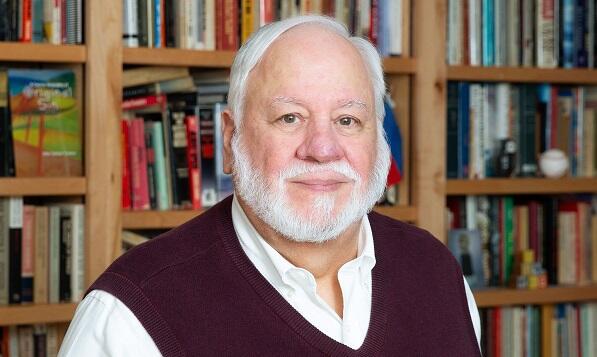
Axar.az presents an article, "The Liberal Arts?" by John Samuel Tieman.
Before anyone serves in public office, they should fill out a survey. Three inquiries. 1) Name your ten favorite symphonies. 2) Name your ten favorite poems. 3) Name your ten favorite paintings. I'm not so concerned about the answers. I'm concerned that the office holder has any answers at all.
Here are a few statistics that scare me. A study by the National Endowment For The Arts found that 48.2% of folks, ages 18 to 24, identify themselves as non-readers. A PEW research study found that 40% of all Americans read zero books last year. The same study found that 19% of Americans account for 82% of all books read, with the top 4% alone consuming 46% of all those books.
Let me be clear. My thesis isn't about elitist education through elitist tastes in art. Mozart wrote the “Haffner Symphony” to celebrate the ennoblement of Sigmund Haffner, sure. He also wrote “The Magic Flute” as a popular entertainment. My thesis is simply this. A life without the liberal arts is simply a poorer thing. In the past, the key to a job in the British foreign service was a degree in the classics. And it wasn't because a young man could recite Virgil in the original Latin. It was because he had a broad foundation upon which he could develop thought.
There are, of course, practical results from a liberal arts education. Philosophy, for example, can teach analytical reasoning, critical evaluation, and creative problem-solving, all skills essential for adapting to the workplace and the community. Think of what is gained by even a passing familiarity with formal logic. Communities in general, and employers in particular, value graduates who can communicate effectively, think critically, and adapt to change. But the practical is only one part of life. It is possible to imagine a community that is purely utilitarian, but history has never known one.
The study of the liberal arts has practical results, sure. But perhaps the greatest result isn't about being practical. A student of the liberal arts is exposed to cultures and ideas from afar, both in geography and time. It fosters curiosity, awareness, perspective. It fosters the courage to question. It fosters the ability to accept the unknowing and the paradox and the mystery and the question for which there may well be no answer. In a society where many seek deeper meaning beyond material success, this can provide personal fulfillment and resilience. Studying the liberal arts is not just about acquiring knowledge. I sometimes think that we are so obsessed with doing that we have no imagination left for being. And without imagination, all we're left with is repetition.
Have you ever sat in silence in a shrine? Have you ever beheld the light through a stained-glass window? I sometimes think, in our obsession with practicality, that we have left no room for awe.
I began this essay talking about public office. What do the liberal arts have to do with being an alderman or alderwoman? Put simply, the liberal arts contribute to both a democratic society at home and global understanding in the wider world. It equips the legislator so that he or she can participate thoughtfully in public discourse. But there's so much more. I don't think we should look simply to practical results, stuff we can measure, if you will. I worry that a person trained only in science and technology is half a person.
A liberal arts education is nonspecific. It doesn't teach a specific set of measurable skills. Nor should it. It teaches a way of forming thought. It teaches that it's OK to be in awe of a painting by Fra Angelico. It teaches that, having read a poem by Auden, it's OK to be speechless. It answers this question: How do you feed your soul?


|
Date
2026.08.03 / 09:51
|
Author
Axar.az
|