


Houthis claim attack on Saudi military HQ in Aden
20:52
| Home page Society |

|
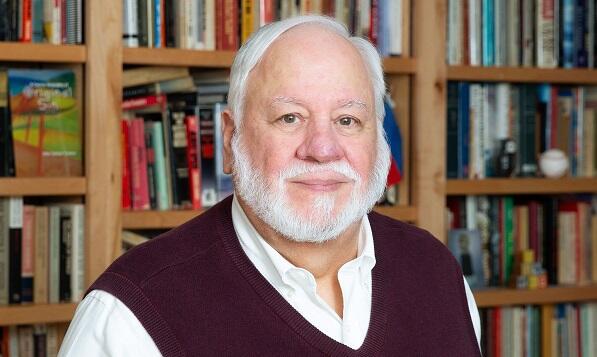
Axar.az presents an article, "In Principio" by John Samuel Tieman.
I grew up Catholic. Today I say that I belong to a Church predicated upon a handful of ideas. These ideas are then compounded with two millennia of, when the Church is at its best, colorful, beautiful, and comforting magical thinking. There are days when my most profound prayer is, 'Lord, it would be sweet if something like this could be true.' That's today. When I grew up in the 50s and 60s, it was vastly more concrete. The rosary was concrete. The Latin was concrete. Being an altar boy was concrete. There were daily religious rituals. Nuns wore habits. Priests wore collars.
Until I was 14, I went to Mass every day except Saturday. (If Saturday was a Holy Day, it was considered a real rip-off by the kids.) My mother said the rosary each night. I frequently joined her. My grandfather walked to the 6:30 AM Mass each day.
I was not a “ghetto Catholic”. I grew up in the Jewish part of St. Louis, meaning University City. My neighborhood was 85% Jewish. I can still go down the old block and point out the non-Jews. The Re family was Italian. The McGoogans were Irish. Catholics all. But the Johnson family was Presbyterian. I had no explanation for that. Everyone else was Jewish. I was a Catholic defined by a Jewish neighborhood. I had no idea how exotic this was. It seemed natural to speak in one language, English, and prayed in another, Latin or Hebrew.
Public or private, religion was continuous. I wore a scapular. I carried a rosary. Various medals of various saints came and went. My Confirmation name was Joseph. I was a member of the Legion Of Mary. I kept holy water at home. I was an altar boy. I thought about being a priest. I went to Catholic schools.
My Catholic schooling emphasized memorization. We memorized, as just one example, “The Baltimore Catechism”. All 479 questions and answers. There are few “cradle Catholics” of a certain age, meaning my age, who can recite from memory –
“Who made us?
“God made us.
“Who is God?
“God is the Supreme Being, infinitely perfect, who made all things and keeps them in existence.
“Why did God make us?
“God made us to show forth His goodness and to share with us His everlasting happiness in heaven.
“What must we do to gain the happiness of heaven?
“To gain the happiness of heaven we must know, love, and serve God in this world “
That's the opening of the ”Baltimore Catechism”. Then there were 475 more questions and answers. The “Catechism” brought with it this thought. There are things that are right, and there are things that are wrong. Life would make that thought a lot more complicated. And while I see a lot more gray than black and white these days – there are things that are right, and there are things that are wrong.
But the shades of gray came later. In 1962, morality included submission to the authority of the Church. This was comforting. My father had abandoned our family, so the paternalistic Church provided a kind of solidity. Morality was concretized by submission to the pope, the cardinal archbishop, our pastor the monsignor, and the nun who taught the catechism.
Even the days and the places were concretely different from the secular world. It wasn't January 6. It was the Feast Of The Epiphany. Parts of town were identified not by municipal names but by parish. Folks lived not in the neighboring city but “in Blessed Sacrament.” My personal favorite was the folks who attended Our Lady Of Sorrows. They lived “in Sorrows”.
Then came adulthood. When I was a teacher, I was now and again asked, “What made you a poet?” Students expected me to say something about my universities or the artists who influenced me. There is much of that. Then there is this. I was an altar boy. I was raised with form. I was raised with performance. I was raised with the music of “Laudamus te. Benedicimus te. Adoramus te. Glorificamus te. Gratias agimus tibi propter magnam gloriam tuam.” “We praise Thee. We bless Thee. We adore Thee. We glorify Thee. We give Thee thanks for Thy great glory.” I didn't understand the Latin. But I understood the music. And I understood that the form of the words was so important that it needed to be performed with solemn ritual. "In principio erat Verbum … ". "In the beginning was the Word … ". I understood, from my earliest years, that words can be holy.


|
Date
2026.08.17 / 09:53
|
Author
Axar.az
|