
Israel says Islamic Jihad commander killed - Video
17:36
| Home page World |

|
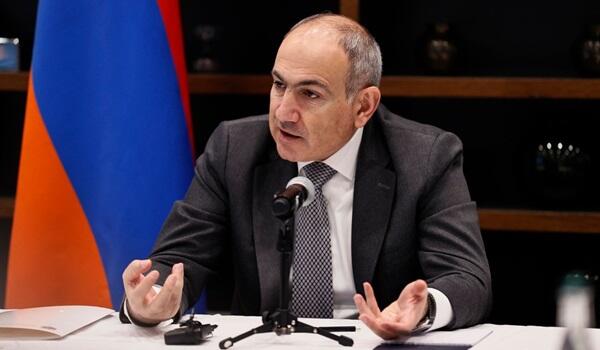
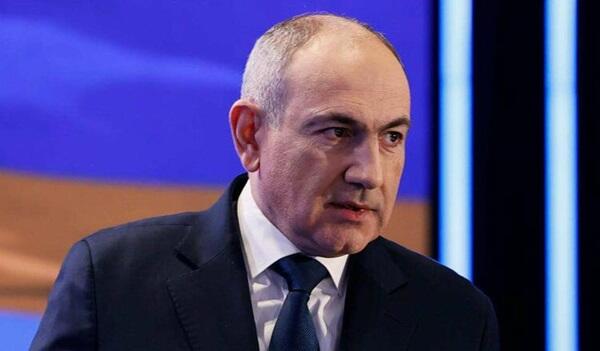
Armenian Prime Minister Nikol Pashinyan has suggested that the effectiveness of the Eurasian Economic Union (EAEU) is called into question if its core principles—particularly the free movement of goods, services, labor, and capital—are not fully functioning in practice.
Axar.az informs, citing Armen Press, asked at a press briefing whether a possible “freezing” of relations with the EAEU could occur due to Russian trade restrictions, similar to what happened with the CSTO, the Prime Minister referred to his earlier remarks during the Cabinet meeting.
“The EAEU has four principles—free movement of goods, services, labor, and capital. If there is no such free movement, then there is no EAEU,” the Prime Minister said.
According to Pashinyan, if the issue is temporary, it can be understood, but if it continues for a long period, it takes on a different meaning.
“Okay, there may be a problem for one month, two months, three months, but in the fourth month, if the problem still exists, it means there is no EAEU. If the EAEU declares that it does not exist, what are we supposed to do?” Pashinyan said.
The Armenian government is discussing support measures for exporters amid restrictions on Armenian goods in Russia, with Prime Minister Nikol Pashinyan raising concerns over the functioning of the Eurasian Economic Union (EAEU) and warning that such trade barriers could seriously undermine the bloc’s core principles of the free movement of goods and services.
He emphasized at the Cabinet meeting that Armenia is pursuing export diversification while continuing engagement within the EAEU, but expects clear answers from the bloc regarding recent developments affecting trade flows.
Pashinyan warned that export restrictions targeting Armenian goods could have a fallout on perceptions of the bloc in other EAEU member states.
Warning of the potential union-wide fallout from Moscow’s decision, which he labeled a “misunderstanding,” PM Pashinyan said that restrictions imposed by Russia on imports from Armenia, as well as on the transit of Armenian goods through its territory to other EAEU countries, will at the very least cause serious concern in a number of EAEU member states.


|
Date
2026.06.25 / 16:25
|
Author
Axar.az
|