











FIFA President Gianni Infantino arrives in Baku
11:55
| Home page Health |

|
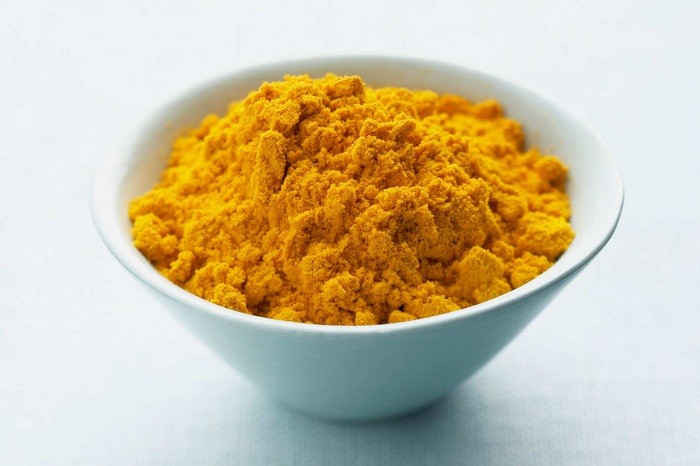
Turmeric, the spice of the moment, can easily be spotted in a subway rider’s water bottle or sprinkled on a dish at a restaurant. A distinctive shade of yellow-orange, turmeric is said to reduce inflammation and improve allergies and depression, but until now most scientific research into the spice has been done on mice, using “unrealistically high doses,” according to Michael Mosley of the BBC’s Trust Me, I’m a Doctor.
Mosley set out to figure out the actual benefits of turmeric through real-world experiments. He found that the spice has a positive effect on genes that cause certain diseases.
Nearly 100 volunteers were divided into three groups for the experiment. In the first group, participants consumed a teaspoon of turmeric every day for six weeks, “ideally mixed in with their food.” The second group took a turmeric supplement, while the third group was given a placebo. Next, scientists at University College London, analyzed the results through DNA tests.
The scientists found that, of course, those taking the placebo had no changes to their genes. Neither did the group taking the turmeric supplements. However, participants who mixed turmeric powder with their food were seen to have positive changes to their health.
“We found one gene which showed the biggest difference. And what’s interesting is that we know this particular gene is involved in three specific diseases: depression, asthma and eczema, and cancer,” Dr. Martin Widschwendter, of University College London, told Mosley. “This is a really striking finding.”
Adding turmeric to food may have more of an effect than ingesting the spice through a supplement because adding fat or heating it up could potentially make the “active ingredients more soluble,” Dr. Kristen Brandt of Newcastle University added. Mosley noted that additional research should be completed to confirm the findings of his study.


|
Date
2016.09.24 / 19:56
|
Author
Axar.az
|