



Erdogan, Pashinyan discuss Turkiye–Armenia normalization
00:40
| Home page Politics |

|
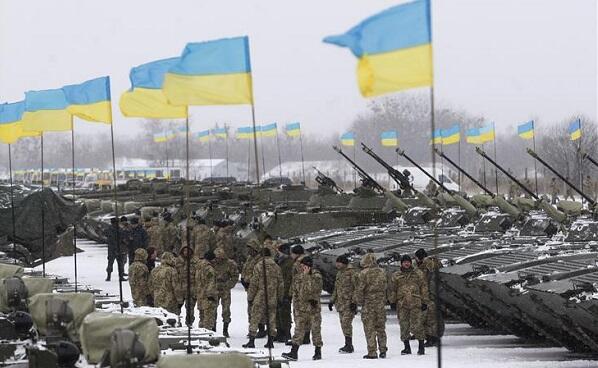
In recent days, two developments on the Ukrainian front should be particularly highlighted. On the one hand, there has been the advance of the Armed Forces of Ukraine, and on the other, a strike carried out with a “Flamingo” missile against a strategic facility located approximately 1,400 kilometers away.
Axar.az reports that this was stated by political analyst Kamran Jafarov.
In his view, the direction between the Dnipropetrovsk and Zaporizhzhia regions is strategically sensitive in itself:
“This area is strategically vulnerable. A possible advance here could weaken the positions of Russia’s southern grouping and complicate its logistics. As of today, according to unofficial information, the AFU has liberated 300 square kilometers and eight settlements in this direction.
Following the shutdown of Starlink systems, communication problems between Russian army units have facilitated the Armed Forces of Ukraine's advance. Another significant factor is that Russian military forces, while retreating, are unable to establish defensive lines in new positions and are being forced into a continuous withdrawal.
The Armed Forces of Ukraine has struck one of Russia’s main missile production facilities. The Votkinsk plant produces ‘Topol,’ ‘Topol-M,’ ‘Yars,’ ‘Iskander,’ and other missiles. The plant is located 1,400 kilometers from the Ukrainian border. The key aspect of the issue is that the strike was carried out not with drones, but with ‘Flamingo’ missiles, and post-strike footage shows the scale of the impact. The strike hit Workshop No. 19, and the hole in the roof alone measures 24 by 30 meters — just imagine. It seems impossible that anything inside the workshop remained intact.
The fact that the Armed Forces of Ukraine is now striking strategic facilities at such distances not with drones carrying 50–60 kilograms of explosives, but with missiles carrying 500–1,000 kilograms of explosives, will produce a practically destructive effect.
In this area, the next word now belongs to Ukraine’s military-industrial complex:
- To mass-produce ‘Flamingo’ missiles;
- To strengthen the air defense of production facilities.”


|
Date
2026.02.23 / 23:13
|
Author
Axar.az
|