Baghaei warns South Korea against joining US operations
14:55
| Home page Politics |

|
The agreements reached between Azerbaijan and Armenia in Washington last year significantly strengthened the United States' position in the South Caucasus. In particular, the TRIPP (Zangezur Corridor) project represents a tangible U.S. presence in the Middle Corridor, which spans a vast geography along the China–Europe route, and in Eurasia's transportation network as a whole.
The Trump Administration achieved this result thanks to its strategy of maintaining a balanced approach in its South Caucasus policy. By contrast, Trump's predecessor, Biden, failed precisely because he abandoned a balanced approach to the region and pursued an Armenia-centered policy. The region also witnessed a similar failure in the case of France, which sought to become a geopolitical power. During and after the Second Karabakh War, the Elysee Palace's openly pro-Armenian policy left France sidelined both in the South Caucasus and in the transportation corridors for which the region serves as a key hub. France has yet to recover what it lost. Trump was able to achieve results because he avoided repeating those mistakes and pursued a pragmatic, balanced policy toward the region. Whether these achievements endure will depend on maintaining that balanced approach. Recent developments, however, have begun to raise doubts about this.
The display of U.S.-made weapons at the military parade held in Yerevan on May 28 drew particular attention and raised questions:
Why is Washington, which witnessed the signing of a draft peace agreement between Azerbaijan and Armenia, participating in the militarization of one of the parties?
Although the parade was presented as election-oriented propaganda by the Armenian authorities, the military arsenal on display appeared risky in the context of regional security at a time when the peace agenda remains highly relevant. Events during and after the 2020 war confirmed that Armenia accepted Azerbaijan's peace initiatives because of the new realities that had emerged in the region. Until the 2023 anti-terror operation that restored Azerbaijan's sovereignty, it was no secret that Yerevan had merely been imitating negotiations. Following the Washington agreements, the main expectation of U.S. regional policy has been to promote the peace process. However, the opposite could encourage Armenia to deviate from the current agenda. As a participant in the peace process, the Trump Administration should exercise particular caution in this regard. While this remains the primary expectation, U.S. support for Armenia is visible not only in military but also in diplomatic terms.
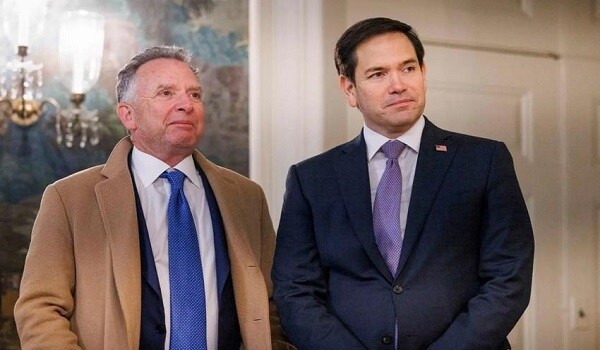
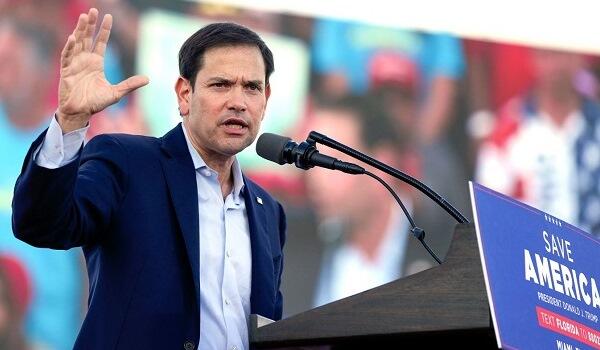
U.S. Secretary of State Marco Rubio's visit to Armenia can be viewed as an example of high-level diplomatic support. The official responsible for the foreign policy of the world's leading superpower was making his first visit to the region in many years, yet the trip concluded only in Yerevan. Although Rubio's stop was described as a brief visit on his return from India, the issues discussed in Yerevan, along with the signing of the U.S.-Armenia Strategic Partnership Charter and the framework agreement on the TRIPP project, were highly significant.
Rubio's decision to leave the region after visiting only Armenia, without traveling to Azerbaijan, indicates a clear disruption of balance in U.S. South Caucasus policy. The display of American-made weapons at the Yerevan military parade just two days after the secretary's visit further reinforced this perception.
This raises the question: Does Rubio's unbalanced approach stem from the Trump Administration's foreign policy course, or from his personal views?
President Donald Trump's peace initiatives in global affairs, his contribution to the Azerbaijan-Armenia peace process, and his strong relations with President Ilham Aliyev make it less likely that this approach originates from Washington's broader foreign policy strategy. At the same time, certain aspects of Rubio's political career are noteworthy.
Before being appointed to a senior position in the Trump Administration, Marco Rubio was considered an active supporter of the Armenian lobby. The Armenian National Committee of America consistently praised his activities directed against Azerbaijan. Following the Second Karabakh War, Rubio was also an active participant in the large-scale anti-Azerbaijan campaign launched by the Armenian diaspora and lobbying groups. In this effort, he worked closely with pro-Armenian Senator Bob Menendez, then chairman of the Senate Foreign Relations Committee. In 2022, Menendez and Rubio jointly introduced resolutions calling for the suspension of military assistance to Azerbaijan, the imposition of sanctions, and including what the article describes as fabricated allegations of war crimes. It was therefore no coincidence that ANCA was among the first groups to support Rubio's nomination as secretary of state.
Given this background, it cannot be ruled out that the secretary of state may be sacrificing Washington's interests to lobbying interests. A departure from balance in U.S. regional policy—particularly after the Washington agreements—would amount to a self-inflicted setback. If that balance is disrupted to Azerbaijan's disadvantage, the United States could once again find itself in the "offside" position previously created by the Biden Administration's mistakes, while also risking the loss of gains achieved in the Middle Corridor.
The fact that Vice President J. D. Vance maintained balance during his regional visit—traveling to both Yerevan and Baku—strengthens the perception that Rubio's diplomacy reflects lobbying interests rather than the approach of the White House or President Trump himself. Such an approach runs counter to U.S. strategic interests. Disrupting the balance against Azerbaijan, the region's principal power and a key transportation hub, could create risks for the future of U.S.-Azerbaijan relations. At the same time, Vance's visit demonstrated how pragmatic and professional a balanced approach can be.
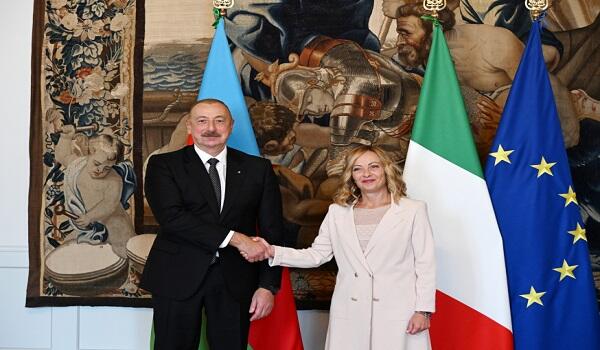
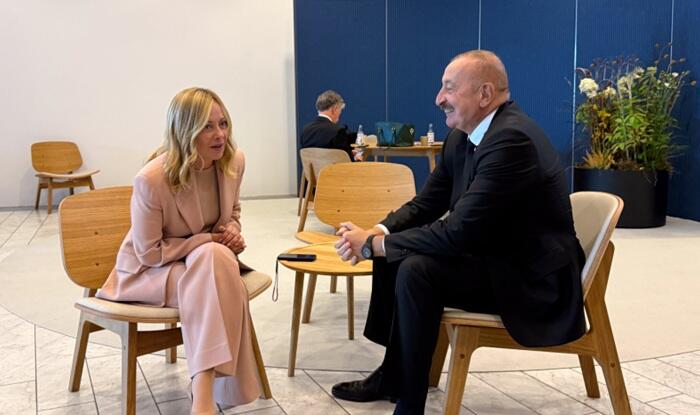
Through high-level talks in both Yerevan and Baku, the U.S. vice president strengthened Washington's position in the region and reinforced the Trump Administration's contribution to regional peace. European leaders have followed a similar approach. Italian Prime Minister Giorgia Meloni and EU High Representative Kaja Kallas both visited Azerbaijan when traveling to Armenia. This approach strengthened not only bilateral relations but also the EU-Azerbaijan partnership. In the past, the actions of EU officials who abandoned balance and viewed the region primarily through the prism of Armenian interests had jeopardized Brussels' position in the South Caucasus. In particular, the activities of former foreign policy chief Josep Borrell caused difficulties in relations between Brussels and Baku. Following changes in the EU administration, a policy of balance was restored in the South Caucasus, helping resolve problems in EU-Azerbaijan relations while also strengthening Europe's regional standing.
All of this underscores the need for the United States to pursue a balanced policy in the region. Otherwise, Washington's global reputation and regional position could be put at risk. U.S. leaders should take this into consideration and ensure that the secretary of state's approach to the region is not shaped by lobbying interests.


|
Date
2026.06.08 / 18:10
|
Author
Asif Nərimanlı
|