

Trump orders 500% tariffs on Russian goods under Graham Act
13:13
| Home page Politics |

|
August 8 last year was remembered as the beginning of a new stage in the geopolitical history of the South Caucasus. Azerbaijani President Ilham Aliyev's historic visit to the United States, the formalization in Washington of important outcomes of the Azerbaijan-Armenia peace process, and the agreements reached with the participation of U.S. President Donald Trump marked a decisive turning point toward ending the decades-long confrontation in the region.
Axar.az reports, citing Аzertac, that at the same time, the visit became an important political event that laid the foundation for a new stage in Azerbaijan-U.S. relations. This was the logical outcome of a political strategy developed over many years and of Azerbaijan's success in turning the new reality it had created into a peace agenda. President Ilham Aliyev also described August 8 as a "historic day in our interstate relations," noting that what happened would "have a very positive impact on the entire region."
After restoring its territorial integrity through military and political means in 2020, Azerbaijan offered the other side peace rather than seeking revenge and set the agenda for the post-war period. Baku made clear not only that the war should end, but also the principles on which relations between Azerbaijan and Armenia should be built.
Two years later, in March 2022, Azerbaijan put forward five basic principles for the normalization of relations with Armenia. These principles called for mutual recognition of the sovereignty and territorial integrity of the states, renunciation of territorial claims, refraining from the use or threat of force, delimitation and demarcation of the state border, as well as the opening of transport and communications links. These five principles subsequently formed the conceptual basis of the negotiations and outcomes achieved in the following years. President Ilham Aliyev, emphasizing Azerbaijan's authorship of the initiative, said: "Once again, Azerbaijan took the initiative; once again, we were the ones who formulated these five principles, and if we had not taken this initiative upon ourselves, there would have been no progress in this direction to date."
Thus, Azerbaijan also defined the political and legal framework within which peace should be established. In this regard, it is impossible to view the political significance of the Washington Summit separately from the processes that preceded it. The meeting constituted another important international confirmation of the agenda put forward by Azerbaijan over many years.
Recalling the process in an interview with Аzertac in Washington on August 8 last year, President Ilham Aliyev said: "It was precisely at that time that Azerbaijan put forward its vision for the future. In other words, this vacuum could not continue for long. There had to be a peace treaty between Azerbaijan and Armenia, and, as you noted, we were the initiators. After we put forward that initiative, once again, there was no response from anywhere. Then we put forward the aforementioned five basic principles, and we had also drafted the text of the peace agreement on that basis."
The dynamics of relations with the United States also played an important role in advancing this process at the international level. Unlike the tensions that had emerged in Azerbaijan-U.S. relations under the previous administration, the election of Donald Trump as president ushered in a new political approach in Washington toward the region and Azerbaijan.
The tensions that emerged in Washington's approach toward Azerbaijan during the Joe Biden administration and policies that undermined achievements previously made in bilateral relations had a negative impact on the development of ties. Certain tough positions toward Azerbaijan and initiatives involving sanctions had also been observed in Biden's political activities before his presidency. The administration's approach to the region was also accompanied by an inadequate consideration of the new geopolitical realities created by Azerbaijan and the country's leading role in the region.
The election of Donald Trump as U.S. president brought new approaches to the forefront of Washington's foreign policy. As President Ilham Aliyev noted, Trump attached particular importance to the peace agenda in international relations. This approach also affected Azerbaijan-U.S. relations, creating an opportunity for a new stage of cooperation based on mutual interests between the two countries.
In fact, the political dialogue between President Ilham Aliyev and President Donald Trump did not begin with the Washington meeting. Even before Trump's election as president, the development of relations between the two political leaders, their correspondence and mutual political messages had laid the foundations for this dialogue. The Washington Summit represented a stage at which those political contacts and mutual trust were elevated to a higher level.
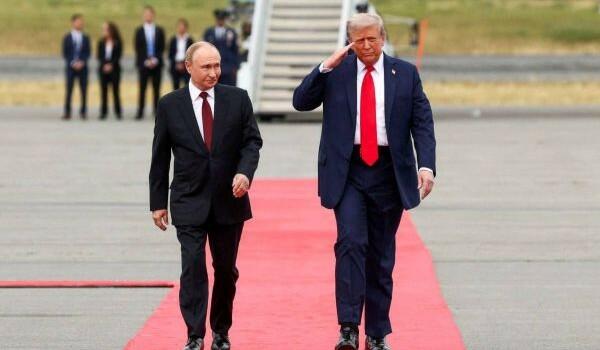
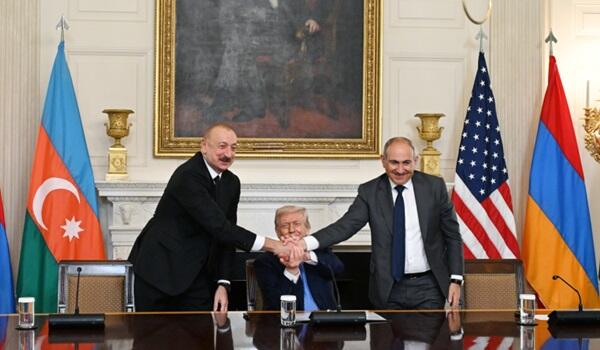
At the meeting held at the White House on August 8, 2025, important documents were signed with the participation of Azerbaijani President Ilham Aliyev, U.S. President Donald Trump and Armenian Prime Minister Nikol Pashinyan. On that day, the foreign ministers of Azerbaijan and Armenia initialed the agreed text of the "Agreement on the Establishment of Peace and Interstate Relations between the Republic of Azerbaijan and the Republic of Armenia." This was followed by the signing of a Joint Declaration in the presence of the leaders. The agreements reached in Washington outlined the main contours of a new model of relations between the parties following decades of confrontation. The Joint Declaration reaffirmed the importance of opening communications between Azerbaijan and Armenia and envisaged establishing unobstructed connectivity between mainland Azerbaijan and Nakhchivan through the territory of Armenia.
Alongside the agreements reached in Washington, important political decisions were also made for the future development of Azerbaijan-U.S. relations. The agreement to prepare a Charter on Strategic Partnership between Azerbaijan and the United States became an important indication of the transition of bilateral relations to a new stage. At the same time, the U.S. decision to suspend the application of Section 907 demonstrated that a new political atmosphere was taking shape in bilateral relations. Thus, the August 8 Washington visit represented both a turning point in the Azerbaijan-Armenia peace agenda and an important stage in the formation of a new framework for cooperation between Azerbaijan and the United States.
The participation and political support of U.S. President Donald Trump were of particular importance to the Washington process. Trump himself described the Washington meeting as a historic peace summit and congratulated the Azerbaijani and Armenian leaders for their support for the process. President Ilham Aliyev has also repeatedly highlighted Trump's role. The Azerbaijani president noted that the initialing of the agreed text of the peace agreement in the presence of the U.S. president significantly reduces the possibility of backtracking on the document. Subsequent diplomatic correspondence between the two leaders also demonstrated the continuation of this political dialogue. In December 2025, President Ilham Aliyev highly praised Trump's peace efforts, while in July 2026, the Azerbaijani president called Trump a "Man of Peace" and once again noted his indispensable role in the process. Thus, the peace agenda defined by Azerbaijan and the political support of the U.S. president came together in the Washington process, enabling an important stage in a process that had remained inconclusive for many years.
One of the most important outcomes of the Washington Summit was also the emergence of the TRIPP ("Trump Route for International Peace and Prosperity") project, which could reshape the region's transportation map. The significance of this project is not limited to the establishment of a single transport route. TRIPP has the potential to enhance the South Caucasus' role in the East-West transportation system, turn Azerbaijan into one of the key hubs of new regional connectivity and expand the region's economic potential. In this regard, the opening of communications means not only expanded transportation opportunities, but also the development of mutual economic interests between Azerbaijan and Armenia and the creation of new foundations for lasting peace in the region.
The landscape that emerged in the South Caucasus after August 8 demonstrates the formation of a new status quo. Azerbaijan changed the military and political reality in 2020 and subsequently took consistent steps to shape the political and diplomatic consequences of that reality. The old status quo based on occupation and confrontation has now become history. It has been replaced by a new political reality based on the principles of sovereignty, territorial integrity, inviolability of borders, the opening of communications and regional cooperation.
Azerbaijan's position in this process was not limited to its military victory. Following the victory in the war, President Ilham Aliyev consolidated the resulting military and political advantage through a consistent diplomatic policy and compelled Armenia to accept the new reality and adapt to the peace agenda. Armenia's retreat from its previous revanchist approaches, the agreement on the text of the peace treaty and its joining of the new regional cooperation agenda can be viewed precisely as consequences of this reality. Thus, Azerbaijan emerged both as the victorious country in the war and as the principal author of the peace agenda.
Thus, the new status quo taking shape in the South Caucasus did not emerge by itself. The principal political course that defined its foundations, transformed the reality created by Azerbaijan into a peace agenda and shaped the region's future development trajectory is the strategy pursued by President Ilham Aliyev.
August 8 last year holds a special place in the history of Azerbaijan's victory. The date once again demonstrated that transforming a military and political victory into lasting peace requires not only strength, but also far-sighted political will, a precise diplomatic strategy and consistent policies based on national interests. The Washington Summit was precisely the international confirmation of this will. The new reality created by Azerbaijan was consolidated at the diplomatic level, historical justice was complemented by a peace agenda, and the political contours of a new stage of development for the South Caucasus were defined.


|
Date
2026.08.08 / 09:27
|
Author
Yusif Güney
|