


Azerbaijani, Turkish FMs discuss bilateral ties in Baku
00:51
| Home page Science |

|
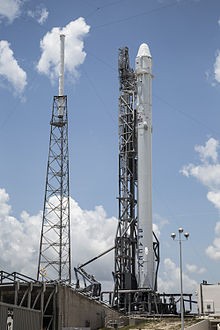
Following a joint investigation with the Federal Aviation Association (FAA), NASA, and the US Air Force, the private space company SpaceX has finally zeroed in on the likely system flaw that caused one of its Falcon 9 rockets to explode on the launch pad in Cape Canaveral, Fla., two months ago.
The explosion occurred while the fuel tanks were being prepped, leading SpaceX CEO Elon Musk and President Gwynne Shotwell to believe that the problem was with fueling process rather than a vehicle design or engineering flaw. On Friday, the company announced it had been able to replicate the failure of a helium tank, which is believed to be the cause of the explosion.
Although the investigation is still ongoing, it has not disrupted plans for SpaceX to return to flight by the end of the year.
"SpaceX’s efforts are now focused on two areas – finding the exact root cause, and developing improved helium loading conditions that allow SpaceX to reliably load Falcon 9," SpaceX said in a statement Friday. "With the advanced state of the investigation, we also plan to resume stage testing in Texas in the coming days, while continuing to focus on completion of the investigation."
The focus of the investigation was on the fiber composite tanks that were used to store helium within the liquid oxygen propellant tank.
"The root cause of the breach has not yet been confirmed, but attention has continued to narrow to one of the three composite overwrapped pressure vessels (COPVs) inside the [liquid oxygen] tank," SpaceX said a statement.
Investigators found the tank to be highly affected by changes in temperature and pressure of the helium as it is loaded into the tank, making it a likely, although not confirmed, cause of the explosion. When put under pressure, Musk has stated that the helium could have ignited with the carbon.
Despite the rocket explosion and the loss of the payload on board – a satellite Facebook planned to use to bring internet access to remote regions of Africa – SpaceX is still contracted to NASA to make additional cargo deliveries to the International Space Station and to one day bring American astronauts there as well.
And the company has loftier plans as well as Musk seeks to take humans and cargo to Mars.
In the statement released Friday, SpaceX called the new insights into what caused the Sept. 1 Falcon 9 explosion "an important milestone on the path to returning to flight."
Still, some are worried that this explosion will make companies wary to attach their multi-million dollar satellites to SpaceX’s product, but not all have lost confidence.
Iridium Communications was the next in a line of nearly 70 companies that have signed up to have SpaceX to launch their satellites when the Cape Canaveral explosion occurred. Iridium executives have said they have been following the investigation and are confident enough to continue with plans to launch the satellite with SpaceX as soon as possible.
"I remain hopeful that they’ll return to launching this year," Matt Desch, chief executive of Iridium, told Space News. "Also, I don’t know if Iridium Next will be SpaceX’s first launch once they return to flight or whether they might schedule a launch from Florida ahead of us. Either way, we’re comfortable with SpaceX’s investigation and the progress they’re making and I assure you that we won’t proceed to launch if we aren’t confident in SpaceX and their investigation outcome."


|
Date
2016.10.30 / 16:34
|
Author
Axar.az
|