


Turkic states discuss summit preparations in New York
19:10
| Home page World |

|
It must be pretty weird, and in a way fascinating to know, that the next thing that you are about to say is going to be the last thing. Well, prisoners on a death row surely knew that feeling the best.
Naturally, you kind of expect some cliche like:
I am sorry for everything, I didn’t plan to end up like this, or goodbye world or even some poem in a way of “Oh Captain, My Captain”, but no, these guys stayed notorious till the end and kept their sense of humor and that is for respect.
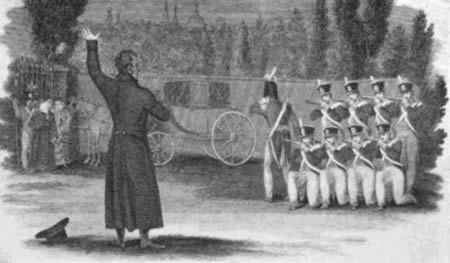
1.“Soldiers, Fire!” (Spoken by Michael Ney After Wishing to Command His Own Firing Squad)
Michel Ney popularly known as Marshal Ney, was a French soldier and military commander during the French Revolutionary Wars and the Napoleonic Wars.
When Napoleon was defeated, dethroned, and exiled for the second time in the summer of 1815, Ney was arrested (on 3 August 1815). After a court-martial declared itself incompetent (November), he was tried (4 December 1815) for treason by the Chamber of Peers. In order to save Ney’s life, his lawyer Dupin declared that Ney was now Prussian and could not be judged by a French court for treason as Ney’s hometown of Sarrelouis had been annexed by Prussia according to the Treaty of Paris of 1815. Ney ruined his lawyer’s effort by interrupting him and stating: “I am French and I will remain French”.On 6 December 1815, he was condemned, and executed by firing squad in Paris near the Luxembourg Garden on 7 December 1815, an event that deeply divided the French public. He refused to wear a blindfold and was allowed the right to give the order to fire, reportedly saying:
“Soldiers, when I give the command to fire, fire straight at my heart. Wait for the order. It will be my last to you. I protest against my condemnation. I have fought a hundred battles for France, and not one against her … Soldiers, fire!”
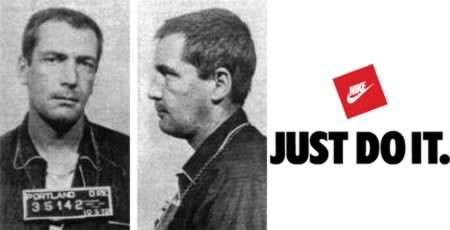
2.“Let’s Do It” by Gary Gilmore
The convicted Gary Gilmore from Utah was demanding his own death. During the summer of ’76, Gary killed two people in two days. The jury convicted Gary and unanimously recommended the death penalty. Utah had two options for execution: hanging and fire squad and Gary choose to be shot.
Gilmore was executed on January 17, 1977, at 8:07 a.m. by firing squad at Utah State Prison in Draper, Utah. The night before, Gilmore had requested an all-night gathering of friends and family at the prison mess hall. On the evening before his execution, he was served a last meal of steak, potatoes, milk and coffee but consumed only the milk and coffee. His uncle, Vern Damico, who attended the gathering, later claimed to have smuggled in three small, 50ml Jack Daniel’s whiskey bottles which Gilmore supposedly consumed.
In the morning at the time of execution, Gilmore was transported to an abandoned cannery behind the prison, which served as its death house. He was strapped to a chair, with a wall of sandbags placed behind him to trap the bullets. Five gunmen, local police officers, stood concealed behind a curtain with five small holes, through which they aimed their rifles. When asked for any last words, Gilmore simply replied, “Let’s do it.”
Gary became a sort of a cultural icon. He was the inspiration for the big hit “Bring Up the Night” by The Police. Jack Nicholson in his performance in the “The Postman Always Rings Twice”, was inspired by Gary, he was also mentioned in “Saturday Night Live”, Seinfeld, and Roseanne. At top of all,the founder of advertising agency Wieden+Kennedy, Dan Wieden credits the inspiration for his “Just Do It” Nike slogan to Gilmore’s last words
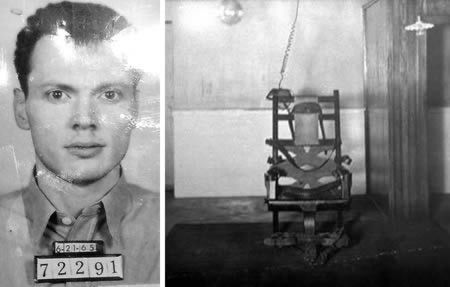
3.“French Fries” (Spoken by James D. French)
James D. French was an American criminal who was the last person executed under Oklahoma’s death penalty laws prior to Furman v. Georgia, which suspended capital punishment in America from 1972 until 1976. He was also the only prisoner executed in the United States that year. Already in prison for life for killing a motorist who had picked him up from hitchhiking in 1958, but allegedly afraid to commit suicide, French murdered his cellmate, apparently to compel the state to execute him.
French’s last words before his death by electric chair were “How’s this for your headline? ‘French Fries'”.
This was the last execution by electric chair in the United States before Furman v. Georgia; after the moratorium on capital punishment was lifted, the first electrocution was John Spenkelink in 1979 in Florida.
4.“I think that governor’s phone is broke. He hadn’t called yet.”(A Convicted Murderer Whose Execution had been Postponed Three Times)
David Matthews was convicted of first-degree murder in death of Otis Earl Short, who was shot during a robbery at his home. Mathewes postponed his death by lethal injection for three times. .
Former Gov. Brad Henry twice granted stays to give defense attorneys time to investigate Matthews’ claims of innocence.
When he has been finally put on death row, he looked at his family members and said with a smile, “I think that governor’s phone is broke. He hadn’t called yet.”
5.“I’d rather be fishing” (Spoken by Jimmy Glass Before Being Put to Death)
Jimmy L. Glass was an American convicted murderer, executed by the state of Louisiana. He is probably best known not for his crime, but as petitioner in the U.S. Supreme Court case Glass v. Louisiana.
Glass’ father worked in Arizona Chemical, where he was an instrument repairman. The company had a policy of hiring the children of employees as temporary summer laborers, including Glass.
Before committing a capital crime, Glass already had a criminal record. With fellow inmate Jimmy Wingo, Glass escaped from the Webster Parish, Louisiana Jail in December 1982 and, during their escape, they killed Newton Brown (born 1927) and his wife, Erlene Nealy Brown (born 1931), at their home in Dixie Inn outside Minden. The Browns’ son, Gary Lamar Brown, was the son-in-law of Judge Charles A. Marvin (1929-2003) of the Louisiana Court of Appeal for the Second Circuit, based in Shreveport. Glass and Wingo were soon arrested. Both were sentenced to death in the electric chair.
Glass made a headlines in 1985 as a petitioner in a Supreme Court case. He argued that executions by electrocution violate the Eighth and Fourteenth Amendments to the United States Constitutionas “cruel and unusual punishment”. But the Court, by majority 5-4, found that electrocution as an authorized method of executions is constitutional.
Glass was electrocuted on June 12, 1987 at the age of twenty-five and became the 78th person executed in the United States since 1977. Governor Edwin W. Edwards refused commutation of the sentence. Wingo was executed four days later, on June 16, 1987.
Glass’s last words at execution were “I’d rather be fishing”.
6.“Well, gentlemen, you are about to see a baked Appel.” (Spoken by G. Appel Before Being Executed by Electric Chair)
George Appell was a murderer convicted to death by electric chair in New York in 1928. His final words were a witty pun: “Well, gentlemen, you are about to see a baked Appel.”
7.“Where’s your stunt double when you need one” (Spoken by Vincent Gutierrez Before Being Executed by Lethal Injection)
Vincent Gutierrez, 28, was executed by lethal injection for carjacking murder of a 40-year-old man.
Guitierrez was suffering from a Bipolar disorder, and his final words were rather poetic: I do, I would like to tell everybody that I’m sorry about the situation that happened. My bad – everybody is here because of what happened. I’d like to thank everybody that’s been here through the years. The little kids overseas – they really changed me. Sister Doris, mom, brothers, sister, dad; I love ya’ll. My brother… Where’s my stunt double when you need one? My Lord is my life and savior, nothing shall I fear.
8.“Forgive me sir, I meant not to do it”.(Spoken by Marie Antoinette to Her Executioner After She Stepped on His Foot)
Marie Antoinette died under the guillotine on Oct. 16, 1793. Thousands of people were gathered around to bid the queen final aideu. Her hair was cut off and she was driven through Paris in an open cart while wearing a plain white dress.
However, Marie Antoinette didn’t lose her integrity and stayed bold and impudent to the very end. Her last words were, “Forgive me sir, I meant not to do it,” spoken to Henri Sanson the executioner, whose foot she had accidentally stepped on after climbing the scaffold.


|
Date
2016.11.18 / 11:14
|
Author
Axar.az
|














.jpg)