

Two candidates nominated for Russia’s State Duma speaker
23:31
| Home page Politics |

|
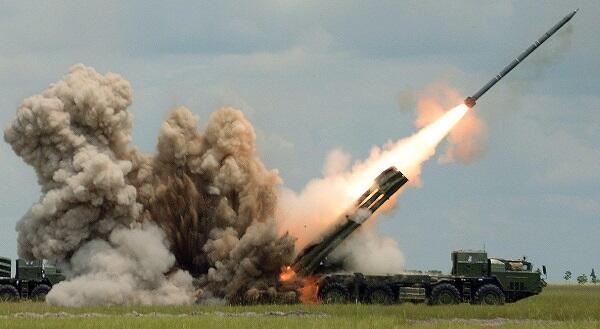
Human Rights Watch has released another report on the Armenian armed forces' investigation into rocket attacks on Azerbaijani civilians and civilian objects.
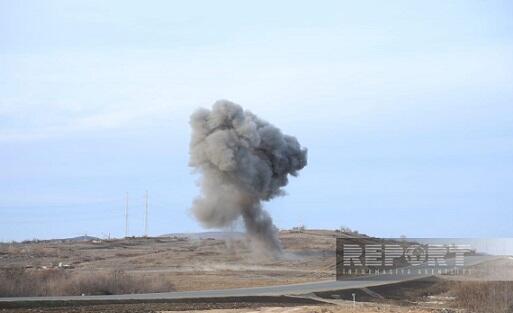
Axar.az reports that Armenian or allied Nagorno-Karabakh forces repeatedly fired widely banned cluster munitions in attacks on populated areas in Azerbaijan during the six-week war over Nagorno-Karabakh, Human Rights Watch said today. The use of cluster munitions violates the laws of war due to the weapons’ inherently indiscriminate nature.
During a visit to Azerbaijan in November 2020, Human Rights Watch researchers documented four attacks with cluster munitions in three of the country’s districts. They killed at least seven civilians, including two children, and wounded close to 20, including two children.
“Cluster munitions are a brutal weapon, banned under an international treaty, and using them shows flagrant disregard for civilian life,” said Hugh Williamson, Europe and Central Asia director at Human Rights Watch. “Both Armenia and Azerbaijan should make an immediate commitment not to use cluster munitions and join the treaty banning them.”
Cluster munitions can be fired from the ground by artillery, rockets, and mortars, or dropped by aircraft. They typically open in the air, dispersing multiple bomblets or submunitions over a wide area, putting anyone in the area at the time of the attack, whether combatants or civilians, at risk of death or injury. In addition, many of the submunitions do not explode on contact, but remain armed, becoming de facto landmines. Locations contaminated by unexploded submunitions remain dangerous until the remnants are cleared and destroyed.
Human Rights Watch did research about the intense fighting between Armenia and Azerbaijan over Nagorno-Karabakh from September 27 until a ceasefire on November 11. In Nagorno-Karabakh, Human Rights Watch documented Azerbaijan’s use of cluster munitions in four attacks: three in Stepanakert and one in Hadrut. Human Rights Watch also documented a cluster munition attack on the city of Barda in Azerbaijan that killed 21 civilians and wounded 70 in October.
During a research trip in Azerbaijan in the first half of November, Human Rights Watch documented four attacks with cluster munitions by Armenian forces, including one in Barda district, two in Goranboy district, and one in Tartar district. While Human Rights Watch was not in a position to determine the presence or proximity of military personnel, equipment, or vehicles at the impact sites at the time of the attacks, the inherently indiscriminate nature of cluster munitions makes their use a violation of the laws of war, irrespective of whether there were legitimate military targets in the areas.
Witnesses said that an attack by Armenian forces between 4 p.m. and 5 p.m. on October 5 in Gizilhajili, a small village in Goranboy district roughly 30 kilometres from the then-front line, killed Raziya Abbasova, 65, wounded three of her neighbours, including one child, and set fire to the nearby house of Gulnara Huseynova, 46. The Azerbaijani National Agency for Mine Action (ANAMA) identified the munition used as a Smerch rocket. Residents said they counted at least six explosions. Human Rights Watch visited the area on November 9 and identified four impact sites and observed fragmentation damage consistent with a Smerch cluster munition rocket attack.
Human Rights Watch observed seven small craters in the field consistent with the impacts of cluster submunitions. The village of 290 families, most with small farms, had not been attacked before or after October 27. Human Rights Watch did not observe any military installation or military transportation movement in the vicinity at the time of the visit, and residents said they were not aware of any military targets in the area at the time of the attack.
In a meeting with Human Rights Watch on November 27 in Yerevan, a Foreign Affairs Ministry representative denied that Armenia possesses any cluster munitions in its arsenal.
Standard international reference publications, including the authoritative annual Military Balance 2020 by the International Institute for Strategic Studies, state that Armenia has Tockhka and Iskander ballistic missiles and Smerch and Chinese-made WM-80 multi-barrel rocket launchers, all of which can deliver cluster munition warheads. As far as Human Rights Watch is aware, Nagorno-Karabakh forces do not possess cluster munitions, and it is, therefore, likely that Armenian forces carried out the attacks or supplied the munitions to Nagorno-Karabakh forces.
As prohibited weapons, cluster munitions should not be used or supplied by anyone under any circumstances, Human Rights Watch said.


|
Date
2020.12.15 / 17:09
|
Author
Axar.az
|