
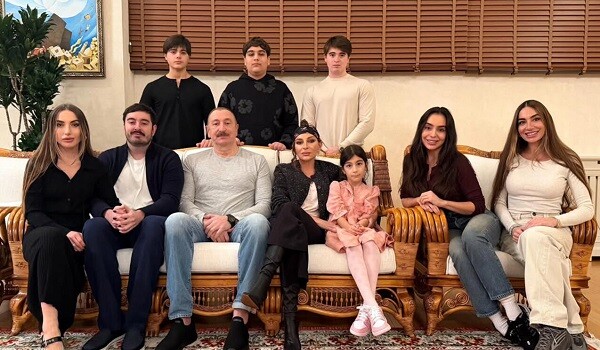
President Aliyev celebrates birthday with family
24 December 23:55
| Home page World |

|
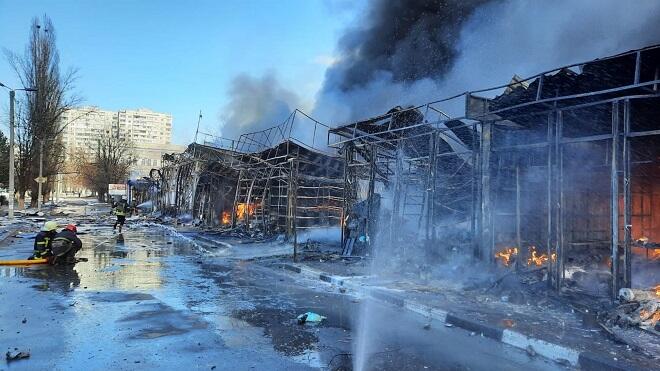
Ukrainian President Volodymyr Zelensky is reportedly ready to accept a 20-point peace plan despite its strict terms. This plan is a shortened and revised version of the 28-point plan initially proposed by the Donald Trump administration. For example, one clause in Washington’s original plan stipulated that the Zaporizhzhia nuclear power plant, under occupation, would be placed under U.S. management, and electricity would be split 50/50 between Ukraine and Russia. In the current plan, the electricity would instead be split 50/50 between Ukraine and the U.S. This is not a major change, since the U.S. would anyway transfer its 50 percent share to Russia, but Kyiv could not agree to a clause explicitly stating that half of the electricity would go to Russia.
Axar.az reports that these remarks were made by political analyst Elkhan Shahinoglu regarding Zelensky’s 20-point peace plan.
“In the initial draft, the size of the Ukrainian Armed Forces in peacetime was set at 600,000. In the current plan, this number is 800,000. Article 5 of the new plan states that the U.S., NATO, and Europe will provide security guarantees to Ukraine under Article 5, for example, and if Russia intervenes in Ukraine again, there will be a military response and sanctions will be reinstated. However, this clause remains ambiguous. The security guarantees for Ukraine should differ essentially from those given in 1994. This clause should make Russia understand that if it plans another attack on its neighbor in the future, it will face greater forces, deterring any new aggression,” Shahinoglu emphasized.
According to E. Shahinoglu, one of the main points of the new plan concerns territory:
“Russian forces must withdraw from Dnipropetrovsk, Mykolaiv, Sumy, and Kharkiv regions, while in Donetsk, Luhansk, Zaporizhzhia, and Kherson, the principle ‘we stay where we are’ should apply. This represents the maximum concession Ukraine can make. In other words, Ukraine will not recognize the lost territories as Russian territory legally, but, acknowledging reality, it accepts that these regions cannot be retaken militarily.”
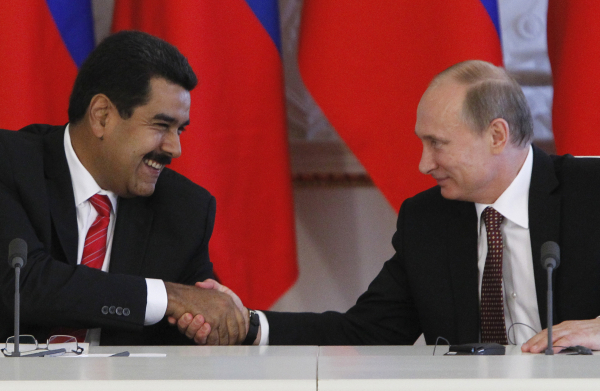
Thus, Kyiv and Brussels are ready to accept the current plan, and Washington would not object. The main issue is persuading the Kremlin. Russian President Vladimir Putin’s personal representative, Kirill Dmitriev, has traveled to the U.S. to deliver the plan to Moscow. However, it is difficult to get Kremlin approval. Putin continues to demand all of Donbas. Although he may not object to most clauses of the 20-point plan, he is unlikely to accept the territorial provisions. If this happens, the plan cannot be adopted, and the war will continue at full intensity.


|
Date
2025.12.24 / 22:53
|
Author
Axar.az
|
.jpg)