




Saudi Arabia, US diplomats discuss regional security
12:16
| Home page Society |

|
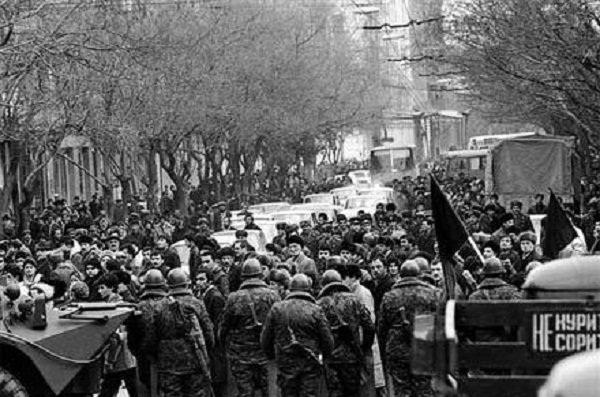
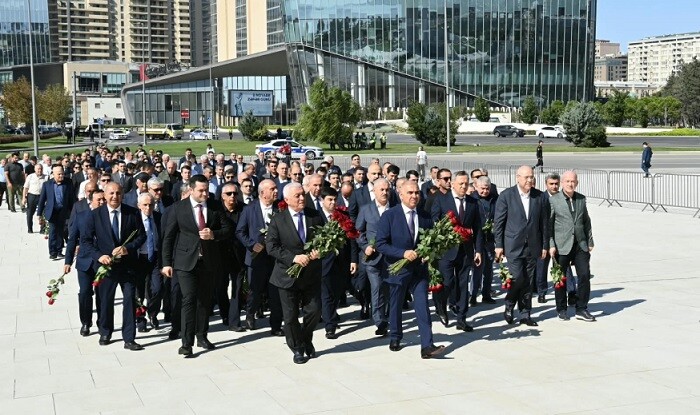
It is the anniversary of the events of January 20, 1990, which entered the history of Azerbaijan as the Bloody January tragedy.
Axar.az reports that 36 years have passed since the Bloody January events.
The so-called Nagorno-Karabakh problem, which re-emerged in late 1987, was aimed at violating the territorial integrity of Azerbaijan, occupying our lands, and expelling hundreds of thousands of Azerbaijanis living in Armenia and Nagorno-Karabakh from their homelands. This conflict, which began between the two republics of the former Soviet Union, was the next stage in the policy of systematic settlement of Armenians in Azerbaijani lands in the 19th-20th centuries, as well as ethnic cleansing and genocide carried out against our people.
The direct or indirect support of the USSR leadership for the territorial claims of the Armenian SSR to our republic, the separatism incited by radical Armenian nationalists, and the mass violence committed against our compatriots, as well as the criminal indecision of the then leaders of Azerbaijan and steps contrary to national interests, prompted our people to rise for the sake of protecting the territorial integrity of the republic. Thus, a broad social spectrum people's movement was formed in the republic, and the course of the processes laid the foundation for its gradual transformation into a national liberation movement.
On the night of January 19-20, 1990, directly by order of the General Secretary of the Central Committee of the Communist Party of the Soviet Union, Mikhail Gorbachev, units of the USSR Ministry of Defense, State Security Committee, and Ministry of Internal Affairs were deployed to Baku and several regions of Azerbaijan, and the civilian population was subjected to mass murder under fire from heavy equipment and various types of weapons. The occupation of Baku by the Soviet army's special forces and a large contingent of internal troops was accompanied by special cruelty and unprecedented brutality. Before the introduction of a state of emergency to the population, military personnel mercilessly killed 82 people and mortally wounded 20. After the state of emergency was declared, 21 people were killed in Baku within a few days. In regions and cities where a state of emergency was not declared - in Neftchala on January 25 and in Lankaran on January 26, another 8 people were killed.
Thus, as a result of the illegal deployment of troops, 131 people were killed in Baku and the surrounding regions, and 744 were injured.
Among the dead were women, children, and the elderly, as well as emergency workers and militiamen. The illegal deployment of troops was also accompanied by mass arrests among the civilian population. During the course of the operations, 841 people were illegally arrested from the capital Baku and other cities and regions of the republic, 112 of whom were sent to prisons in various cities of the USSR. 200 houses, 80 cars, including ambulances, were set on fire by military personnel, and a large amount of state and private property was destroyed as a result of fires caused by incendiary bullets.
All the signs condemned by the international tribunal held in 1945-1946, and which went down in history as the Nuremberg Trials, were observed in the actions of the Soviet troops. In total, 150 Azerbaijanis were martyred on January 20.
A day after that massacre, on January 21, the eldest son of our people, Heydar Aliyev, went to the Permanent Representation of Azerbaijan in Moscow and issued a statement sharply accusing the USSR authorities and the incompetent leadership of Azerbaijan of committing mass murder in Baku. This terrible and merciless terror to which the Azerbaijani people were subjected was also resolutely condemned by the progressive forces of the world.
The tragedy, which was not thoroughly investigated and adequately assessed in Azerbaijan, was given a political and legal assessment at the state level only a few years later, at the initiative of the national leader, Heydar Aliyev. In the Decree of the President of the Republic of Azerbaijan “On the celebration of the 4th anniversary of the January 20 tragedy” dated January 5, 1994, the Milli Majlis was recommended to consider the issue of holding a special session on the events of Bloody January. The Resolution adopted by the Milli Majlis on March 29, 1994, specifically mentioned the perpetrators of the January 20 tragedy and assessed this bloody action as a military aggression and crime committed by the totalitarian communist regime in Azerbaijan to suppress the national liberation movement and break the people's trust and will.
On January 20, 1990, the Azerbaijani people sacrificed many martyrs for their freedom and independence. However, their will was not broken, and their national spirit was not shaken. During that massacre, the sons of the Motherland, who gave their lives for the sake of defending national interests and rose to the peak of martyrdom, wrote a new bright page in the heroic chronicle of our people with their unparalleled sacrifices.
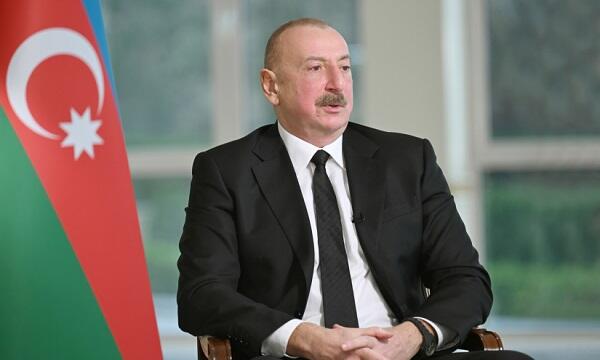
With the Historic Victory achieved in the Patriotic War of 2020 under the leadership of President, Supreme Commander-in-Chief Ilham Aliyev, the restless souls of the martyrs of January 20 have found peace. Today, the national idea of the Azerbaijani people is returning to their historical lands
is in the spotlight. Great construction work is underway in Karabakh and East Zangezur. The Great Return has already begun with the village of Aghaly in Zangilan, and this year, the return process will accelerate even more.
Azerbaijani refugees will also return to their ancestral lands in Armenia, the examples of national resistance in the January 20 events, the intransigence against the occupation over 30 years, and the Historical Victory achieved in the Patriotic War of 2020, bringing of Armenia to its knees, further strengthen these hopes.
President Ilham Aliyev has already identified the return to Western Azerbaijan as a new priority.
Let us recall that every year, January 20 is celebrated as the Day of National Mourning in Azerbaijan.


|
Date
2026.01.20 / 09:10
|
Author
Axar.az
|