
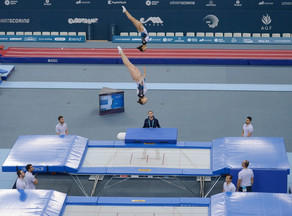
Azerbaijani gymnast wins World Cup gold in Germany
20:32
| Home page World |

|
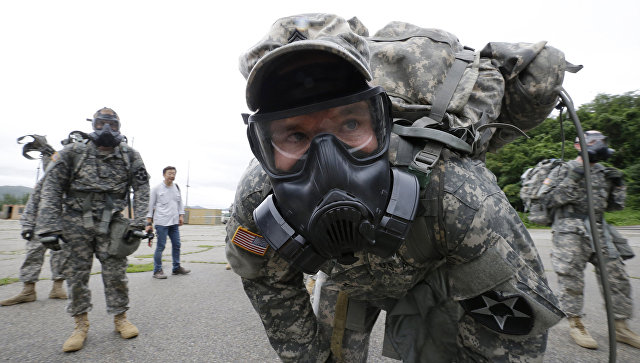
Following the downing of a U.S. F-15E Strike Eagle over southern Iran on Friday, April 3, 2026, the U.S. military successfully executed what President Trump has described as one of the most "daring" combat search and rescue (CSAR) operations in American history.
The incident began when the multirole fighter—deployed from RAF Lakenheath—was struck by Iranian surface-to-air fire. The two-man crew, consisting of a pilot and a Weapons Systems Officer (WSO), were forced to undergo a brutal high-speed ejection.
The Ejection and Initial Evasion
The ejection process subjected the crew to forces of approximately 25g, or 25 times their body weight. After descending through the atmosphere, the crew members were separated by prevailing winds and landed in a high-threat environment. While the pilot was recovered relatively quickly within the first 12 hours, the WSO—a U.S. Colonel—landed in rugged, mountainous terrain. He was forced to implement SERE (Survival, Evasion, Resistance, and Escape) protocols, concealing his parachute and equipment while attempting to put distance between himself and the crash site to evade the Islamic Revolutionary Guard Corps (IRGC) and the Basij militia.
The Search and Technical Challenges
The rescue was complicated by the terrain and the "double-edged sword" of the PRC-112 rescue beacon. While the beacon provides an encrypted signal for U.S. forces, its effectiveness was hampered by the Colonel’s position in a deep ravine. During the 48-hour ordeal, the CIA reportedly launched an information operations campaign to mislead Iranian forces, spreading rumors that the airman had already been captured to thin out the search parties. Eventually, the CSAR package—consisting of HC-130 aircraft and HH-60 Jolly Green II helicopters equipped with terrain-following radar—was able to pinpoint his location.
The Extraction and Asset Denial
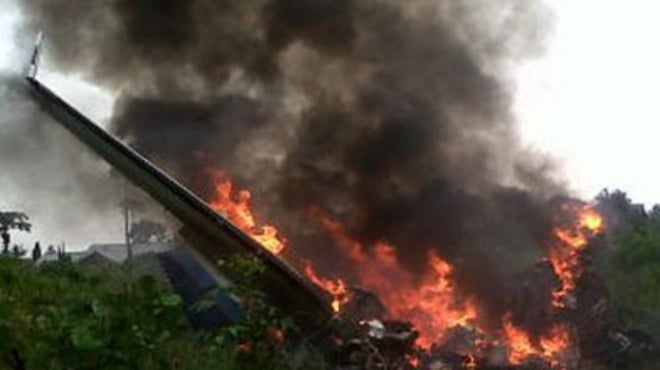
The final phase of the operation involved a massive commitment of resources, including dozens of aircraft and hundreds of troops. To facilitate the rescue, the U.S. established a temporary Forward Operating Base (FOB) at a remote location inside Iranian territory. During the extraction, two C-130 Hercules transport planes became stuck in sand or gravel. With Iranian forces closing within three kilometers, three additional C-130s landed to extract the ground troops and the rescued Colonel. To prevent sensitive technology from falling into enemy hands, U.S. jets subsequently targeted and destroyed the two stranded C-130s, leaving only charred wreckage for the Iranian authorities to recover. Both airmen are now safe, though the Colonel is recovering from injuries sustained during the operation.


|
Date
2026.04.05 / 21:31
|
Author
Yusif Güney
|