

Trump calls flying Tesla Roadster ‘very impressive’
01:13
| Home page Society |

|
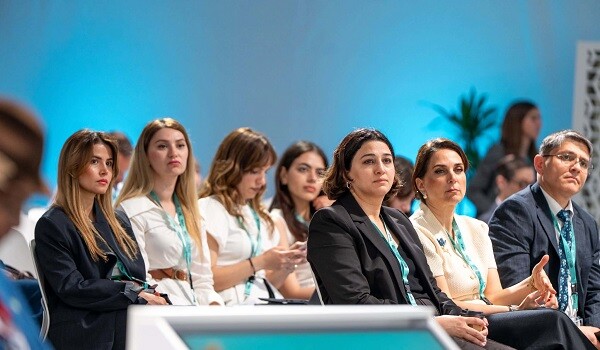
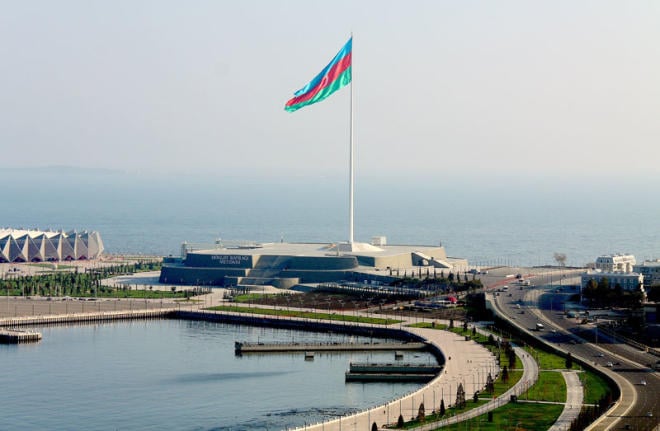
On May 20, discussions continued in Baku within the framework of the 13th session of the World Urban Forum (WUF13), focusing on urban planning, climate-resilient urbanization, and sustainable development.
Axar.az reports that numerous dialogues, special sessions, and group meetings were held on the fourth day of WUF13.
Within the program, a high-level forum titled “Breathing Life into the New Urban Agenda: Integrating Air Quality and Green Infrastructure for Resilient Cities” was organized through the initiative of Leyla Aliyeva, Vice-President of the Heydar Aliyev Foundation and founder and head of the IDEA Public Union, in partnership with the Clean Air Fund (CAF), as part of the UN World Urban Forum.
An address by Leyla Aliyeva to the event participants was delivered at the opening of the forum. In her address, Leyla Aliyeva noted that air quality holds vital importance in terms of the health and well-being of urban residents, as well as securing a safe living environment for future generations. It was stated that the issue of clean air must become one of the priorities of the modern urban planning agenda. Information was also shared regarding the activities carried out by the IDEA Public Union, the rehabilitation of residential courtyards under the "Our Yard" project, as well as ongoing efforts in tree planting, public awareness raising, and the promotion of sustainable transport. The attention of the participants was drawn to the critical need for international efforts to reduce air pollution and build greener, more resilient, and human-centered cities.
At the conclusion of the event, a communique titled the "Baku Call for Action for Breathing Cities" was adopted. The communique reflects calls for recognizing clean air as one of the core principles of modern urban planning, permanently including it as a recurring topic on the agenda of future World Urban Forums, and promoting closer cooperation across urban planning, transport, housing policy, green infrastructure, and public health.
The forum also featured an exhibition of visual materials from the Clean Air Fund, UNEP, and other partners, as well as works from participants of the international photography project “Children’s Eyes on Earth.”
Within WUF13, the first special platform dedicated to cooperation among cities in the SPECA region—the SPECA Cities Forum—was officially launched in Baku. Speaking at the event, Anar Guliyev, Chairman of the State Committee on Urban Planning and Architecture of Azerbaijan and national coordinator for WUF13, stated that the forum’s establishment during COP29 in 2024 marked an important step in strengthening regional cooperation in sustainable urban development. He noted that cities today are at the forefront of addressing global challenges such as rapid urbanization, affordable housing, climate resilience, energy efficiency, and digital transformation.
During the forum, a Declaration of Intent on the establishment of the SPECA Climate-Resilient Cities Forum was signed. It was noted that the SPECA Cities Forum, initiated by the cities of Almaty, Arkadag, Bishkek, Dushanbe, Ganja, and Samarkand, will serve as an important platform for experience sharing, promoting practical solutions, and developing long-term partnerships among cities in the region.
Also within WUF13, the official presentation of a new international award established by the Government of Azerbaijan in cooperation with UN-Habitat—the “Baku Urban Award”—was held. The award aims to promote and scale innovative urban solutions in sustainable city development and affordable housing at the international level.
The Baku Urban Award is expected to become one of the lasting legacies of WUF13, serving as a long-term global mechanism for advancing the urban agenda.
It was highlighted that the award reflects Azerbaijan’s active role in the global urban and climate agenda, including hosting COP29, launching initiatives such as the Multi-Sectoral Action Pathways (MAP) for Sustainable and Healthy Cities and the Baku Sustainability Coalition, co-chairing the UN-Habitat Open Intergovernmental Working Group on Adequate Housing for All, and hosting WUF13 in Baku.
Azerbaijan’s cooperation with UN-Habitat has been steadily developing since the establishment of the National Urban Forum in 2022. This includes joint projects such as three National Urban Forums held in the Karabakh and East Zangazur economic regions, as well as events dedicated to World Habitat Day in Baku in 2023.
At a session titled “Baku Urban Award: Scaling Housing Solutions for Global Impact,” attended by UN-Habitat Executive Director Anaclaudia Rossbach and Anar Guliyev, the significance of the award in promoting best practices in urban development, expanding international cooperation, and sharing innovative urbanization approaches globally was emphasized.
Another session at WUF13 focused on “Transforming informal settlements and slums for housing worldwide.” Minister of Economy Mikayil Jabbarov and UN-Habitat Executive Director Anaclaudia Rossbach delivered speeches. Discussions addressed the transformation of informal settlements, affordable housing policies, social protection mechanisms, and inclusive urban development approaches. Participants emphasized the importance of expanding social protection systems, improving data and statistics, and strengthening international cooperation to transform informal settlements into sustainable and integrated urban environments.
During WUF13, a Memorandum of Understanding was signed between the State Committee on Urban Planning and Architecture of Azerbaijan and the Ministry of Lands, Public Works, Housing and Urban Development of the Republic of Kenya. The agreement covers cooperation in integrated urban and territorial planning, sustainable urbanization, smart city solutions, housing policy, and modern urban development.
Within the forum, a session titled “The climate-housing nexus: can we scale up climate-resilient housing without deepening inequalities or displacement?” was held, where First Deputy Minister of Ecology and Natural Resources Agakaram Samadzade emphasized the importance of considering climate risks in urban development. Participants discussed climate-resilient housing policies, early warning systems, green city solutions, energy efficiency, and the protection of vulnerable population groups.
A roundtable titled “Housing across the life course: adequate housing for all ages” was also organized under the theme of the rights of older persons. The session discussed challenges posed by population aging, accessible housing, inclusive urban planning, barrier-free environments, and the social inclusion of older people.
In the Azerbaijan pavilion, an event titled “Fighting plastic pollution: promoting livable cities and circular economy” was held. Speakers included Deputy Minister of Ecology and Natural Resources Vugar Karimov, UNEP representatives, and COP29 Climate Champion and MP Nigar Arpadarai. Discussions focused on the environmental and health impacts of plastic waste, sustainable waste management systems, circular economy approaches, regional cooperation, green urban solutions, environmental awareness, and youth engagement in climate action.
Throughout WUF13, additional activities were organized, including the WUF Academy, City Voices, SDG implementation sessions, City Cinema, City Library, the UN-Habitat Arena, Innovation and Business Centers, and various other events.


|
Date
2026.05.21 / 00:09
|
Author
Axar.az
|