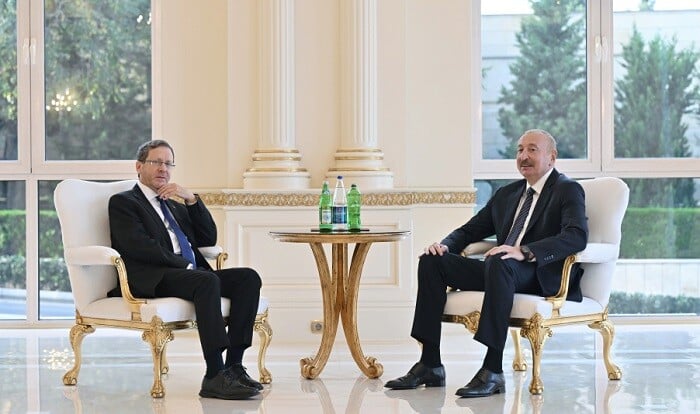


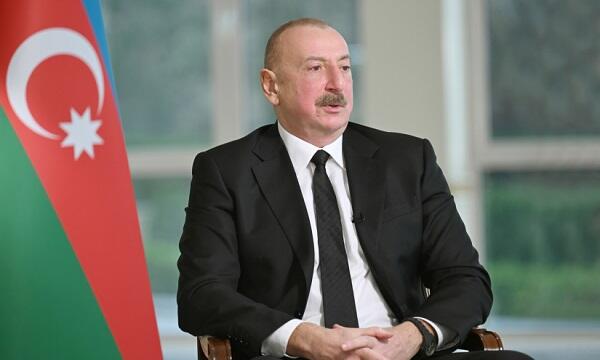
Azerbaijan marks 23rd anniversary of Aliyev’s first election
00:22
| Home page Culture |

|
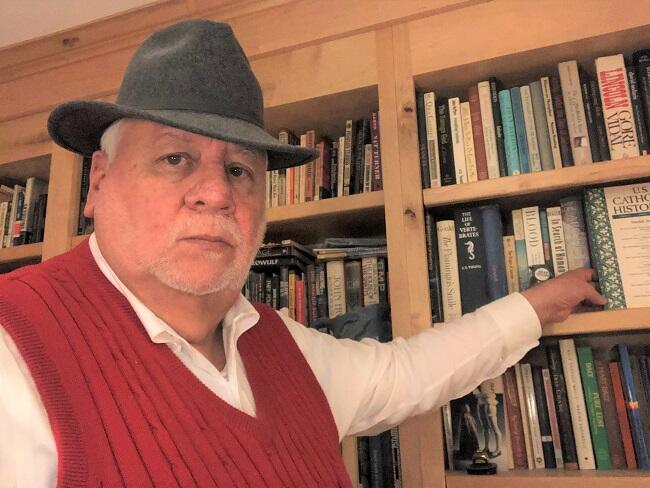
Axar.az presents an article, "Politics and Stereotypes” by John Samuel Tieman.
One neighbor, a nice guy, complimented me. "I never met a politician before you. You're not at all what I expected." I'm flattered -- I think. I didn't say, of course, "You expected what? A city councilman from the supporting cast of The Sopranos?"
Stereotypes oversimplify people. They lead to prejudice. But the worst outcome is that they reduce opportunities for relationships because they begin with damaging assumptions. Politicians are just like everyone else. Some are bad, sure. And some are motivated by the highest ideals. Caligula was a madman, sure. Arlene Violet was the Attorney General of Rhode Island and a Roman Catholic nun, a Sister of Mercy.
This isn't a paean to politicians. Some stereotypes seem true because there are just enough folks to make it seem applicable. However, stereotypes are misleading because they are sweeping. There are over 500,000 American politicians, from the mayor of a village in Missouri to the mayor of Chicago. All kinds of folks are politicians. That's my thesis.
So let's deal with four stereotypes. Politicians are dishonest and selfish. Elected officials are dullards. Politicians are manipulative. And this elected office is corrupting because of money and power.
Politicians are dishonest and selfish. And here's some other actual politicians. Bob donated a kidney to a co-worker. Julie is an environmentalist, a city council member, and a devout Catholic. Sophie won't accept so much as a free bagel from a constituent she meets for lunch and a chat. I'm not saying there aren't thieves and selfish people in politics. I am saying I have also met selfish folks when I was in the army and thieves when I was a teacher. Politicians are just, well, just folks. Most are in the business of public service. A few are in the business of self-service.
Then there's this stereotype. Elected officials are often dullards. My city council has three PhDs, two lawyers, a musician. When I attend meetings of our Municipal League, I meet folks of all sorts. A lot of lawyers, of course. But also a lot of teachers. One fellow is an airline pilot. Another is a housewife who is raising four children. Still another is in real estate. A few social workers. A few ministers. A banker. A psychotherapist. I'm a retired teacher, a poet and essayist. With some exceptions, most politicians are accomplished. They at least won that last election. Otherwise, they wouldn't be here.
Politicians are manipulative. The truth is far simpler. Most politicians are good with people. That handshake, that hand on the shoulder, that's real. Your state senator isn't making that up. Of course, this isn't universally true. Richard Nixon was awkward with people. Donald Trump is a malignant narcissist for whom others don't really exist. But the limited number of exceptions makes the general rule. Put another way, if you are not good with people, you shouldn't go into politics. Politics is about dialogue and, to a great extent, intimacy. Of course, people who are good with people can also be manipulative. But in my experience, that avuncular “Hail fellow well met,” your alderman isn't making that up.
Lastly, that stereotype of corruption. The greatest corrupting influence in politics is not money, and it's not power. I get paid $184.70 a month. As for power, people vastly overestimate the power of any single politician. I may be a city council member, but by myself, I can't even offer a bill without a second. No, it's not power, and it's not money. The greatest corrupting influence in politics is status.
Yes, status. You go from being a nameless face in the crowd to "our distinguished guest, the Honorable …" People are respectful. Folks open doors. They are deferential. Colleagues deal with this in all kinds of ways. Lilly is naturally humble. Bob is self-effacing. Me? I'm a narcissist. I love the status. So I remind myself that “democratic republic”, that's two words but only one concept. The elected official is both of and in the democracy. It helps when I change the vocabulary. I was 'elected by the citizens.' I was 'chosen by my neighbors.'
I was 'chosen by my neighbors.' And it helps when I remind myself that, in a few years, my neighbors will choose someone else.


|
Date
2025.12.22 / 09:52
|
Author
Axar.az
|