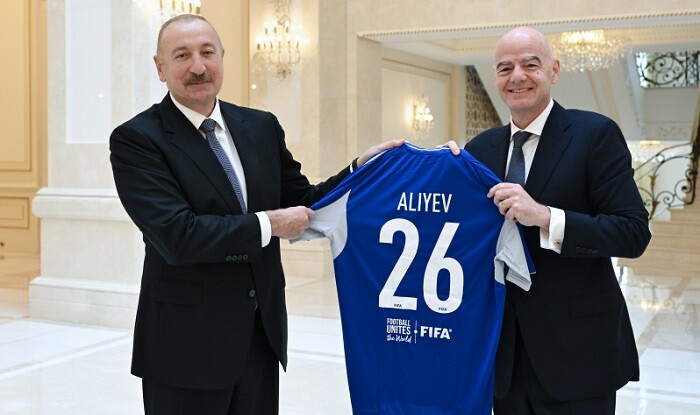

Gokhan Edman appointed to lead Azerbaijan youth teams
13:57
| Home page Politics |

|
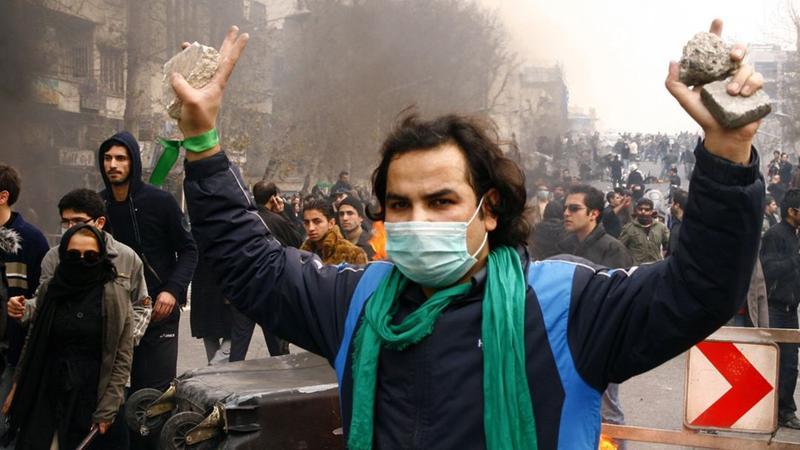
Protests in Iran have been ongoing since December. Hundreds of people are reported to have died, with thousands more arrested.
Axar.az reports protests sparked by a widening economic crisis have swept across Iran since the end of December.
Demonstrations began in the capital Tehran on 28 December and spread to over 574 locations in all of Iran's 31 provinces, according to the US-based Human Rights Activists News Agency (HRANA).
More than 600 people have died, and more than 10,000 people have been arrested, according to HRANA. The group relies on an activist network within Iran for its reporting and has been accurate in the past, although information from outside the country can be difficult to verify.
The protests do not appear to be slowing down. On 9 January, authorities implemented a nationwide internet blackout, with phone calls not reaching the country, flights cancelled, and Iranian news websites only intermittently updating.
The demonstrations are potentially the biggest challenge clerical rulers have seen since the 1979 Islamic Revolution - when former supreme leader Ayatollah Ruhollah Khomeini installed a Shia theocracy.
Here is what you need to know.
What caused the demonstrations?
Demonstrations began on 28 December when shopkeepers and bazaar merchants in Tehran staged a strike as the Iranian currency hit an all-time low against the US dollar.
Iran's economy has been suffering for years, and problems were exacerbated after Donald Trump reimposed US sanctions in 2018 during his first term as president and ended an international deal over the country's nuclear programme.
Sanctions from the United Nations were also reimposed on the country in September 2025.
The country's long-standing economic crisis deepened again after Israel and the US launched strikes on the Islamic Republic in June last year in a 12-day war that targeted several of Iran's nuclear sites.
Iran maintains its nuclear energy programme is entirely peaceful and claims it has not tried to build a nuclear bomb.
While protests initially focused on the economy, they have since expanded to wider political issues, with protesters heard chanting anti-government statements.
Footage from 30 December showed university students marching alongside shopkeepers and merchants in Tehran, chanting "rest in peace Reza Shah", a reference to the founder of the royal dynasty who was ousted in the 1979 Islamic revolution.
'We are all caught up in this.'
Problems with the economy have meant the nation has been struggling with an annual inflation rate of around 40%, with prices of essentials, including cooking oil, meat, rice, and cheese, increasing beyond the means of most people.
"We are all caught up in this. I mean everyone," Shirin, a 45-year-old housewife in the city of Kermanshah, told Sky News.
"A few days ago, a tray of eggs was 280,000 tomans, and now that has gone up to 500,000 tomans [approximately £9]."
She said the price of five kilograms of cooking oil had also jumped from 470,000 (approximately £11) to 1,200,000-1,400,000 tomans (approximately £25).
It comes after Iranian President Masoud Pezeshkian announced his government will halt the process of providing a preferential subsidised rate of foreign currency to those who import goods.
Instead, the state now gives a monthly subsidy to each person in Iran. By doing so, merchants are more likely to hike the price of goods.
Last year, the nation also introduced a new pricing tier for its nationally subsidised petrol, raising the price and putting further pressure on the population.
How widespread are the protests?
Demonstrations and protests had been recorded in at least 186 cities across all 31 provinces by 12 January, according to HRANA.
The Sky News Data and Forensics team has independently geolocated and verified video of protests in 19 provinces.
Some protests and market closures have been reported in Kurdish regions, HRANA said, with dozens of cities in Kurdistan, West Azerbaijan, Kermanshah, and Ilam provinces joining the strikes.
Ilam province is mainly home to the country's Kurdish and Lur ethnic groups and faces severe economic hardship.
It comes after Kurdish opposition groups - considered the strongest opposition to the current regime - met on 5 January and expressed full support for the protests and "uprisings against the Islamic Republic".
The seven parties agreed to "intensify dialogue among Kurdish political forces" and "establish a roadmap to strengthen the political and national Kurdish movements in Iran".
Demonstrations have also been held in some international cities, including London, Los Angeles, and Paris, in support of the protesters.
Have protests been violent?
The number of people who have been killed in protests rose sharply on 11 January after 116 deaths were recorded by the end of the weekend.
The most intense clashes have been reported in western parts of Iran, but there have also been clashes between demonstrators and police in central areas and in the southern Baluchestan province.
In Malekshahi, in Iran's Ilam province, protesters were met with gunfire from security forces when they gathered outside the gates of a base run by the Revolutionary Guards. It became known as 'Bloody Saturday'.
The next day, in the same area, security forces entered the regional hospital, where relatives of people who had been shot called for the end of the regime.
Amnesty International said security personnel entered the hospital on multiple occasions, arresting injured protesters and members of their families.
Despite the nationwide internet blackout, short online videos shared by activists appear to show protesters chanting against Iran's government around bonfires as debris littered the streets in the capital, Tehran, and other areas.
Days before, demonstrators were also filmed sitting down in front of security forces in Tehran's Grand Bazaar market.
Iranian state media alleged "terrorist agents" of the US and Israel had set fires and sparked violence. It also said there were "casualties", without elaborating.
How is the US involved?
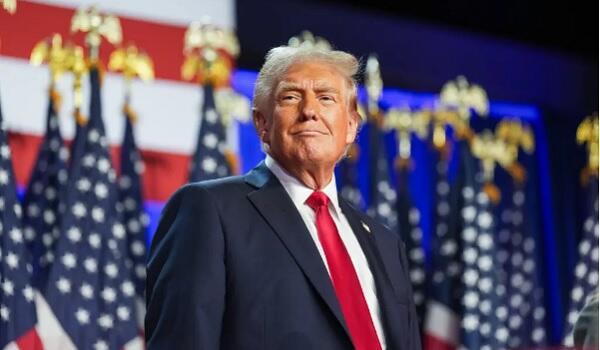
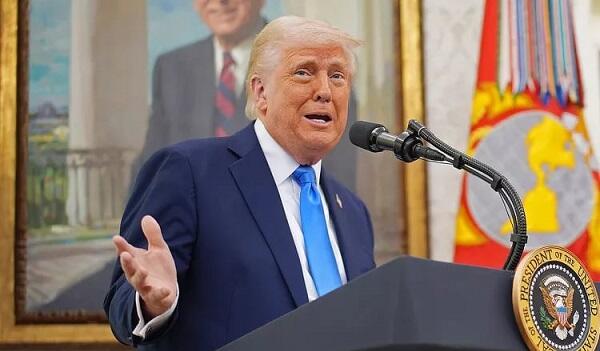
On 2 January, US President Mr Trump warned that if Tehran "violently kills peaceful protesters," the United States "will come to their rescue".
"We are locked and loaded and ready to go", the president wrote on Truth Social, without specifying what actions he was considering.
Mr Trump then told reporters on 11 January that his administration was in talks to set up a meeting with Tehran, but cautioned he may have to act first as reports mount of increasing deaths and protester arrests.
"Iran called, they want to negotiate," he said, adding, "I think they're tired of being beat up by the United States."
Iran's foreign minister, Abbas Araghchi, later said that protests have "turned violent and bloody to give an excuse" for Mr Trump to intervene.
Speaking to foreign diplomats in Tehran, Mr Araghchi also claimed "the situation has come under total control."
How has the Iranian government responded?
Shortly after protests began, Iran's president, Mr Pezeshkian, said he had asked the interior minister to listen to the "legitimate demands" of the protesters.
However, in a brief address aired by state television on 9 January, Supreme Leader Ayatollah Ali Khamenei signalled that his government would crack down on protesters.
He said protesters were "ruining their own streets to make the president of another country happy" - referring to Mr Trump - and warned that Tehran would not tolerate people acting as "mercenaries for foreigners".
In previous comments, Khamenei sought to differentiate between protesters and rioters, saying the latter should be "should be put in their place".
Iran's judiciary chief Gholamhossein Mohseni-Ejei separately vowed that punishment for protesters "will be decisive, maximum and without any legal leniency".
Has this happened before?
Protests in Iran are not unheard of, with protests occurring in the 1970s, 1990s and early 2000s.
More recently, Iran faced protests across the country in 2022 over price hikes, including for bread.
The country's clerical rulers were rocked by the boldest unrest in years over the same period and into 2023 after the death of a 22-year-old Iranian Kurdish woman, Mahsa Amini, in the custody of the morality police, who enforce strict dress codes.
More than 500 people died in the months-long security crackdown and over 22,000 were detained.


|
Date
2026.01.13 / 13:49
|
Author
Yusif Güney
|