
Rain expected in parts of Azerbaijan on October 19
14:52
| Home page Politics |

|
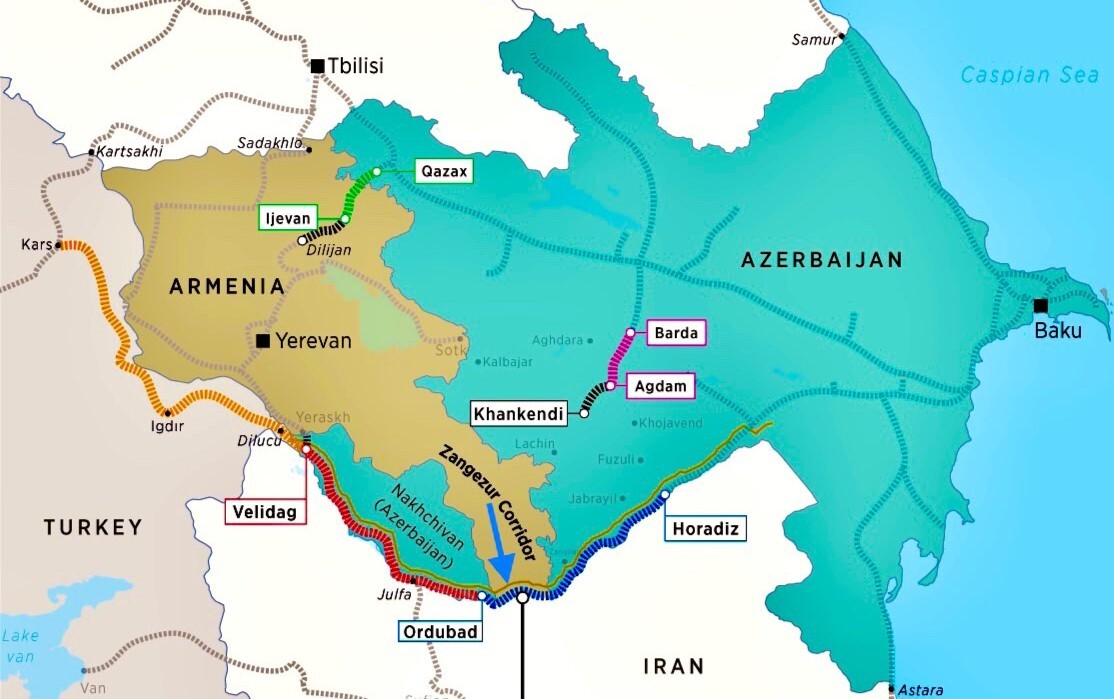
The United States and Azerbaijan have begun technical implementation talks on key infrastructure projects linked to the Trump-brokered TRIPP corridor, marking an early rollout of a strategic peace and connectivity initiative following the 2025 White House agreement.
Axar.az reports, citing Euronews, that a US technical delegation led by the U.S. Trade and Development Agency (USTDA) has concluded a visit to Baku focused on advancing the “Trump Route for International Peace and Prosperity” (TRIPP) and broader regional infrastructure cooperation.
USTDA described the talks as part of efforts to “advance shared strategic infrastructure priorities” under the US–Azerbaijan Strategic Partnership Charter signed in February. Officials said the initiative aims to translate political agreements into concrete projects in energy, transport, and digital infrastructure.
“Azerbaijan’s strategic geographic position makes it an indispensable hub along the Trans-Caspian Transit Route linking Central Asia to the West,” said Sara Leming, USTDA country manager for Europe and Eurasia. She added that TRIPP will “make this corridor even more important” for regional connectivity and global trade flows.
TRIPP refers to a 42-kilometre transport corridor through Armenian territory, brokered as part of the 2025 peace framework between Armenia and Azerbaijan. It is intended to serve as a critical link in the wider Middle Corridor connecting China and Central Asia to Europe.
According to USTDA, discussions in Baku also covered potential cooperation in liquefied natural gas, electricity transmission, cybersecurity, AI infrastructure, and digital connectivity, with an emphasis on feasibility studies and private investment.
The push comes as Azerbaijan continues to expand its role as a key energy supplier to Europe through the Baku–Tbilisi–Ceyhan pipeline and the Southern Gas Corridor, which currently supplies gas to multiple EU member states amid Europe’s efforts to diversify energy imports.
EU officials have also recently highlighted the South Caucasus country as an important partner in energy and connectivity, underscoring growing geopolitical competition and cooperation over the region’s transit routes.
Officials say the TRIPP project is expected to play a central role in reshaping East–West trade and energy flows while strengthening long-term regional stability following the peace agreement.


|
Date
2026.04.23 / 21:11
|
Author
Axar.az
|