







Trump seeks concrete nuclear commitments
22:31
| Home page Technology |

|
San Giovanni a Teduccio, a downtrodden suburb of Naples, is a far cry from Silicon Valley.
The crumbling apartment buildings, the walls covered in either graffiti or church death notices, and the ubiquitous clotheslines hung outside people’s windows do not leave the impression that the neighbourhood is a centre for high technology.
And yet it is this spot – a corner of the sprawling city of Naples that never quite recovered after a major food-packing factory shut its doors in the 1980s – where the Apple chief executive, Tim Cook, and the Italian prime minister, Matteo Renzi, hope the best and brightest young minds in the world will come to develop into leaders in the new app economy.
This week, Apple, the biggest technology company in the world, will open a new academy here – the first of its kind – that will teach 200 mostly southern Italian students how to write code and launch apps on Apple technology by the end of the year.
Each student at the iOS Developer Academy will be handed the latest iPhone, iPad and Macbook at the start of the nine-month course, which is being offered free of charge following a joint investment of about €10m by Apple and University of Naples Federico II, one of the oldest universities in the world, which is hosting the tuition.
The collaboration is already being hailed as a great achievement by the Renzi administration, which sees it as a way to disprove stereotypes that suggest Italy’s south is a poor destination for foreign investment.
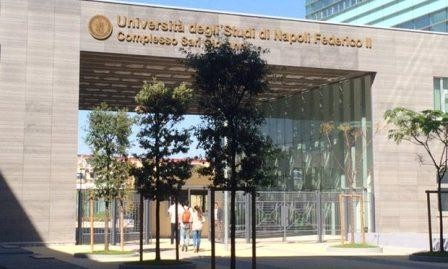
With just days to go before the academy’s 6 October opening, Leopoldo Angrisani, a university professor who has helped organise the academy with Apple, excitedly mapped out a diagram of the new classroom, which is still under construction. The academy will be housed within the gleaming new buildings in Federico II’s new San Giovanni campus, an area comprised of three big buildings with glass facades – plus another building under construction – that starkly contrast with the rest of the neighbourhood.
Next year, the academy will be open to about 400 students. This year, about 4,000 people applied for spots in an 11-day period, with just 200 being accepted.
The layout of the large, open-plan classroom was designed by Apple. “The didactic model is very new [for us],” Angrisani said. Small groups of students will sit at round tables equipped with special acoustic systems so the teacher can communicate with each table individually about their work. All courses will be taught in English, since it is meant to be open to students from around the world.
“Competition will be a fundamental part of the class,” Angrisani said.
Apple has insisted that couches and a lounge area be built in the other half of the classroom, giving the students a chance to rest.
“Apple thinks that all of these activities, learning and rest and so on, have to stay very close to each other, because this is the best way to ensure that the concepts are absorbed and understood very well,” he said.
The collaboration has gone exceedingly smoothly, according to the university. But a visit to the site by the Guardian showed signs of a clash between the hyper-secretive corporate culture that has become Apple’s trademark and Naples itself – a city that, in Italy, is stereotypically considered a place where no one can keep a secret.
While a university official was happy to show a Guardian reporter the new classroom (exhibiting a very relaxed attitude about the fact that it was still being assembled by workmen), and allowed her to pop her head into a class where new academy teachers were being coached by an Apple official, things got touchy when Apple realised there was a journalist in the vicinity.
When the Guardian journalist identified herself and asked why the teachers-in-training were watching the opening credits for the Netflix series Chef’s Table on a large screen, the Apple official became alarmed.
“You are not allowed to be here,” he said, before abruptly shutting the door.
One university official noted that, far from just writing a cheque and letting the university doing the rest of the work, Apple had been “very, very” involved in the work, even on details such as the lighting in the classroom and the colour of the walls.
Apple declined to comment on any aspect of the academy or its experience in Naples.
At Federico II main campus in the centre of bustling Naples, Gaetano Manfredi, the rector of the university, said he hoped the project would eventually add a new dimension to the whole San Giovanni neighbourhood.
He said there was a keen desire – shared by Apple – for the students to be placed in jobs at local companies or create startups based in Naples, since the area often suffers from “brain drain”.
But it is not just Naples that is benefiting from the project. Cook’s announcement that Apple was building an academy – an idea that emerged after a meeting between the CEO and Renzi in January – came just as the company was facing intense public scrutiny over its tax dealings in the EU. In August, the company was ordered to pay €13bn (£11bn) in back taxes to Ireland after the European commission ruled that a sweetheart tax arrangement between Apple and the Irish tax authorities was illegal.


|
Date
2016.10.05 / 16:43
|
Author
Valeh Mammadli
|