


Over 100 flights delayed at Moscow airports
20:55
| Home page World |

|
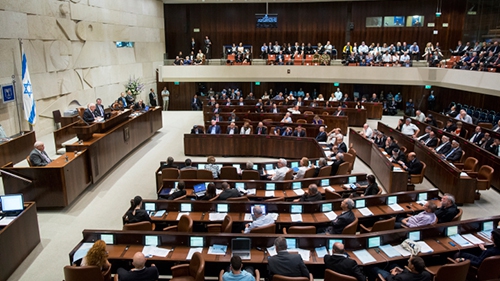
The leaders of the three Jewish communities operating in Azerbaijan have appealed to members of the Israeli parliament, the Knesset, calling on them not to support the initiative to recognize the so-called "Armenian genocide."
Axar.az informs, citing APА, the appeal, signed by Milikh Yevdayev, Chairman of the Religious Community of Mountain Jews in Baku, Alexander Sharovsky, Head of the European Jewish Community in Baku, and Zamir Isayev, Head of the Baku Religious Community of Sephardic Jews, states that the initiative could negatively affect the peace and stability process that has recently begun to take shape in the South Caucasus.
The appeal emphasizes that Azerbaijan's Jewish community is one of the world's oldest Jewish diasporas and that Jews have lived on Azerbaijani soil for centuries in an atmosphere of peace, security, and mutual respect.
It notes that Jews in the country have been able to freely preserve their religious beliefs, national identity, and traditions.
The document signed by the community leaders particularly notes that Azerbaijan is one of the rare countries where Jewish life develops freely and where the Jewish community enjoys respect and support from both the state and society.
The authors of the appeal also state that the relations established between Azerbaijan and Israel over the past decades have been based on the principles of strategic partnership, mutual trust, and friendship. In their opinion, this cooperation is an example of successful collaboration based on mutual respect and shared interests not only for the two countries, but also between the Jewish state and a country with a Muslim-majority population.
The community leaders note with regret that the Israeli government has adopted a decision supporting the recognition of the events that took place 111 years ago as the "Armenian genocide" and that the issue is expected to be submitted to the Knesset for discussion in the near future.
They believe that the fact that such an initiative is being brought forward precisely at a time when, after many years of tension in the region, there is hope for real peace, stability, and good-neighborly relations is a matter of particular concern.
The appeal emphasizes that political steps taken by third countries on such sensitive historical issues may complicate the peace process and may not serve to strengthen reconciliation, mutual understanding, and trust between peoples.
The community leaders believe that complex and sensitive historical events should be the subject of scholarly research by historians and experts, rather than political decisions. In their opinion, the politicization of these issues may create unnecessary tension among Israel's sincere friends.
The appeal states that, as representatives of Azerbaijan's Jewish community, they can testify that the Azerbaijani state has always treated its Jewish citizens with respect and care, while Azerbaijan-Israel relations have been built on the principles of friendship, trust, and mutual support.
For this reason, they appealed to the members of the Knesset to demonstrate wisdom and responsibility and not to support the initiative to recognize the so-called "Armenian genocide."
The appeal also notes that such a decision would neither benefit the State of Israel nor serve the cause of peace and mutual understanding. On the contrary, it could cause disappointment among people who have always maintained an unconditional friendship toward Israel.
At the end of the document, the authors express their hope that, when making their decision, the members of the Knesset will be guided by historical responsibility, the principles of statehood, as well as the need to preserve and further strengthen relations with friendly peoples and states.


|
Date
2026.07.01 / 16:35
|
Author
Axar.az
|