
Son of Israeli ambassador wounded in Maccabim attack
23 September 23:54
| Home page World |

|
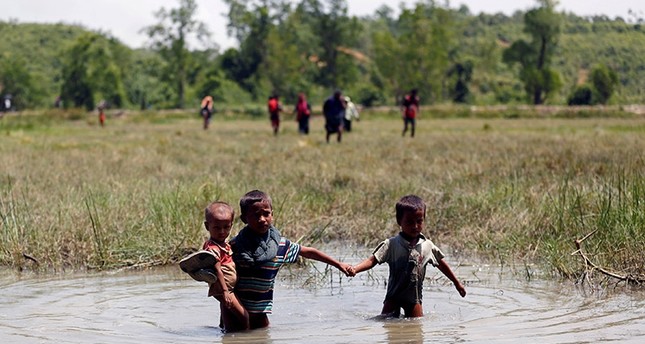
Rohingya Muslims fleeing to Bangladesh from fighting in Myanmar face the growing danger of sickness and attempts by the Bangladesh authorities to send them home despite a U.N. appeal that they are allowed to stay.
Axar.az reports citing Daily Sabah that, a series of coordinated attacks by Rohingya insurgents on Myanmar security forces on Friday, in the north of Myanmar's Rakhine State, has triggered a crackdown by Myanmar forces that has sent a stream of Rohingya villagers fleeing to Bangladesh.
It also sparked a mass evacuation of thousands of Buddhist residents of the area.
At least 109 people have been killed in the clashes in Myanmar.
Bangladesh, which already hosts to more than 400,000 Rohingya who has fled persecution in Buddhist-majority Myanmar since the early 1990s, has said it will not accept any more.
Bangladesh's border guards are trying to block the Rohingyas from crossing in, and aim to round up and send back those who do.
Border guard officials told Reuters they had sent back about 550 Rohingya since Monday, via the Naf river that separates the two countries, despite an appeal by U.N. Secretary-General Antonio Guterres for Dhaka to allow Rohingya to seek safety.
An estimated 5,000 Rohingya have been able to cross into Bangladesh over the past few days, most slipping in at night over the land border near the Bangladeshi village of Gumdhum.
Many are sick and at least six have died after crossing in, an aid worker said, adding that fear of being caught and sent back meant some refused to seek help.
"What we're seeing is that many Rohingya people are sick," said the worker with an international agency in Bangladesh who declined to be identified or have his agency identified.
"This is because they got stuck at the border before they could enter. It's mostly women and children."
"We're making all out efforts but a rapid response is needed," the aid worker said. "Some are refraining from getting treatment to avoid arrest."
Thousands of Rohingya are stranded in the no man's land between the two countries, trying to get into Bangladesh, aid workers and fellow Rohingya say.
The treatment of about 1.1 million Muslim Rohingya in Myanmar has become the biggest challenge for national leader Aung San Suu Kyi, who has been accused by Western critics of not speaking out on behalf of the long-persecuted minority.
Myanmar said late on Monday that a total of 45 insurgent bombs went off on Sunday and Monday. It also blamed the insurgents for torching seven villages, one outpost, and two parts of Maungdaw town.
Attackers ambushed security forces with small arms and machetes on Monday, and one policeman and one civilian were wounded, the government said in a statement.
Satellite imagery analyzed by New York-based Human Rights Watch showed widespread burnings in at least 10 areas in northern Rakhine State since the Aug. 25 militant raids, the group said in a statement.
"This new satellite data should cause concern and prompt action by donors and UN agencies to urge the Burmese government to reveal the extent of ongoing destruction in Rakhine State," said Phil Robertson, the group's deputy Asia director.
"Shuffling all the blame on insurgents doesn't spare the Burmese government from its international obligations to stop abuses and investigate alleged violations."


|
Date
2017.08.29 / 15:54
|
Author
Axar.az
|