


Five men bailed after arrests near US-run UK air base
28 September 23:58
| Home page World |

|
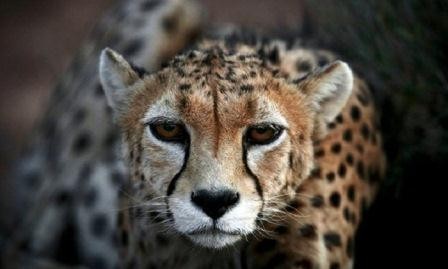
Conservationists say only two female Asiatic cheetahs are known to be alive in the wild in Iran, which hosts the last surviving population.
Asiatic cheetahs, also known as Iranian cheetahs, are a subspecies of the fastest animal on earth and classified as critically endangered, with fewer than 40 believed to remain in Iran.
As part of efforts to raise the animal’s profile, in the past decade cheetahs have been displayed on the national football team’s kit and on stamps, but it has become increasingly imperilled.
Tuesday was Iran’s national cheetah day, marking an event more than two decades ago when a cub named Marita survived an attack by a group of villagers in which his mother and two siblings were killed. Marita became a national symbol.
Morteza Eslami, head of the Iranian Cheetah Society (ICS), a Tehran-based NGO, said camera traps in areas with the most Asiatic cheetahs had seen just two females in recent months.
“The situation is very critical,” he said. “We have been monitoring the situation closely in the past five years and the population of female Asiatic cheetahs has significantly dropped.”
Delaram Ashayeri, an independent conservationist, said: “Unfortunately the number of female cheetahs has been dwindling. In areas where camera traps have been operating for a long time … we are not seeing many female cheetahs or we’re seeing only carcasses.”
In the past 15 years, 48 cheetahs are believed to have died, seven from natural causes, 21 at the hands of farmers, 15 in car accidents and five as a result of hunting.
Of the two female cheetahs believed to be still alive, one is in Turan national park and the other in the nearby Miandasht reserve.
“In some of our other environmental areas we haven’t had any reports of female cheetahs for at least two years now, including in an area near the city of Yazd where only four male cheetahs survive,” Eslami said.
Two Asiatic cheetahs – a male, Koushki, and a female, Delbar – are held in captivity at Tehran’s Pardisan Park research centre. They have not yet successfully mated.
Eslami said the fate of Asiatic cheetahs was important because two other big cats, the Caspian tiger and Persian lion, had become extinct in Iran. The Caspian tiger is extinct worldwide; a small population of Persian lions remains in India.
ICS has launched an online petition calling on the president, Hassan Rouhani, to intervene, including to prevent the construction of new roads and mines close to the natural habitats, erect fences around existing roads, increase the number of conservationists and encourage greater participation of indigenous people.
Eslami said despite last year’s nuclear agreement which resulted in the removal of sanctions, Iranian conservationists still had limited access to international funding and equipment.
“I don’t want to sound pessimistic because if it wasn’t for the past work of conservationists, cheetahs would have become extinct by now, but despite the critical situation, we still have hope today,” Eslami said. “But more needs to be done.”


|
Date
2016.08.31 / 22:43
|
Author
Axar.az
|