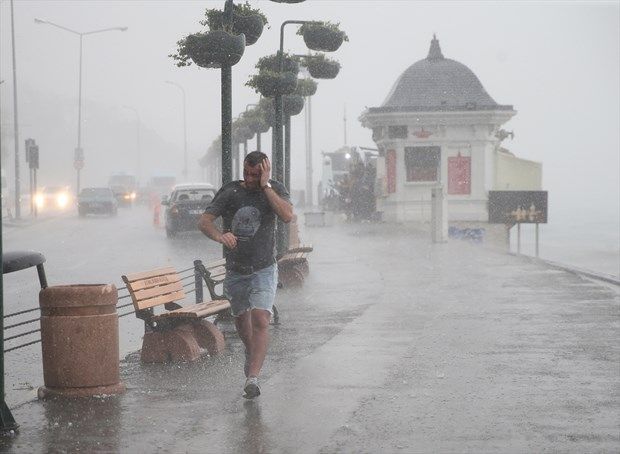
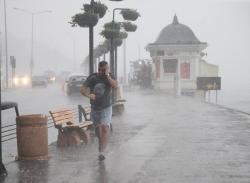


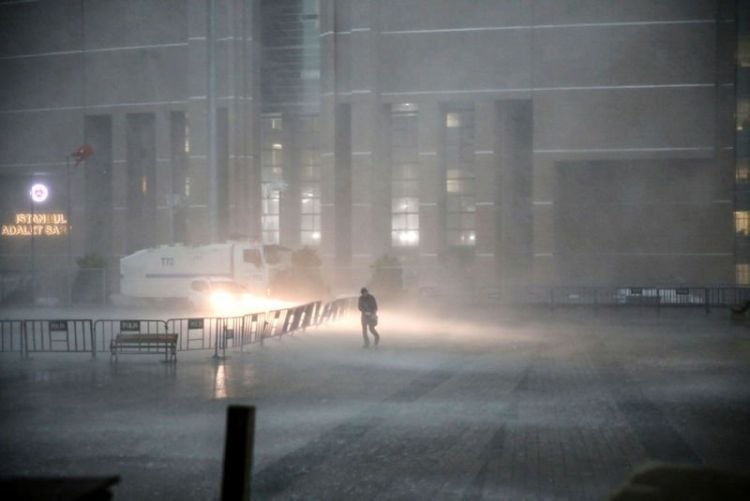
Heavy rain floods streets across Istanbul - Video
23:16
| Home page Culture |

|
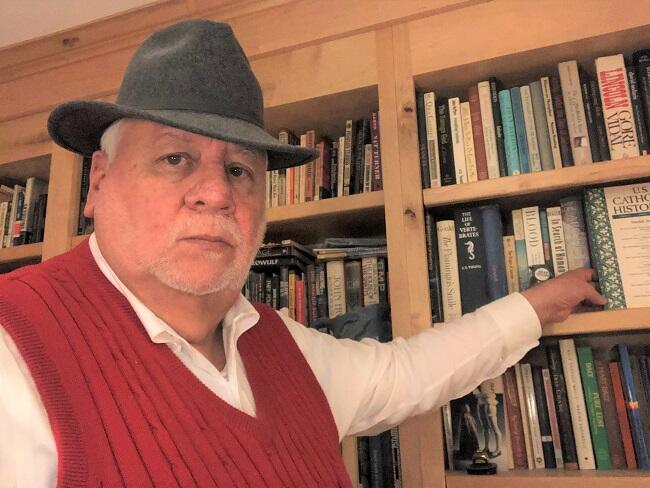
Axar.az presents an article, "Violent Behavior Is Learned" by John Samuel Tieman.
During my years as a teacher, I worked in an institute for disturbed teens. One kid, let's call him Tom, revealed how he had witnessed his father severely beat his mother. A half hour later, he spoke of his dreams of marriage and family. As he got more specific about his plan, he was asked what he would do if his wife didn't agree. “She'll agree if I smack her!” Violent behavior, like any other behavior, is learned.
Tom had learned a lesson too common in our society. Violence gets short-term results. What he couldn't see is that violence is neither creative nor does it provide long-term solutions. Violence creates relationships in which people cannot grow, because they are scared. But victims of trauma seldom see that. One lesson is that the world contains two kinds of people – the strong and the weak, the winner and the loser. Violence teaches you to get your own way; it doesn't teach you to be the sensitive observer of the other's pain or the reflective observer of your own pain.
In a violent society, trauma is a major source of education. Another simple lesson: Violence brings order. To achieve this order within relationships, the former victim learns to perpetrate violence. Violence is the only sure way to feel strong and “on top”, at least for the moment. However, this is a rigid, inflexible view that requires you to always be vigilant and to know where to stand in relation to everyone.
During times of self-doubt, the victim of violence feels worthless, and this is unbearable. People who were abused as children never learned to care for themselves because they learned only one way to feel good, at least for a while, and that is to control someone else.
Like Tom, perhaps one in two people is abused by his or her own parents, psychologically, physically or sexually. And again like Tom, the victim carries on such activity because this is learned behavior. If you have a problem, you solve it with violence or abuse – “She'll agree after I shack her!”
Trauma is widespread in our society. Consider some numbers. Perhaps one in four women who enter an emergency room does so because someone who loves her beat her up. (“She'll agree after I smack her!”) Perhaps one in ten people suffers from alcoholism, a leading cause of emotional abuse and violence. The leading cause of death in young Black males is homicide. There are 1 1/2 guns in America for every man, woman, child. Then there is the ubiquitous presence of militarism and its corrosive effects upon the soul. In our society, violence is entertainment – boxing, wrestling, blood sports in general, not to mention violence on TV and in movies. The president just hosted a mixed martial arts event on the south lawn on the White House.
Think about chic exercises like mountain biking, river running, and ice climbing. These may seem exciting and physically demanding sports, but they also tell of emotional numbness, a numbness to the ordinariness of life. Take mountain biking, for example. Riding a bike down a steep incline at high speed is exhilarating. The adrenaline rush alone would produce intense sensations. But what do these sensations cost the participant? Do they diminish his or her capacity for pleasure in other parts of life? Just how much trauma has a person suffered to consider as sport the riding of a bike down the side of a steep mountain?
I seem to recall reading somewhere that the psychologist Abraham Maslow speculated that perhaps 50% of folks in the United States never satisfy their elemental physiological and security needs. Some of the people he refers to have trouble putting food on their tables, but many a child worries if Daddy will come home tonight and smack Mommy around.
The level of trauma, the ubiquitous nature of such trauma, is not without consequences. Americans are a violent and warlike people. Today's question, however, is not what we are, but what we can become. To put it differently, if we are warlike, then what do we do about our wounds?
For a warrior is, sooner or later, always wounded. Do we pass the wounds on (“We don't get mad, we get even!”) or do we choose to heal the wounds? Do we learn to repeat our traumas, changing only our role from victim to perpetrator (”She'll agree after I smack her!”)?
Or do we make another choice? A simple choice. Do we learn from our own pain? Do we learn to avoid pain the next time by not inflicting the pain we have known upon another?
Can Tom unlearn what his father taught him? He can't forget his trauma, but he can learn not to repeat it. He can choose any number of nonviolent solutions. He can choose to say to himself, “Of all my options, violence is not one of them.” If nothing else, he can simply say to his wife, “Let's talk.”
He can learn to listen instead of hit. And so may we all.


|
Date
2026.07.06 / 09:51
|
Author
Axar.az
|