








Turkiye sends first Osman Gazi platform to Black Sea
17:33
| Home page Culture |

|
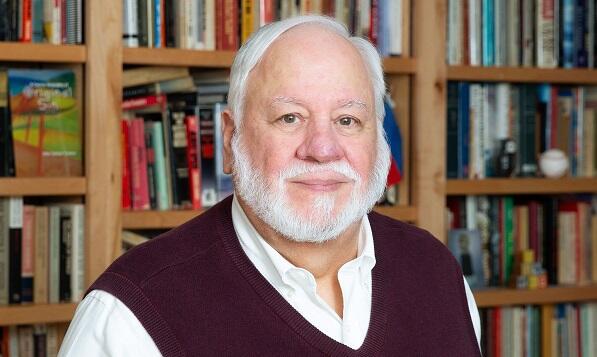
Axar.az presents an article, "Closure" by John Samuel Tieman.
Timothy McVeigh killed 168 people, and injured 684, when he bombed a federal building in Oklahoma City in 1995. Now consider 2001. Think of Tim McVeigh's last few bowls of ice cream. Now think of his eyes as he died.
There is an intimacy to an execution. The condemned loses all privacy. We learn the details of the crime, the personal life histories, the family, the last hour. And we want every detail. Why? Because the condemned men or women cease to belong to themselves. They belong to us.
Executions are a ritualized effort to repair the pain created by murder. The condemned becomes the sacrifice. If we take from this person the only thing he or she has left to give, then we presume to equalize the equation. If this person is stripped of his or her dignity, if that man or woman weeps and pleads, then we see our suffering reflected in their suffering. Thus do we hope to experience closure.
An interesting word, closure. In one sense, it means confinement. In another, it means conclusion. But there is more. For there is an implied meaning of agreement, unity and union. When we execute, we participate in a public event. The act of execution draws in everyone just by the fact of our awareness of it. Our attentiveness, whether the personal awareness of the victim's family or the more general awareness of the public, drives us to seek some satisfaction through the ritual meal, the ritual reading of the death warrant.
We're given permission to stare. We're given permission to look into the eyes of the condemned. We look for some sign, some fear, regret, some emotion that we recognize, something that convinces us that he or she understands why they are suffering. For in that ritual, it is necessary that the condemned comprehend the meaning of the act that is carried out on his or her body. Indeed, it is vital that the prisoner acquiesces to the executioner's interpretation of what is happening. Thus does the prisoner validate our suffering.
And thus the ritual humiliation, for the execution is never about the prisoner. The ritual is about us. In this sense, the condemned is no longer fully human. He or she is an extension of our emotions. They are to act as the vehicle leading us to satisfaction or reparation. If the condemned can register some response, some fear, longing, wanting his mother perhaps, then we can feel satisfaction.
It is this display of emotion for which we yearn. The community wants to etch its pain on the face of the condemned. This is why we have that peculiar interest in the last meal. It is such a moment of vulnerability. If this were your last meal on earth, what would you want? This vulnerability of the man or woman, who is helpless to do anything to defend themselves, is laid before us. We want to see his softness. We want to know that something is to be done to her from which she can never recover. In this way, the execution parallels the experience of the community. Something was done to us that can never be undone. For whatever else an execution is, it is about us. It is about our pain. The prisoner becomes our mirror.
In short, if the prisoner suffers, then his or her suffering brings some finality to the suffering of the victims and the community. At least that's the hope.
But does it?
What if some people, after viewing the execution, cannot identify their feelings? Or what if they feel guilty for feeling a bloodlust, which, ironically, is not considered appropriate at an execution? Or what if the witnesses have a range of feelings, pity, hate, rage, compassion, revenge? We should not presume that there is only one emotion appropriate to an execution.
After all, we should not presume that all who view an execution are of the same mind. There are, for instance, victims who oppose the death penalty. In these cases, the person traumatized by the murder is often traumatized by the execution.
In short, people who speak of execution as closure presume that rituals have one predictable emotional outcome. But this simply isn't true. There is no one expectation beyond the fact that trauma takes a long time to heal. Closure is neither a ritual nor a moment. Nor is it corporate. Closure is a singular process, an individual process, one that struggles toward some resolution that may take years, even decades, to find. Or never find. As one victim of the Oklahoma City bombing said, “When I die, and they lay me in my grave, that's when I'll have closure.”


|
Date
2026.07.13 / 09:51
|
Author
Axar.az
|