

AFFA appointed Mustafayeva as UEFA Youth League delegate
22:52
| Home page Politics |

|
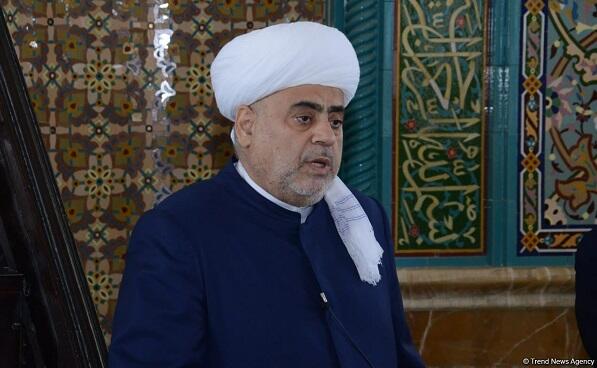
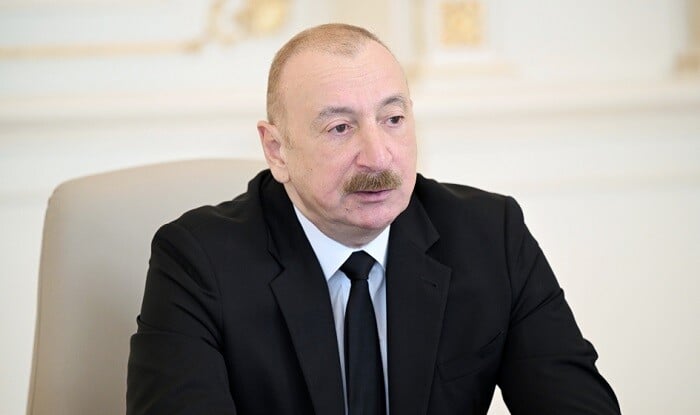
Sheikhulislam Allahshukur Pashazade, Chairman of the Caucasus Muslims Office, has sent a letter of protest to Jerry Pillay, Secretary General of the World Council of Churches (WCC), regarding the statement issued by the WCC on April 23.
Axar.az presents the letter:
“Honorable Mr. General Secretary,
I extend to you my sincere greetings. I am writing to you to address several anti-Azerbaijani allegations reflected in the statement issued by the World Council of Churches (WCC) on April 23. Regrettably, the statement seriously distorts recent developments in the region with regard to our country, and such an approach is unacceptable.
During our previous contacts, you acknowledged that Armenian churches regularly attempted to influence you. Unfortunately, it appears that those efforts are “bearing fruit,” and the WCC is being used as a tool for inflammatory propaganda that does not reflect reality, undermines the peace process, and attempts to artificially introduce a religious dimension to the issue.
At the meeting held on February 8, 1993, in Montreux under the mediation of the WCC, we signed a Joint Communiqué with the then-Catholicos of All Armenians, Vazgen I, stating that “despite certain attempts to portray this conflict, which has resulted in the shedding of innocent blood, as a Christian–Muslim confrontation, it is not a religious conflict. Christian Armenians and Muslim Azerbaijanis should continue to live in peace, mutual respect, and good-neighborliness.” The WCC unequivocally supported this position of ours at that time.
The stance demonstrated by the Council during that period, as well as its visits to refugee and internally displaced persons’ settlements and the humanitarian assistance provided to them, was received with deep gratitude by our citizens and religious people who had suffered from Armenian aggression and was appreciated as a valuable contribution to peace and justice, as well as to endeavors of interreligious dialogue.
Unfortunately, during your leadership at the WCC, your organization has not taken steps that contribute to reconciliation between the Armenian Church and us.
As is well known, as a result of Armenia’s military aggression against Azerbaijan, 20% of Azerbaijan’s territories remained under occupation for nearly 30 years, mass atrocities were committed against Azerbaijanis, and more than one million of our compatriots were forcibly displaced from their native lands. The UN Security Council adopted four resolutions strongly condemning Armenia’s aggression against Azerbaijan and demanding the immediate, complete, and unconditional withdrawal of Armenian armed forces from our occupied territories.
In 2020, Azerbaijan liberated its ancestral lands from occupation in accordance with international law, the UN Charter, and the aforementioned Security Council resolutions. In September 2023, in response to large-scale armed provocations by the armed forces of Armenia in several regions of our country, Azerbaijan conducted a one-day anti-terror operation, after which it fully restored its sovereignty.
In this regard, presenting Azerbaijan’s historical land as Armenian territory constitutes a violation of international law and a disregard for historical realities. The statement issued as a result of the Prague meeting of the President of the Republic of Azerbaijan and the Prime Minister of the Republic of Armenia in October 2022 emphasized that both sides recognized each other’s territorial integrity and sovereignty, and the Prime Minister of Armenia has officially declared that Garbagh is an integral part of Azerbaijan. The peace agreement initiated between Azerbaijan and Armenia during the Washington Summit in August last year clearly reflects mutual respect for the territorial integrity and sovereignty of both countries. Nevertheless, the Armenian Church, as always, does not accept the fact that Garabagh is a sovereign territory of Azerbaijan, calling on Armenians to pursue a policy of occupation, aggressive separatism, and revanchism, which in turn creates serious obstacles to the peace process between the two countries.
At the same time, the allegations in the WCC statement claiming that Armenian residents were forcibly expelled from Garabagh and that their rights were violated are completely unfounded. I would like to emphasize that the UN missions that visited the region immediately after the 2023 anti-terror measures confirmed that there was no violence against the civilian population or civilian infrastructure in this area. Despite the disinformation of Armenian propaganda, as international observers have also confirmed, there was no pressure or violence against the civilian population in the Garabagh region of Azerbaijan, and they left this area voluntarily.
The claims made in the statement regarding Azerbaijan’s treatment of religious and cultural heritage are equally baseless. For centuries, places of worship and communities belonging to various religions, including Orthodox, Catholic, and Jewish communities, have operated freely in Azerbaijan. Azerbaijan ensures the protection and restoration of all religious monuments on its territory, including mosques, churches, and synagogues, without discrimination. At the same time, it is necessary to emphasize the recent restoration of the Armenian Kazanchi Church in Shusha as well as the state protection of the Armenian Church in Baku throughout the conflict. Yet, it is regrettable that the facts of the systematic destruction of mosques and other religious and cultural monuments of Azerbaijan during the occupation were not taken into account by international religious organizations.
Regarding the allegations on Armenian prisoners, we would like to bring to your attention that Azerbaijan, demonstrating goodwill, returned the vast majority of detainees after the 2020 war and the 2023 anti-terror measures. The prisoners currently in custody are individuals who have been convicted of many serious crimes, including terrorism, sabotage, and war crimes, and their sentences within the legal framework are the manifestation of divine justice.
It is regrettable that the statement did not take these important points into account and presented the events in a one-sided manner. Such an approach undermines the fragile trust in the region and does not serve the peace process.
We call on the influential international religious organizations, such as the World Council of Churches, to base its positions on balanced, objective, and verified information when formulating its positions on the region. Politicization of religious platforms and selective approaches do not contribute to the peace and reconciliation process.
By the Will of the One Creator, it is one of the most virtuous deeds for religious figures to serve the Truth and contribute to the ideas of humanism - peace, coexistence, and mutual understanding.
I hope that the WCC, while not succumbing to the political provocations left over from the past, will demonstrate a fair approach to the Armenian Church’s attempts to incite discord and will not allow attempts that hinder the establishment of lasting peace in our region.
We once again declare our readiness for constructive cooperation, adhering to the principles of interfaith dialogue and mutual respect.
May the Almighty help you!
With regards,
Sheikhulislam Allahshukur Pashazade”.


|
Date
2026.04.29 / 23:23
|
Author
Axar.az
|