
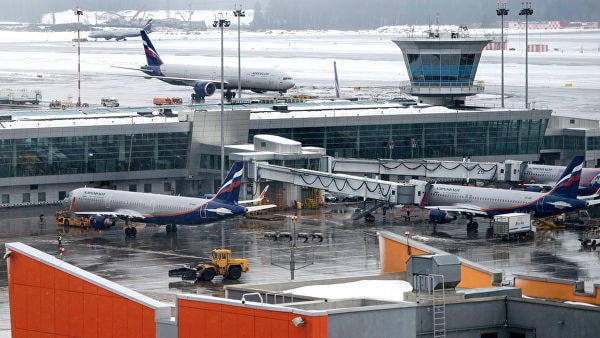
Over 100 flights delayed at Moscow airports
20:55
| Home page Politics |

|
The World Bank plans to allocate $410 million for the implementation of the Livable Baku project.
Axar.az informs, citing Rеport, that according to the World Bank, the project is expected to be appraised by October 26, 2026, while its approval by the Board of Directors is scheduled for February 18, 2027.
The financing will be provided through the International Bank for Reconstruction and Development, which is part of the World Bank Group.
The total cost of the project is $501.25 million, with the Azerbaijani government's contribution expected to amount to $91.25 million. The project aims to improve quality of life and strengthen resilience to climate threats in Greater Baku and surrounding areas.
Under the project, financing will be provided for agreed capital investments and institutional development measures aimed at addressing the most pressing environmental problems in Baku's urban environment. The project includes three mutually reinforcing investment components and one project management component.
According to the project concept, improving the quality and resilience of Baku's urban environment is impossible without parallel efforts to address infrastructure gaps and environmental pollution and to strengthen institutional capacity.
The first component, Integrated Solid Waste Management, provides for the financing of works, goods and services to upgrade solid waste management infrastructure in Baku and the Absheron district. Key investments include the construction and commissioning of sanitary landfills that meet international environmental standards, the establishment of waste transfer stations, and the creation of material sorting and recovery facilities to improve resource recovery and reduce the volume of waste sent to landfill.
This component will also support measures to improve the separate collection of waste at source, develop recycling and promote a circular economy.
The second component, Remediation of Polluted Lakes and Areas, is the largest component and focuses on the environmental rehabilitation of natural water bodies and oil-contaminated land. Financing will be allocated for the restoration of three natural lakes - Zigh, Khojasan and the western part of Boyuk Shor - which have been polluted by industrial and household waste for decades.
The component will also support the remediation of selected oil-contaminated sites in Greater Baku. The restored areas are expected to provide significant environmental benefits by expanding green spaces and freeing up land for urban development.
The third component, Institutional Strengthening, aims to develop the capacity of state institutions to plan, manage and preserve an environmentally friendly and resilient urban environment. Key measures include strengthening capacity in integrated urban planning and management, creating and applying land resource management systems, and supporting reforms in the solid waste management sector, including regulatory reforms, tariff regulation and improvement of the legal framework.
The fourth component, Project Management, Monitoring and Evaluation, will finance the operating costs of the Project Implementation Unit, including procurement, financial management, compliance with environmental and social standards, monitoring and evaluation, and project communications. In addition, this component will support the development of the project's monitoring and evaluation system, including the collection of baseline data and mechanisms for reporting on achieved results.
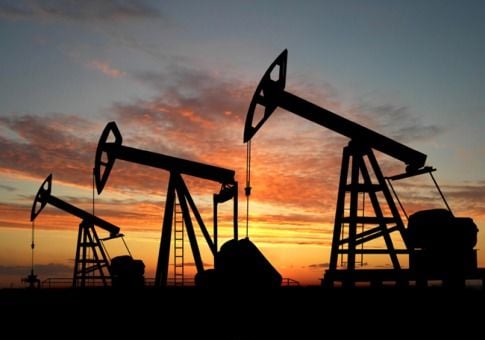
The World Bank said the need for the project stems from soil and water pollution caused by many years of oil production and industrial activity.
"The situation is further complicated by shortcomings in the waste management system and the city's exposure to natural risks, including seismic, flood and temperature risks. At the concept stage, the project's environmental and social risks were assessed as high," the project description says.
The project will be implemented by a hybrid Project Implementation Unit under the Ministry of Economy, with the involvement of relevant ministries and utility organizations.
The World Bank said Azerbaijan is classified globally as an upper-middle-income country. The country's economic system has historically relied on revenues from the hydrocarbon industry, enabling large-scale public investment in infrastructure and human capital.
However, Azerbaijan faces the need to diversify its economy in order to reduce dependence on oil revenues, and the government is implementing structural reforms aimed at increasing productivity, attracting foreign investment, and improving the quality of public services and urban infrastructure.
Over the past two decades, Baku has experienced rapid urbanization, but this development has been uneven.
Climate change is further deepening existing problems, as rising temperatures increase the urban heat island effect and eco-meteorological pressure across the entire agglomeration. According to World Bank specialists, addressing these complex urbanization challenges is important for Azerbaijan's broader goals of resilient and sustainable economic development.
Experts say effective management of Baku's ecosystem requires coordinated work among various institutions, including the Ministry of Ecology and Natural Resources, the Azerbaijan State Water Resources Agency, the State Committee for Urban Planning and Architecture, SOCAR and Tamiz Shahar OJSC.
"Institutional capacity, coordination mechanisms and reliable data systems for integrated urban management are still being developed. The Baku General Plan through 2040, prepared by the Azerbaijani government, sets a unified strategic framework for the capital's long-term development and includes a $55 billion investment program to transform Baku into a comfortable, competitive and resilient agglomeration. The $500 million Livable Baku project directly supports the implementation of the environmental and resilience components of the General Plan 2040," the World Bank said.


|
Date
2026.06.29 / 23:23
|
Author
Axar.az
|