


Romania proposes joint NATO military command in Black Sea
09:37
| Home page Science |

|
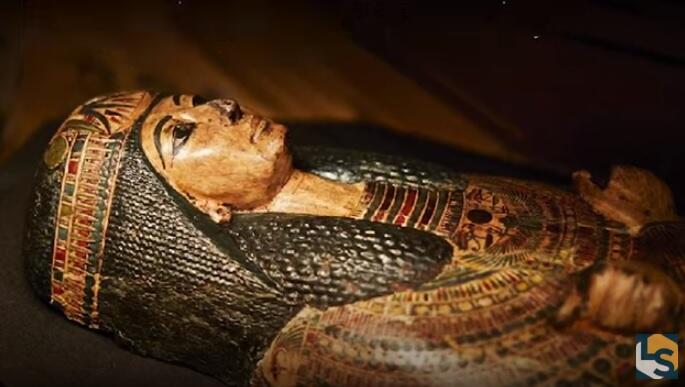
A Greek literary text from Homer’s Iliad has been discovered inside a Roman-era Egyptian mummy, marking what researchers describe as a unique archaeological finding.
Axar.az reports that the mummy was found in Tomb 65 of Sector 22 within a funerary complex dating back approximately 1,600 years. Inside the body, researchers identified a papyrus placed on the abdomen as part of the embalming process.
Subsequent analysis carried out in early 2026 confirmed that the papyrus contains a passage from Book II of the Iliad, specifically the “Catalogue of Ships,” which lists the Greek forces assembled for the Trojan War. The passage is considered one of the most well-known sections of Homer’s epic.
Researchers noted that previous excavations at the same site had uncovered Greek papyri placed inside mummies, but those texts were exclusively magical or ritualistic in nature. This is the first known case of a Greek literary text being deliberately incorporated into the mummification process.
“This is not the first time we have found Greek papyri, bundled, sealed, and incorporated into the mummification process, but until now, their content was mainly magical. The real novelty is finding a literary papyrus in a funerary context,” said professor Ignasi-Xavier Adiego, one of the project’s lead researchers.
The excavation is part of the long-running Oxyrhynchus Archaeological Mission, which has been operating since 1992 and is supported by the University of Barcelona and several Spanish and Egyptian institutions.
The discovery was made by the Oxyrhynchus Archaeological Mission, led by the Institute of Ancient Near East Studies (IPOA) at the University of Barcelona, during excavations conducted between November and December 2025 in Al Bahnasa, the modern site of ancient Oxyrhynchus in Egypt.
The findings from the latest campaign are currently being presented in a series of public lectures in Barcelona


|
Date
2026.04.23 / 23:43
|
Author
Axar.az
|