

Trump calls flying Tesla Roadster ‘very impressive’
01:13
| Home page Society |

|
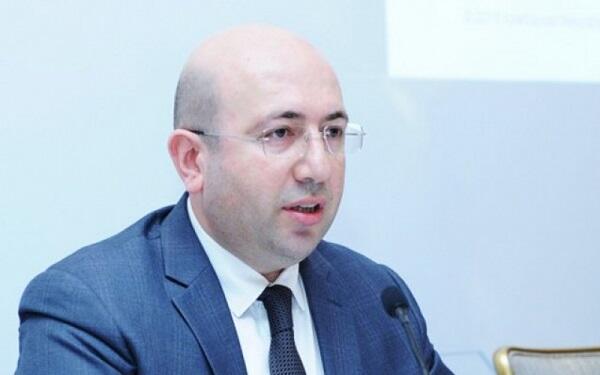
As part of WUF13, the event titled “Powering Sustainable Cities in the D-8 Region: Aligning Energy Transitions with Urban Development Agendas” featured discussions on sustainable urbanization, green energy transition, post-conflict urban planning, and climate resilience.
Axar.az informs in his remarks, Anar Guliyev, National Coordinator for WUF13 and Chairman of the State Committee on Urban Planning and Architecture, noted that the expansion of renewable energy projects, the reconstruction of liberated territories, and sustainable urban development are among the main directions of Azerbaijan's long-term economic and environmental strategy.
“Through renewable energy projects implemented in the country, Azerbaijan aims to increase the share of green energy in its energy balance from 13 percent to approximately 38 percent, and to raise total renewable energy capacity to 8 gigawatts by 2032.
Reconstruction projects in Garabagh and East Zangezur are based on the principle of ‘building back better.’ In these territories, sustainable settlements are being established in accordance with the ‘smart city’ and ‘smart village’ concepts, and more than 80,000 people have already returned to their native lands,” the WUF13 National Coordinator added.
Azerbaijan’s Minister of Energy Parviz Shahbazov underlined that next year, 12 solar and wind power plants with a total capacity of 2 gigawatts will be commissioned, preventing approximately 2.4 million tons of greenhouse gas emissions annually.
“‘Smart city’ and ‘smart village’ projects are being implemented in Garabagh and East Zangezur as part of the green energy zone created at the initiative of President Ilham Aliyev. These territories are equipped with solar panels, energy-efficient technologies, and electric charging infrastructure,” Parviz Shahbazov noted.
Other speakers included Pakistan’s Federal Minister for Climate Change and Environmental Coordination Musadik Masood Malik and Sohail Mahmood, Secretary General of the Developing-8 Organization for Economic Cooperation (D-8).
The speakers emphasized the importance of international cooperation, green energy transition, and innovative urban planning approaches in shaping sustainable cities.
The event continued with speeches by ministers and deputy ministers from D-8 member countries.
The dialogue serves as an important international platform for cooperation and discussions on urban planning, environmental protection, and climate sustainability issues related to the development of sustainable cities.


|
Date
2026.05.20 / 13:24
|
Author
Axar.az
|