










Eight matches played in UEFA Nations League
00:58
| Home page Society |

|
There is a very thin line between brilliant innovation and absolute failure, as some of these inventors famously found out.
Some of the most popular products we use today were accidents stumbled on by clumsy scientists, chefs who spilled things, and misguided inventors who–in the case of the glue used on Post-it Notes–were trying to create the opposite of what they ended up with. But we can all take comfort in knowing even some huge mistakes can come with silver linings, sometimes big enough to change entire industries. And sometimes, even forgetting to wash your hands has its advantages.
1. The Slinky

Somehow if the song had gone: “A spring, a spring, a marvelous thing! Everyone knows it’s Industrial Equipment Stabilizers,” it wouldn’t have been quite as catchy.
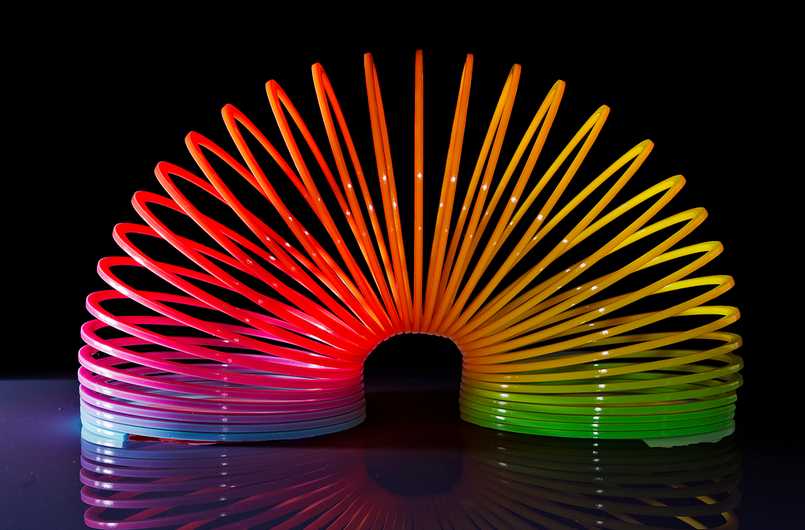
Yet that was the intended use of the springs naval engineer Richard James was developing in 1943. The sensitive springs were meant to keep fragile equipment steady on ships. Then James knocked one of his new springs from a shelf and, like a kid on Christmas morning, watched it do that famous Slinky walk down instead of just hitting the ground, asTime noted in its all-time greatest toys list last year.
He took the creation home to show his wife, Betty, who saw the potential for a new toy. After consulting the dictionary, a name sprung (sorry) to mind: Slinky, a Swedish term meaning “sleek and sinuous.” By time the toy was demonstrated in front of Gimbels Department Store in Philadelphia, during the 1945 Christmas season, it was clear it would be the Tickle Me Elmo of its time. The industrial machine James had could coil 80 feet of wire into two inches, and hundreds of Slinkys were already being sold.
That’s not all, either: The Slinky has found other uses, including as an antenna by soldiers in Vietnam and as a therapy tool. Whatever the use, everyone knows it’s Slinky.
2. Saccharine

The familiar sweetener in the pink packet was discovered because chemist Constantin Fahlberg failed to do what even a high school chemistry student knows: Always wash your hands.
Prepare to be grossed out. Here’s the scene: It’s 1879, and Fahlberg was sitting in his lab, toying around with new uses for coal tar, to no great success. The work interested him so much he forgot about his supper until late, then rushed off for a meal with his hands all still covered in laboratory goo, as he later admitted in an interview with Scientific American.
He broke a piece of bread, put it to his lips, and noticed it tasted unusually sweet. He rinsed his mouth, wiped his mustache with a napkin, and found the napkin tasted sweeter, too. Even the water in his cup tasted syrupy. Then he did what would surely gross out any scientist passerby: He stuck his thumb in his mouth, then went back to his laboratory and tasted every beaker and dish in the lab until he found the one that contained saccharin.
Luckily for dieters everywhere, he managed not to poison himself along the way.
3. Corn Flakes

Dr. John Kellogg and his brother Keith would have fit right into today’s world of new agey health fads. In 1894, however, they were probably laughed at as weirdo health freaks who put visitors at their hospital and health spa in Battle Creek, Michigan, through strange health regiments that included abstaining from meat, alcohol, tobacco, and even sex. One part of that regiment was eliminating caffeine by using a coffee substitute made of a type of granola. After cooking some wheat, the men were called away, as happens when you’re running a busy sanatorium. When they came back, the wheat had become stale, but, ever the budget-conscious hippies, they decided to force it through the rollers anyway.
Instead of coming out in long sheets of dough, each wheat berry flattened and came out as a thin flake. The brothers baked the flakes, and, boom, a new breakfast cereal fad was born, as the Kellogg’s official website points out.
That wasn’t the only cereal trend that was born at the Battle Creek sanatorium: Charles William Post, who later founded Postum Cereal Company (aka Post Cereals), was a student of Kellogg’s. He developed his own line of products based on the cereal he ate at the clinic. The Post cereal company went on to make Honeycomb, Fruity Pebbles, Waffle Crisp, and lots of other sugary cereals the health-conscious Kellogg probably would have shaken his head at.
4. Penicillin

If Alexander Fleming’s mother were around, we all might be a lot sicker.
Like anyone eager to go on vacation, Alexander Fleming left a pile of dirty petri dishes stacked up at his workstation before he left town. When he returned from holiday on September 3, 1928, he began sorting through them to see if any could be salvaged, discovering most had been contaminated–as you might expect would happen in a bacteria lab in a hospital.
As has been well-documented in history books and on the Nobel Prize website, Fleming dumped most of the dishes in a vat of Lysol. But when he got to a dish containing staphylococcus, something odd caught his eye. The dish was covered in colonies of bacteria, except in one area where a blob of mold was growing. Around the mold was an area free of bacteria, as if the mold had blocked the bacteria from spreading. He realized it could be used to kill a wide range of bacteria–and penicillin was identified.
From that minor act of scientific sloppiness, we got one of the most widely used antibiotics today.


|
Date
2017.04.11 / 15:24
|
Author
Axar.az
|