










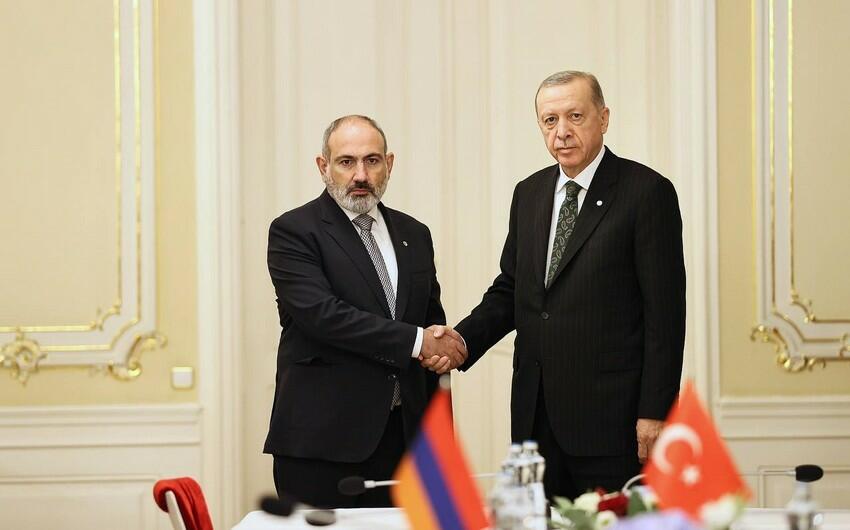
Erdogan, Pashinyan discuss Turkiye–Armenia normalization
00:40
| Home page Society |

|
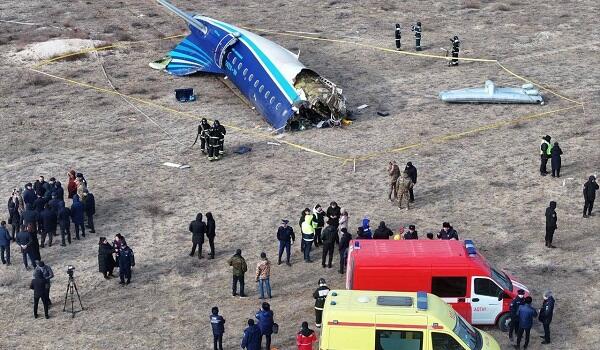
Survivors of the Azerbaijan Airlines flight J2-8243, which crashed in Kazakhstan, have revealed chilling details of explosions they heard before the disaster. The crash, which occurred near Aktau, claimed 38 lives, leaving 29 survivors, many of whom are gravely injured.
Axar.az, citing Reuters, reports that passengers and crew described hearing loud bangs as the Embraer 190 approached Grozny, its original destination in Russia's Chechen Republic. Subhonkul Rakhimov, a passenger, recalled a terrifying moment:
“After the bang... I thought the plane was going to fall apart. It was obvious something had damaged the plane.”
Another survivor, Vafa Shabanova, described hearing two bangs and being advised to move to the rear of the aircraft. Flight attendant Zulfugar Asadov confirmed three loud bangs, followed by a loss of cabin pressure.
The chaos worsened as oxygen masks deployed, and passengers donned life vests in preparation for an emergency landing. “The pilot warned us of a hard landing,” said Asadov. The plane ultimately crashed in Aktau after the captain chose not to land at sea despite being advised to do so.
Allegations of External Interference
Initial reports suggested the possibility of a bird strike. However, Azerbaijan Airlines hinted at "physical and technical external interference" as the cause. Four sources familiar with the preliminary investigation revealed that Russian air defenses might have mistakenly shot down the plane.
Russia has urged patience until official findings are released, with Kremlin spokesperson Dmitry Peskov refraining from speculation.
Drone War Risks and Civil Aviation
The crash highlights the dangers of civil aviation near conflict zones. Though 850 km (530 miles) from Ukraine’s front lines, Grozny and surrounding areas are frequent targets of Ukrainian drones. Russia’s use of electronic jamming and air defense systems to counter drones adds complexity to civilian flight safety.
"The second you place civilian aircraft in the same airspace as ongoing air defense activity, the risks multiply," said Andrew Nicholson, CEO of Osprey Flight Solutions.
Russia’s aviation watchdog confirmed the flight was rerouted due to dense fog and a local alert over Ukrainian drones. Despite being offered alternative airports, the captain chose Kazakhstan's Aktau, where the tragic crash occurred.
Survivors’ Harrowing Accounts
Footage from the cabin moments before the crash showed passengers preparing for impact. Post-crash videos revealed bloodied and bruised survivors emerging from the wreckage. Survivor Rakhimov described a haunting silence after the crash, broken only by the moans of the injured.
The tragedy draws parallels to previous aviation incidents involving military conflict, including:
• 2020: Ukrainian Flight PS752 was shot down by Iran’s Revolutionary Guards, killing 176.
• 2014: Malaysian Airlines Flight MH17 was downed by a Russian BUK missile over eastern Ukraine, killing 298.
• 1983: The Soviet Union shot down Korean Air Lines Flight 007, killing 269.
• 1988: A U.S. warship shot down Iran Air Flight 655, killing 290.
Investigations Underway
Kazakhstan and Azerbaijan have launched joint investigations, supported by Russia. The plane’s flight recorders, or black boxes, have been recovered and are expected to shed light on the disaster.
The tragedy underscores the risks of flying in regions impacted by geopolitical conflict, emphasizing the need for heightened safety measures in civilian aviation corridors.


|
Date
2024.12.28 / 15:36
|
Author
Axar.az
|