
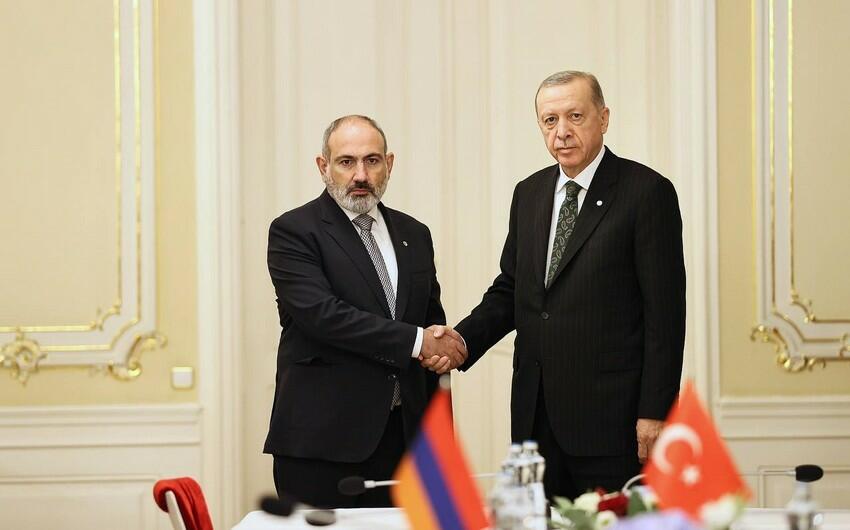
Erdogan, Pashinyan discuss Turkiye–Armenia normalization
00:40
| Home page World |

|
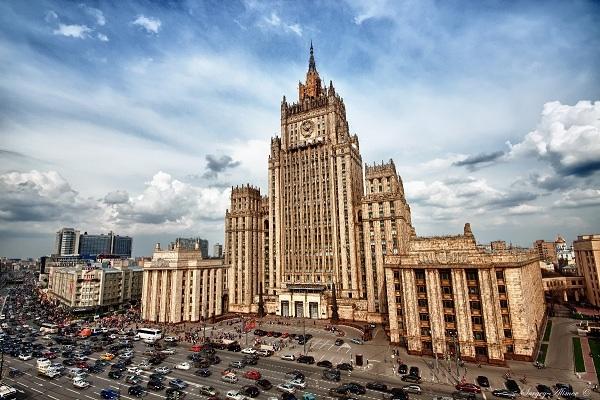
Russia supports continuing international discussions on security and stability in Transcaucasia, but insists the negotiations move from Switzerland to a truly neutral country, citing what it sees as Swiss bias in the context of the Ukrainian crisis.
Axar.az, citing Izvestiya, reports that Russian Deputy Foreign Minister Mikhail Galuzin confirmed that a new round of consultations is scheduled for March 18-19, while potential alternative venues include the UAE, Saudi Arabia, Qatar, or Belarus, which are considered more acceptable to all parties.
The Transcaucasian dialogue involves representatives from Russia, Georgia, Abkhazia, South Ossetia, and the United States, co-chaired by the EU, UN, and OSCE. Despite a long history dating back to the 2008 conflict, progress has been limited, with working groups addressing security and humanitarian issues but no major breakthroughs.
Russia has called on Georgia to sign a non-use-of-force agreement concerning Abkhazia and South Ossetia, which Tbilisi has so far refused.
Relations between Russia and Georgia are relatively stable, with Tbilisi avoiding participation in anti-Russian sanctions, restoring direct flights, and increasing trade turnover. However, Georgia continues to assert sovereignty over Abkhazia and South Ossetia, and formal recognition of the two republics is not expected. Russia maintains a significant role in supporting and developing Abkhazia and South Ossetia, including economic assistance and infrastructure links.
Analysts note that small technical steps in the dialogue are possible, but major political agreements or formal recognition remain unlikely in the short term.


|
Date
2026.02.22 / 12:32
|
Author
Axar.az
|